PM Modi Message: A Powerful Call to Reject Abuse, Forgive the Misguided and Unite for Bharat


Politics · Jantar Mantar · NEET Protest
PM Modi Message: From Abuse to Forgiveness—A Powerful Lesson for Indian Democracy
The student protest held at Delhi’s Jantar Mantar on July 23 over the alleged NEET-UG paper leak took an unexpected turn when videos from the demonstration began circulating widely on social media.
In some of those videos, a section of the protesters could reportedly be heard using deeply offensive and personal language against Prime Minister Narendra Modi and Union Education Minister Dharmendra Pradhan. Some remarks allegedly extended even to the Prime Minister’s late mother, triggering anger and discomfort among many citizens.
The controversy intensified after a police complaint was reportedly filed against a 25-year-old woman in connection with the remarks. Many people expected the Prime Minister to respond with anger, demand strict punishment or issue a warning against those involved.
Instead, Narendra Modi chose a markedly different path.
A PM Modi Message of Forgiveness
Abuses never solve anything.
— Narendra Modi (@narendramodi) July 31, 2026
Let’s guide the misguided.
Let’s work together.
Let’s work for Bharat. pic.twitter.com/yAePG60KYL
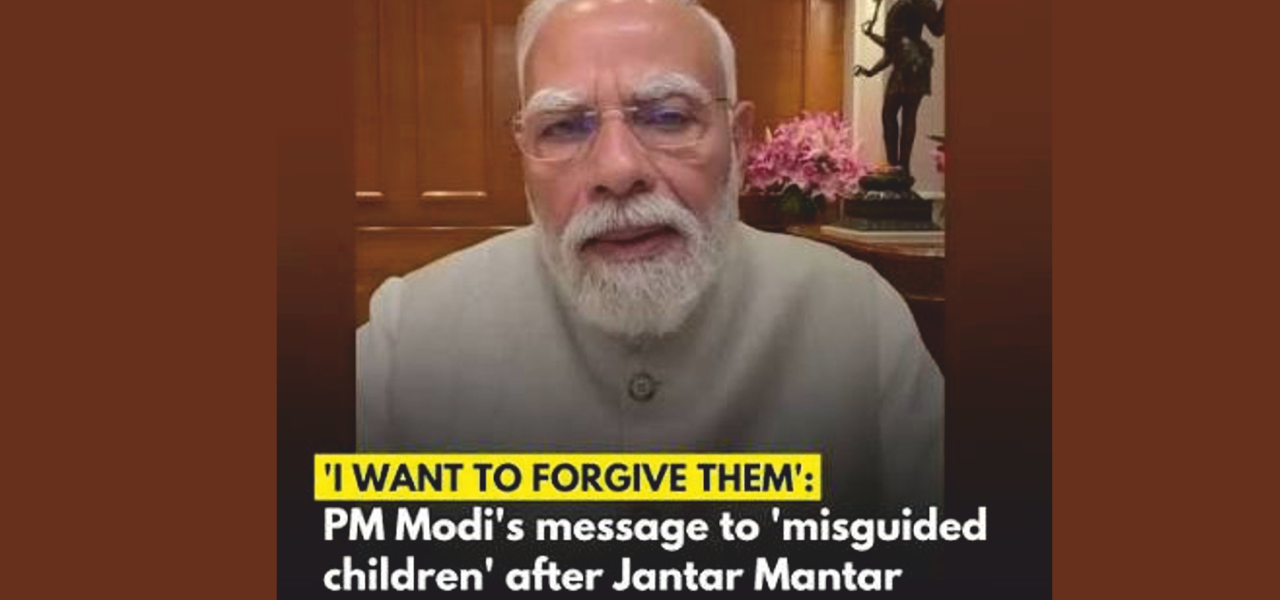
In a video PM Modi Message shared on Instagram on Friday, the Prime Minister acknowledged that abusive remarks had been directed at both him and his late mother. However, what followed became the central message of the entire episode: he said that he wished to forgive the young people involved and guide them towards a better path.
“Abuses never solve any problem. Let us guide those who have been misguided. Let us work together. Let us work for Bharat.”
To explain his message, the Prime Minister used an emotional and relatable metaphor involving the teeth and the tongue.
He observed that, at times, the tongue accidentally comes between the teeth and gets hurt. Yet, we do not break our teeth in anger because both the tongue and the teeth are parts of the same body. In the same way, he suggested, young people who lose their way are still members of the same national family.
They may need correction, guidance and understanding—but not hatred or revenge.
“The teeth are ours, the tongue is ours—and these young people are ours too.”
A Statesman’s Response in a Moment of Anger
The Prime Minister’s response carries significance because it came at a moment when public emotions were running high. Many citizens had expressed resentment over the personal nature of the remarks and demanded accountability for what they viewed as an unacceptable culture of political abuse.
By speaking of forgiveness instead of retaliation, the Prime Minister attempted to bring balance between two competing sentiments: the public demand for dignity and accountability, and the need to prevent anger from deepening social divisions.
PM Modi Message did not suggest that offensive conduct should be celebrated or ignored. Rather, it urged citizens not to answer abuse with more abuse. It called for correction without hatred, disagreement without dehumanisation and accountability without revenge.
An Important Distinction: Forgiveness and Legal Process
It is important to distinguish between the Prime Minister’s personal expression of forgiveness and any legal proceedings arising from the incident.
A criminal complaint, once filed, follows the process established by law. Personal forgiveness by a public figure does not automatically end an investigation or determine whether an offence has been committed.
The legal process and the moral appeal for reconciliation therefore remain separate issues. One concerns the application of law; the other concerns the kind of political and social culture India wishes to build.
The Protest and the Question of Democratic Responsibility
Peaceful protest is a fundamental democratic right. Citizens have every right to question the government, criticise its policies and demand accountability when they believe institutions have failed them.
Students, in particular, must be heard when concerns involve examinations, recruitment, alleged paper leaks or the fairness of systems that directly affect their futures.
However, the moral power of a protest depends greatly on its language, discipline and clarity of purpose. When legitimate demands are overshadowed by personal abuse, threats or attacks on family members, the movement risks losing public sympathy and weakening its own cause.
Criticism based on facts can strengthen democracy. Personal humiliation rarely does.
Not Every Protester Can Be Judged Alike
At the same time, it would be unfair to hold every participant in a large protest responsible for the words or actions of a few individuals.
Public gatherings often include people with different motivations, political affiliations and styles of expression. Many participants may have gathered solely to raise genuine concerns about examinations and student welfare.
Therefore, the alleged misconduct of some individuals should be investigated without using it to dismiss the legitimate concerns of all students. Accountability must be specific, evidence-based and proportionate.
A Lesson Beyond Politics
The significance of the PM Modi Message extends beyond political protests.
Across social media, television debates, schools, colleges, workplaces and even families, disagreement is increasingly turning into personal hostility. People are often attacked not for what they say, but for who they are, where they come from or whom they support.
This culture weakens meaningful conversation. It discourages people from listening, learning or reconsidering their positions.
The lesson is therefore universal: disagreement is natural, but dignity must remain non-negotiable.
Citizens can oppose a leader without insulting his family. Governments can reject criticism without branding every critic an enemy. Protesters can remain firm without becoming abusive. Supporters can defend their leaders without calling for collective retaliation.
“Let Us Work for Bharat”
The final part of the Prime Minister’s appeal was not about himself. It was about the country.
His call to “work together” and “work for Bharat” seeks to move the national conversation away from anger and towards shared responsibility.
India is home to diverse political beliefs, languages, faiths and social experiences. Disagreement is inevitable in such a vast democracy. The real test is whether those disagreements can be expressed without destroying mutual respect.
A democracy does not become stronger merely because people are free to speak. It becomes stronger when that freedom is exercised with responsibility, evidence and restraint.
The Larger Democratic PM Modi Message
The controversy surrounding the Jantar Mantar protest raises an important question for every citizen: what kind of public culture do we want?
One in which every disagreement quickly descends into abuse? Or one in which strong criticism can coexist with basic human dignity?
The Prime Minister’s response offers one possible answer. Those who are misguided should be corrected, not hated. Those who make mistakes should be held accountable, but they should also be given an opportunity to change.
That does not mean abandoning justice. It means ensuring that the pursuit of justice does not itself become an excuse for more hostility.
Conclusion
Prime Minister Narendra Modi’s video message has transformed a deeply unpleasant political episode into a broader conversation about restraint, forgiveness and democratic responsibility.
For those hurt by the abusive remarks, the PM Modi Messagee offered reassurance that dignity matters. For those accused of crossing the line, it offered an opportunity for reflection rather than permanent condemnation. And for the wider public, it delivered a reminder that hatred cannot be defeated by reproducing it.
India’s democracy will always contain disagreement, protest and passionate political debate. But its future will depend on whether citizens can oppose one another without losing their humanity.
The enduring PM Modi Message from this episode is therefore simple:
Abuse cannot solve the problems of a nation. Dialogue, accountability, guidance and collective work can.
News24Media.org will continue to provide balanced and fact-based coverage of this developing issue. This article was originally published on News24Media.org. Attribution is mandatory for republication.
Discover more from
Subscribe to get the latest posts sent to your email.