
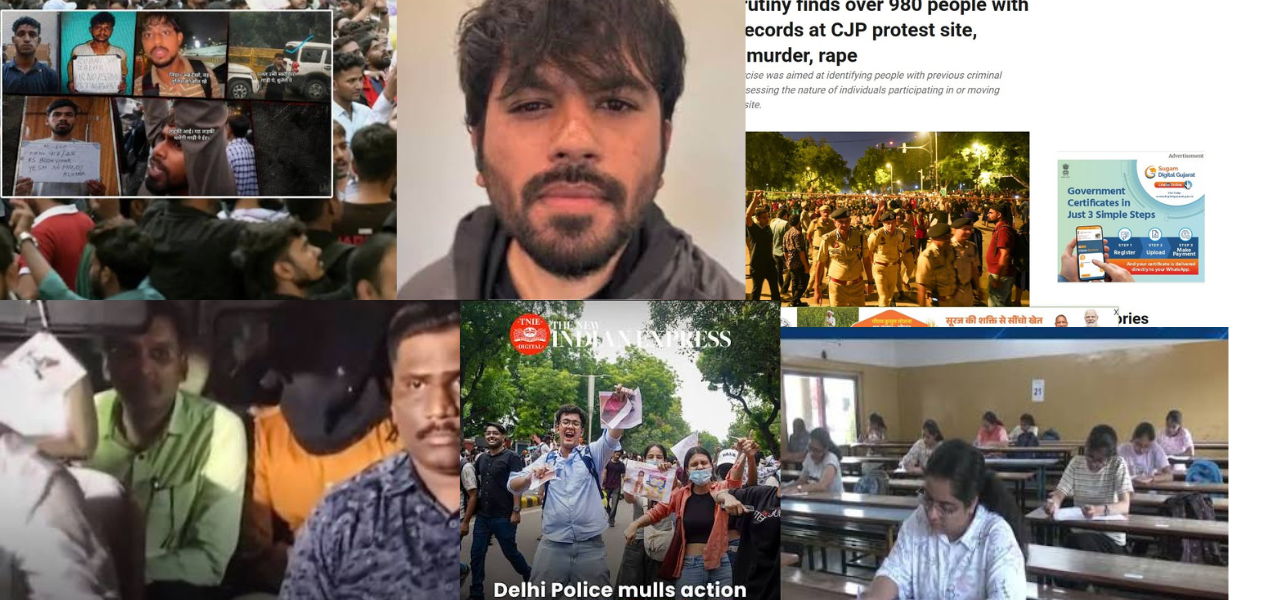
The Untold Truth Behind the Jantar Mantar Protests: Was It Ever Really About Students?


Jantar Mantar Protests: Was It Ever Really About the Students?
For fifty-two days, Jantar Mantar in New Delhi held the country’s attention. A hunger strike that lasted twenty-six days. A resignation that few thought was coming. And a name — the Cockroach Janta Party — that turned a bureaucratic scandal into a generational rallying cry.
But now that the tents are gone and the minister has resigned, a harder question remains — one that was never really asked while the cameras were rolling: at what point did this stop being a students’ movement, and start being something else?
The Questions Nobody Asked While the Nation Was Watching
Everyone knows the NEET-UG 2026 paper leak happened. Everyone knows students died by suicide in the aftermath. Everyone knows Dharmendra Pradhan resigned on 25 July. But almost nobody asked the five questions that actually matter: Who leaked the paper — and what has been proven versus alleged? Who profited from it? Who investigated it, and how far did that investigation actually go? And when the anger reached its peak, was it aimed at the right target?
What we know — verified
- CBI registered the paper-leak case on 12 May 2026 and has made multiple arrests across Jaipur, Gurugram, Nashik, Pune, Latur and Ahilyanagar.
- The Cockroach Janta Party began as a social-media satire on 16 May 2026 and became a physical protest at Jantar Mantar by 6 June.
- Sonam Wangchuk began an indefinite hunger strike on 28 June, was moved from the Jantar Mantar Protest site by police in mid-July, and ended his fast after 26 days.
- Dharmendra Pradhan resigned as Union Education Minister on 25 July 2026, after which the Jantar Mantar Protest was suspended.
The Uncomfortable Middle Ground
This is not a story that fits neatly into “the government failed students” or “the Jantar Mantar Protest was a political conspiracy.” Both framings are too convenient. What our investigation found sits in the harder, less shareable middle: a scandal that was real, an anger that was justified, and a movement whose focus visibly shifted — from examination reform to a single resignation, and from a single resignation into the language of national politics.
We do not settle that question for you. We lay out the timeline, the verified record, and the disputed claims — clearly separated — so you can decide where the movement actually stood by the time it ended.
Why This Matters Beyond One Jantar Mantar Protest
India has seen this pattern before — the JP Movement of 1974, the Anna Hazare movement of 2011. Genuine grievance and political opportunity have never been mutually exclusive in Indian public life. The real test isn’t whether politics touched this movement — it always does. The real test is whether the students who lost years of preparation, and the families who lost children, actually got what they were promised: accountability, compensation, and a safer examination system.
Peaceful protest is a constitutional right. But when accountability is demanded, it must rest on evidence — not on which narrative was loudest that week. News 24 Media
This editorial accompanies our full documentary investigation, available now on the News24Media Facebook Page.
Watch: “The Politics Behind the Jantar Mantar Protests” →
Discover more from
Subscribe to get the latest posts sent to your email.









3 COMMENTS