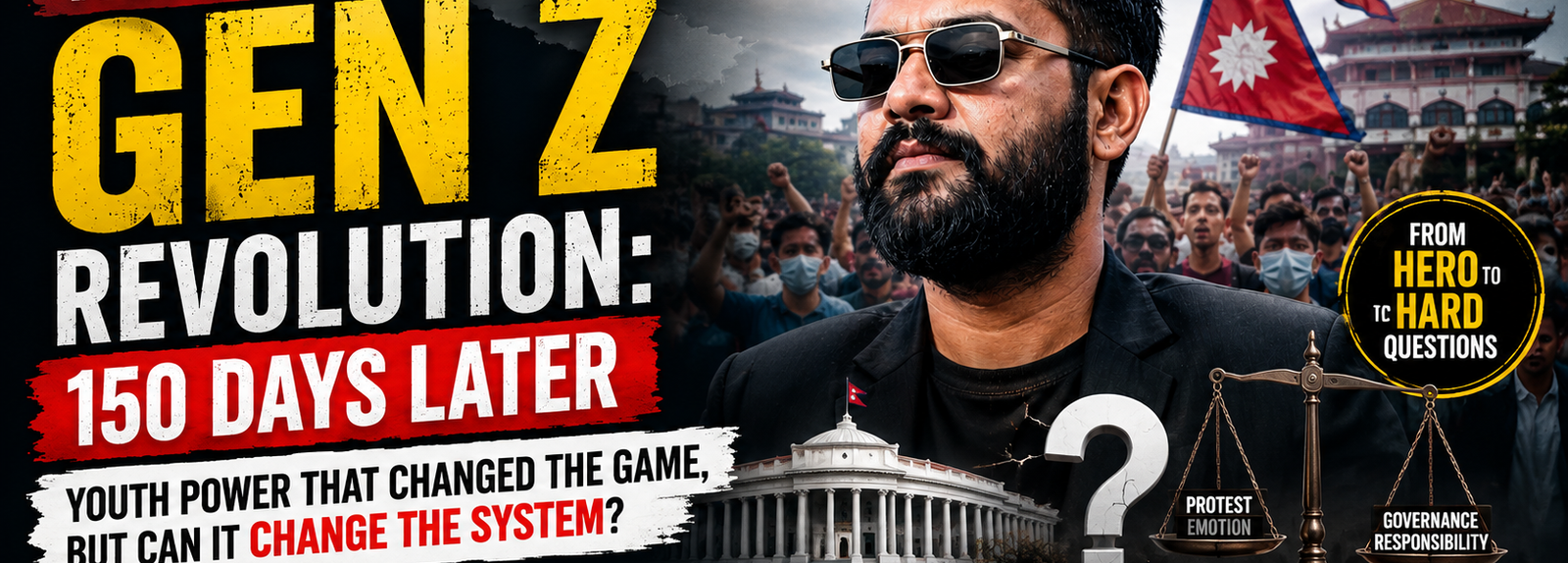


150 Days, One Gen Z Prime Minister, and the Question Nepal Is Now Asking Itself
The same generation that carried Balen Shah to power is now demanding answers from him. This isn’t just a test of one leader — it’s a test of whether a movement won on the streets can actually be turned into a functioning system in office.
When Balendra “Balen” Shah became Nepal’s Prime Minister in March 2026, it wasn’t just an election result — it felt like an entire generation arriving in power. But exactly 150 days later, the same streets that gave him that power are now chanting against his government.
From City Mayor to Prime Minister
Nepal has spent recent years cycling through political instability — governments falling in quick succession, and a deepening public frustration with the old political leadership. A young population increasingly felt shut out of the system it was born into. Into that environment, Gen Z took to the streets, and out of that wave of protest, one name rose fast.
Balen Shah — a structural engineer, a former rapper, and Kathmandu’s popular mayor — looked nothing like the old political establishment. Young voters saw energy in him, accountability, and above all, a genuine alternative. After the March 2026 election, he became Prime Minister, and the moment was read as more than a routine change of government — it looked like an entire generation had stepped into power.
The First Governance Test: The Border Customs Dispute
Almost immediately, the new government ran into the gap between protest and administration. Nepali citizens living near the open India-Nepal border routinely buy everyday essentials — medicines, groceries, household goods — from Indian markets. When the government began strictly enforcing customs rules, the logic on paper seemed sound: plug revenue leakage, enforce the law.
The reality on the ground was different. For families whose daily lives depended on these cross-border markets, the policy became a direct hit to their livelihood. Protests followed, public anger grew, and the government was forced to walk the decision back.
From Hero to Under Scrutiny — In Just Five Months
Over the past few months, the Balen Shah government has faced criticism on several fronts. Reports point to questions over his attendance in Parliament, accounts of growing distance within his own political organisation, and criticism over governance and diplomacy.
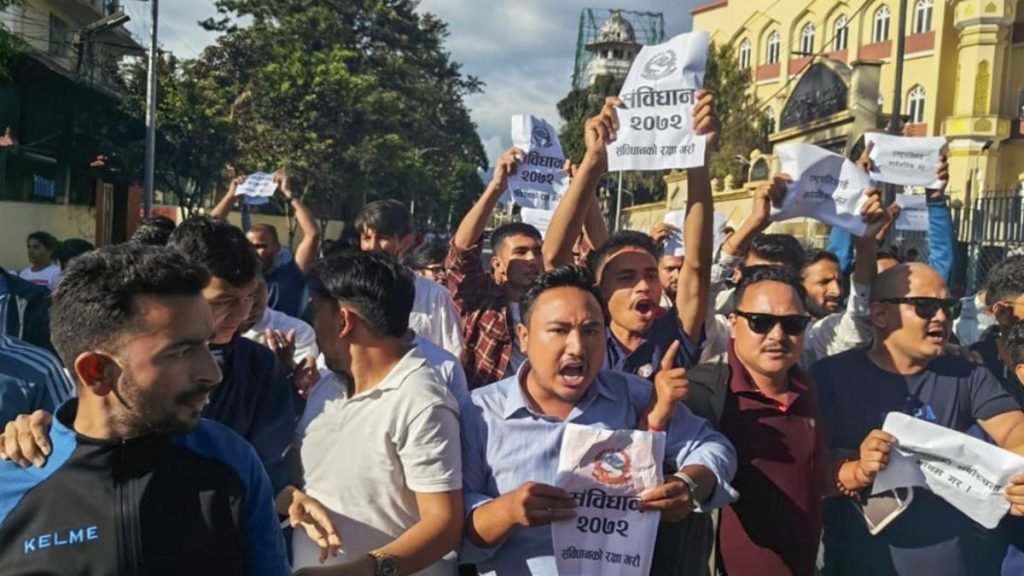
In July 2026, young protesters were back on Kathmandu’s streets — but this time, the target wasn’t the old establishment. It was Balen Shah’s own government.
“The generation that carried him to power is now the one questioning him — and that, more than anything, defines Nepal’s political experiment.”
Was Gen Z Wrong?
One misreading needs to be avoided here — this story doesn’t prove that Nepal’s Gen Z movement was wrong, or that young people shouldn’t be in politics. Their grievances around corruption, nepotism, and political stagnation may well be genuine, and likely still are.
But recognising a problem and solving one are two entirely different abilities. It’s easy to look at a failing building and say “tear it down.” The harder question comes right after: where’s the blueprint for what replaces it, what’s the foundation, and who’s actually going to build it?
What Social Media Gives, It Can Just as Fast Take Away
Nepal’s experience also exposes another sharp edge of modern politics — the speed of social-media-driven popularity. A viral speech, a trending hashtag, a powerful image — and almost overnight, one person becomes the face of an entire generation’s aspirations.
But algorithms don’t know loyalty. The same platform trending #Balen today can just as easily be trending #ResignBalen tomorrow. That fragility is the defining feature of today’s political popularity — and it’s part of why democracies may need to stop turning leaders into heroes, and start demanding accountable ones instead.
The Real Lesson: Mobilisation, Election, and Governance Are Three Different Skills
Nepal’s political experiment surfaces a basic distinction. Getting millions of people onto the streets can be leadership. Winning an election can be political success. But running a country is a different examination altogether — one graded by employment, the economy, law and order, diplomacy, and the strength of institutions.
150 Days Is Too Short for a Final Verdict
This isn’t yet a failure story for Balen Shah. A hundred and fifty days is far too short a window to pass final judgment on any government. He may learn from these early missteps, his government may recover, and this story could look very different a few years from now.
But these 150 days have already delivered one warning: changing who holds power can be the easy part. Changing the system itself is far harder. And the real political maturity of any generation won’t be measured by how forcefully it brought down a government — it will be measured by what it builds afterward.
This analysis is based on publicly available reporting and information. Nepal’s political situation continues to evolve, and new developments may affect the picture presented here.
Discover more from
Subscribe to get the latest posts sent to your email.