Avengers Doomsday Trailer VFX Row: Has Marvel Lost Its Magic as Indian VFX Rises?


Avengers Doomsday Trailer VFX Row: Is Indian VFX Catching Up?
Marvel’s first full trailer for Avengers Doomsday has ignited a familiar internet ritual — frame-by-frame CGI scrutiny. But underneath the noise sits a more serious industry question: is Hollywood’s visual-effects edge eroding, and is India’s VFX sector ready to fill the gap?
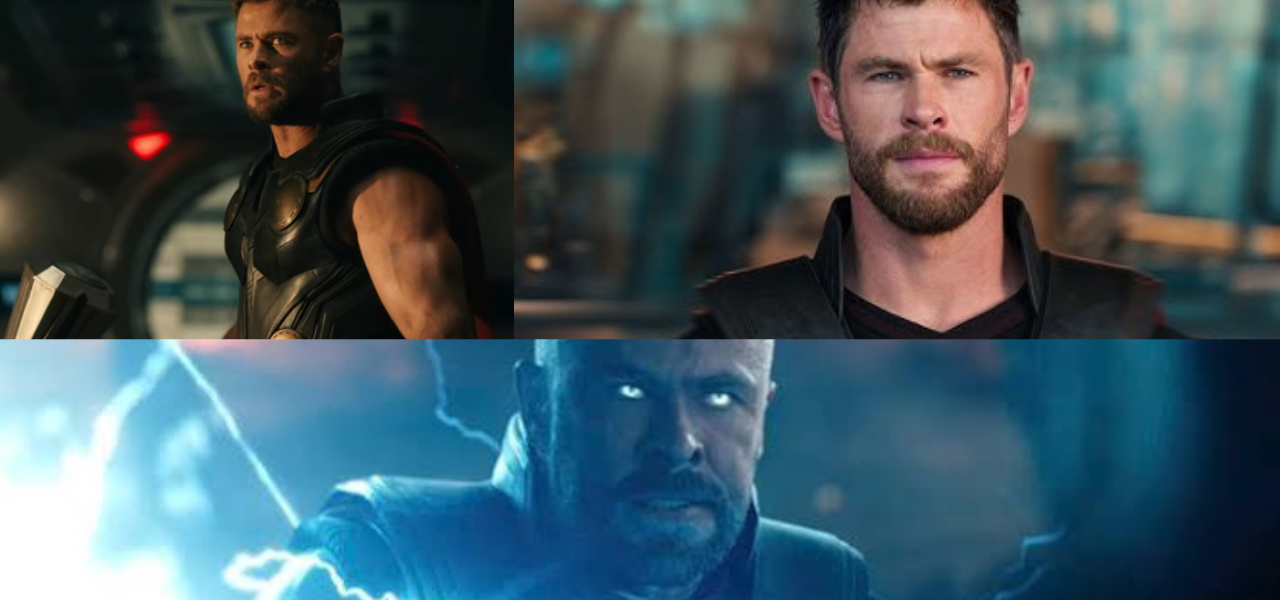
Marvel Studios released the first full-length trailer for Avengers Doomsday on July 20, confirming Robert Downey Jr. as Victor Von Doom opposite an ensemble that spans the Avengers, the X-Men and the Fantastic Four. [ Hollywood Reporter,] Within hours, the trailer had done two things simultaneously: it became one of the most-discussed pieces of pop culture of the week, and it triggered a now-familiar wave of criticism over its visual effects, with some viewers calling specific shots — particularly a Thor-versus-Doom confrontation — noticeably unfinished. [ComingSoon.net ]
That criticism has, predictably, spilled into a bigger argument that has been building across entertainment-industry commentary for two years: has Hollywood grown complacent with visual spectacle, and has India’s VFX industry — long treated as a low-cost outsourcing back office — quietly become good enough to lead rather than follow? This piece separates verified fact from audience opinion on both questions, using trade reporting, studio statements and market data rather than speculation, so readers can form their own view on where the real story lies.
Fast Facts
- Avengers Doomsday releases in theatres on December 18, 2026, directed by Joe and Anthony Russo.
- Robert Downey Jr. plays Victor Von Doom/Doctor Doom; the ensemble includes Chris Hemsworth, Chris Evans, Vanessa Kirby, Pedro Pascal, Florence Pugh, Anthony Mackie, Patrick Stewart and Ian McKellen.
- The trailer debuted publicly on July 20, 2026, after first screening at CinemaCon in April.
- India’s VFX market was valued at roughly $1 billion in 2024 and is projected to reach $1.7 billion by 2033.
Section 1: What the Trailer Actually Reveals
The trailer confirms the film’s central conflict: Doctor Doom, a multiversal threat, pushes the Avengers into direct confrontation with the X-Men, while previously separate MCU factions — the Fantastic Four, Wakanda, Shang-Chi’s circle and the New Avengers — are forced to unite. Steve Rogers, played by Chris Evans, reclaims Mjolnir and rejoins the fight, while Thor emerges as a rallying figure for Earth’s scattered heroes. The footage also gives audiences their first real listen to Downey’s Doom, whose accent and vocal performance have already become one of the trailer’s most argued-over details, separate from the VFX debate entirely.
Standout action beats include a clash between Yelena Belova (Florence Pugh) and Mystique (Rebecca Romijn), and a matchup involving Gambit (Channing Tatum), alongside large-scale ensemble sequences. Expectations are unusually high for a specific reason: this is being positioned as the first true “team-up event” film since Avengers: Endgame in 2019, arriving after several years of MCU projects that critics and audiences have judged as inconsistent. It also has to do more narrative work than any previous Avengers film — folding in the X-Men and Fantastic Four while paying off seven years of Avengers-specific storylines, a juggling act Endgame never had to attempt.
The ensemble scale itself is part of the story. The confirmed cast runs to nearly 30 named characters, spanning three previously separate franchises — the core Avengers, the Fox-era X-Men led by Patrick Stewart’s Professor X and Ian McKellen’s Magneto, and the newly introduced Fantastic Four line-up headed by Pedro Pascal and Vanessa Kirby. Visually, the trailer leans on a darker, cooler color grade than recent MCU output, which several viewers flagged — favourably — as a deliberate tonal shift toward the more grounded look of Infinity War and Endgame rather than the flatter lighting associated with some of Marvel’s post-pandemic slate. Costume and production design details remain deliberately guarded; Marvel has been praised even by critical fans for withholding plot specifics while still delivering visually dense action beats.
Section 2: Why Are Fans Complaining About the VFX?
The criticism clusters around a handful of specific, named moments rather than the trailer as a whole. Multiple viewers singled out Thor’s jump during the Doom confrontation as looking unfinished, and some compared the sequence unfavourably to Marvel’s own Black Widow, noting it seemed low for a production with a budget in the range of a major tentpole film. A smaller but vocal group went further, suggesting certain shots resembled AI-generated imagery rather than traditional CGI.
It is worth being precise about proportion here. Reaction across outlets was genuinely mixed rather than uniformly negative — several commentators specifically praised the trailer’s colour grading and said the CGI was “not bad,” with reservations about pacing and plot clarity showing up as often as VFX complaints. Other criticism was about storytelling, not visuals: some viewers said the trailer felt like “things happening with no buildup,” and others noted the emotional stakes felt lower than the marketing for Infinity War and Endgame once did. Separating the two threads matters — a trailer can be judged “underwhelming” for editing and pacing reasons that have nothing to do with render quality.
Section 3: Is This Actually Finished CGI?
Marvel trailers are routinely cut from early-stage visual effects, and this is not a new phenomenon specific to Doomsday. The pattern has repeated across the studio’s history: the 2022 She-Hulk trailer drew a near-identical backlash over its CGI, only for the show’s visual effects to be substantially reworked before release. More significantly, Marvel’s own VFX supervisor on Spider-Man: No Way Home, Scott Edelstein, confirmed that the film’s visual effects were still being finished by Digital Domain’s team after the movie had already opened in theatres — meaning even released, reviewed films can arrive with post-production still in progress.
This isn’t unique to Marvel, either. Industry observers note that trailers across the blockbuster landscape — from early X-Men footage to Iron Man 2’s Super Bowl spot — have historically shown noticeably rougher effects than the finished film, because trailers are frequently cut from temporary renders, unfinished compositing, and pre-color-correction footage assembled to hit a marketing deadline rather than a delivery deadline. Given that Doomsday does not arrive until December 18 — roughly five months after this trailer’s release — there is a substantial production window remaining for lighting passes, compositing refinement and final color work.
Editorial Note
Trailer VFX quality is not a reliable predictor of final-film VFX quality. This is a verified, repeated pattern in blockbuster production, not an excuse being offered on Marvel’s behalf — readers should weigh trailer criticism accordingly.
Section 4: The Bigger Problem — Audience Expectations Have Changed
Even accounting for the “unfinished trailer” pattern, something structural has shifted in how audiences consume marketing footage. Trailers are now watched in 4K on large displays, paused frame-by-frame, re-uploaded with AI upscaling that can exaggerate compositing seams that were never meant to be scrutinized at that resolution, and dissected in dedicated YouTube breakdown videos within hours of release. A single awkward frame — like Thor’s jump — can be isolated, clipped, and circulated as a meme far faster than the studio can respond or contextualize it.
This scrutiny culture cuts both ways. It genuinely holds studios accountable for cutting corners, but it also punishes the ordinary, decades-old practice of releasing marketing footage before post-production is complete. The Doomsday reaction cycle — genuine criticism, ironic meme amplification, and defenders pointing to the five-month runway before release — played out within the same 24-hour news cycle, illustrating how compressed and unforgiving this environment has become for any studio, not just Marvel.
Section 5: Has Indian VFX Quietly Become World-Class?
While the Doomsday debate plays out online, a parallel story has been developing with far less noise: India’s visual-effects industry has moved well beyond its historical role as a low-cost outsourcing destination. The Indian VFX market was valued at approximately $1 billion in 2024 and is projected to reach $1.7 billion by 2033, growing at a compound annual rate of roughly 12.4%. As of late 2024, India was home to more than 4,000 VFX studios of varying scale.
The key names are increasingly familiar to global audiences even if they don’t realize it. DNEG’s India operations were integral — not peripheral — to the Oscar-winning visual effects on Dune: Part Two, Oppenheimer and Interstellar. Shah Rukh Khan’s Red Chillies VFX has built a reputation on technically demanding domestic work, including de-aging effects in Fan (2016) and the effects-heavy production Zero (2018), and has since pioneered AI-assisted workflows on Pathaan and Jawan. Indian studios collectively contributed to six Oscar-winning films across a recent three-year span.
Kalki 2898 AD (2024), India’s most expensive film at the time with a ₹600 crore budget, showcased DNEG and The Embassy Visual Effects building three distinct fictional worlds — Kashi, the Complex and Shambhala — earning praise for its scale even as reviewers noted its Amitabh Bachchan de-aging work was “not flawless.” The film grossed over $84 million worldwide on a roughly $72 million budget. Separately, DNEG raised $200 million from the United Al Saqer Group specifically to fund a tentpole-scale Ramayana franchise adaptation, with international VFX veterans — including artists who worked on Guardians of the Galaxy Vol. 3 — reportedly reacting with enthusiasm after reviewing the project.
Section 6: Can Indian VFX Surpass Hollywood?
The honest answer is: in specific respects, yes; as a wholesale replacement, not yet — and the industry’s own trajectory supports a collaborative framing rather than a competitive one.
Where India has genuine advantages
India offers a large, technically trained artist pool, meaningfully lower production costs, and government-backed incentives — including a 40% national VFX incentive with additional state-level uplifts in Maharashtra and Telangana — that are actively pulling large-scale international projects toward Indian studios. Indian houses are also early and aggressive adopters of AI-orchestrated pipelines and virtual-production LED-volume setups, of the kind Red Chillies has built for real-time, on-set visualization.
Where challenges remain
India’s studios still largely operate within a service-delivery model for Hollywood-originated IP, rather than driving original tentpole concepts from the ground up at Marvel or DC scale. Global pipeline management across multiple time zones, deep previsualization infrastructure for films with thousand-plus VFX shot counts, and creative supervision talent with the seniority to make final creative calls independently remain areas where legacy Hollywood houses still hold an edge — though that gap is visibly narrowing, not widening.
Budget scale remains the clearest gap. Kalki 2898 AD, India’s most expensive film to date, carried a production budget of roughly $72 million — a fraction of what a single Avengers-scale tentpole spends on visual effects alone. Script development and long-range previsualization pipelines, refined over decades on Marvel and Star Wars-scale productions, are also harder to replicate quickly, even with strong technical execution. That said, DNEG’s $200-million investment in an India-led Ramayana franchise suggests financiers are betting that budget scale, not creative or technical capability, is the more solvable of the two constraints.
Section 7: Hollywood’s Changing VFX Landscape
Part of what’s fuelling the Indian VFX narrative is genuine turbulence on the Hollywood side. The entertainment and media sector shed more than 17,000 jobs in the first eleven months of 2025 alone — an 18% increase over 2024 — driven by post-strike recovery struggles, streaming-platform maturation, and AI adoption reducing roles specifically within VFX, animation and post-production. The 2025 collapse of Technicolor’s VFX subsidiaries — including MPC and Mikros Animation — left an estimated 10,000 people globally without work within 24 hours, with roughly 2,000 India-based staff going unpaid when payroll froze.
Meanwhile, VFX artists in North America have pushed for unionization since the 2023 strikes, largely around AI-usage rules and chronic overtime, though a formal, large-scale union has yet to materialize at the pace many artists want. Industry executives themselves increasingly frame 2026 as “structural contraction” rather than a temporary downturn — fewer productions, tighter post-production windows, and growing reliance on AI-assisted tools to compress timelines. Set against that backdrop, Hollywood’s biggest visible weakness right now may genuinely be workflow and studio economics — compressed schedules, underbidding and consolidation chaos — rather than a shortfall in raw creative or technical talent.
Section 8: What Marvel Needs to Learn
Several practical lessons emerge from the pattern of Marvel’s recurring trailer-VFX controversies, going back through She-Hulk and Spider-Man: No Way Home:
- Release marketing footage later in the post-production cycle, even at the cost of a shorter promotional runway, to avoid repeated “unfinished CGI” news cycles.
- Build in dedicated finishing time rather than compressing VFX work against a fixed release date, a pattern Marvel’s own VFX supervisors have publicly acknowledged on past films.
- Diversify and stabilize vendor relationships, including deeper, longer-term partnerships with proven studios — Indian and otherwise — rather than fragmenting shot counts across houses under deadline pressure.
- Let story carry more of the marketing weight. A meaningful share of this trailer’s criticism was about pacing and stakes, not rendering — a script and editing issue, not a VFX one.
Section 9: Expert Verdict
Is the criticism justified?
Partially — and the two threads deserve different verdicts. Some of the specific VFX criticism, particularly around the Thor-Doom confrontation, appears grounded in real, visible compositing and lighting issues rather than pure meme culture. But the historical record — from She-Hulk to No Way Home — strongly suggests trailer-stage VFX is not a reliable indicator of the finished film, and Doomsday still has roughly five months of post-production runway remaining.
On the larger question: the evidence does not support a simple “India is overtaking Hollywood” narrative, and it would be premature to declare that based on one trailer. What the evidence does support is that India’s VFX industry has genuinely graduated from cost-driven outsourcing toward creative co-ownership — visible in Oscar-credited work on Dune: Part Two and Oppenheimer, in India-originated tentpoles like Kalki 2898 AD, and in DNEG’s $200-million bet on an India-led Ramayana franchise. The more accurate story isn’t a changing of the guard — it’s a converging global VFX supply chain in which Indian studios increasingly sit at the creative table, not just the production floor.
Hollywood vs. India: VFX Industry Comparison
| Parameter | Hollywood | India |
|---|---|---|
| Market Size | ~$10.8B (2025), global leader | ~$1B (2024), fastest-growing hub |
| Growth Rate | ~12.7% CAGR | ~12.4% CAGR |
| Cost Structure | High; consolidation-driven cost cutting underway | Significantly lower; boosted by 40% national VFX incentive |
| Talent Pool | Deep, senior creative-supervision bench; contracting workforce | 4,000+ studios; large, rapidly growing technical workforce |
| Role in Global Pipeline | IP originator and final creative authority | Increasingly co-creative partner, not just vendor |
| AI Adoption | Union-contested, cautious rollout | Aggressive early adoption in pipelines and virtual production |
| Recent Flagship Work | Dune: Part Two, Oppenheimer, Avengers Doomsday | Kalki 2898 AD, RRR, upcoming Ramayana |
| Near-Term Trajectory | Structural contraction, job losses, consolidation | Rising investment, franchise-scale original IP entering pipeline |
Fact-Check: Verified Sources vs. Audience Opinion
Verified, Sourced Facts
- Trailer release date, cast, plot details, and December 18, 2026 release date — Hollywood Reporter, ComicBook.com, SuperHeroHype, MovieWeb.
- Spider-Man: No Way Home post-release VFX completion — VFX Supervisor Scott Edelstein via ScreenRant.
- Indian VFX market size, growth rate and studio count — IMARC Group (via Vitrina.ai), IBEF.
- DNEG’s $200 million raise and Ramayana project — Expert Market Research.
- Kalki 2898 AD budget, box office and VFX studio credits — Wikipedia, Variety (via IMDb).
- Hollywood 2025–26 job losses and Technicolor VFX subsidiary collapse — Click USA News, Stop Motion Magazine.
Clearly Labelled Audience Opinion (Not Verified Fact)
- Claims that specific Doomsday shots “look AI-generated” — unverified social media commentary from X/Bluesky, cited as audience reaction only.
- Comparisons of Doomsday’s trailer CGI quality to Black Widow — subjective fan commentary, not a technical assessment.
- Predictions of how the finished film’s VFX will look — inference based on historical patterns, not confirmed information from Marvel Studios.
Discover more from
Subscribe to get the latest posts sent to your email.