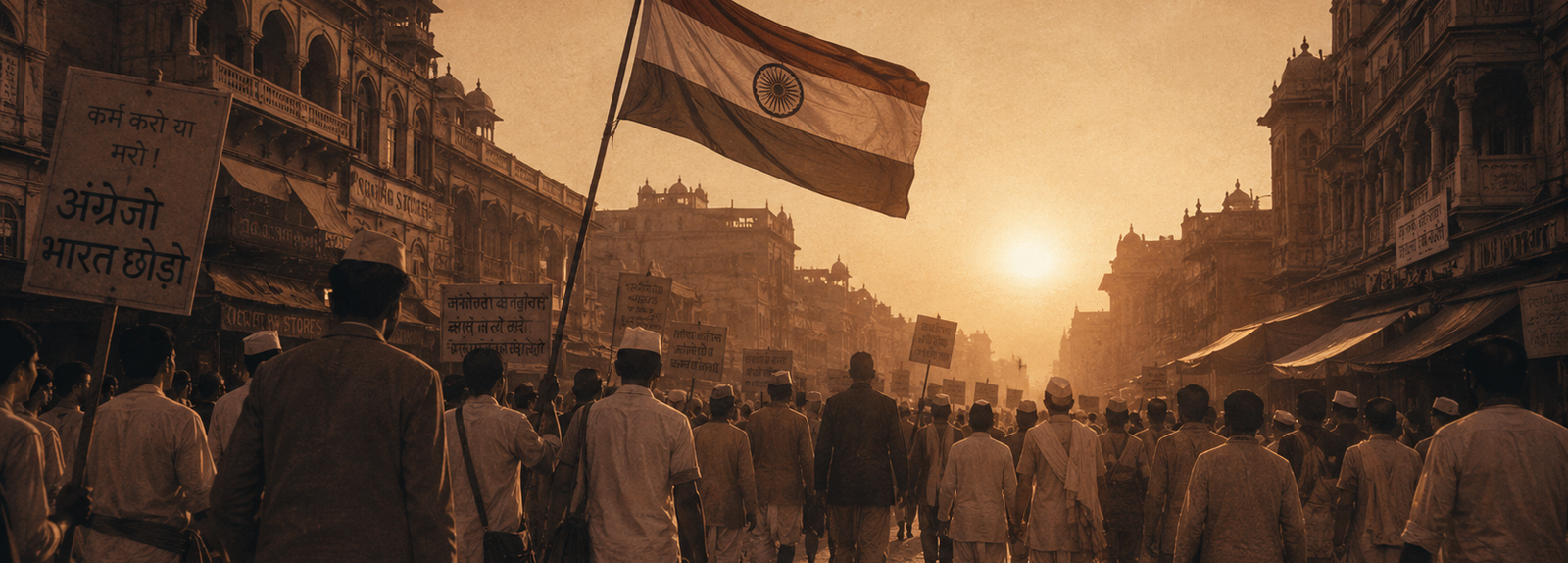
India’s Forgotten Freedom Fighters: Why History Remembered a Few and Overlooked Many


Editorial · History & Memory
Beyond the Familiar Icons: Why India Must Rediscover the Forgotten Freedom Fighters
News24Media.org | July 23, 2026
On the birth anniversary of Chandrashekhar Azad, a question worth asking is not whether India remembers its icons enough — it clearly does — but whether it has remembered everyone else.
I. A Tribute, and a Question
Every year on July 23, official India pauses to remember two men born on this date nearly half a century apart: Bal Gangadhar Tilak, born in 1856, and Chandrashekhar Azad, born in 1906. This year was no different. In a social media tribute on Thursday, Prime Minister Narendra Modi wrote that Azad’s “fearless courage and unwavering patriotism occupy a proud place in the history of India’s freedom struggle,” adding that the revolutionary “motivated countless young Indians to devote themselves to the nation” and that “his resolve continues to inspire generations.” Union Home Minister Amit Shah offered a parallel tribute to Tilak, invoking his cultural mobilisation through the Ganesh festival and his enduring call, “Swaraj is my birthright, and I shall have it.”
These tributes are unremarkable in the sense that they happen every year, from governments of every political hue, because Azad and Tilak have earned a permanent place in India’s national memory. Azad’s decision, cornered by police in Allahabad’s Alfred Park on February 27, 1931, to turn his last bullet on himself rather than be captured alive has become one of the most recognisable images of individual defiance in the freedom movement. That the park was later renamed Chandrashekhar Azad Park is itself a marker of how memory becomes institutionalised.
Paying homage to the brave Chandra Shekhar Azad on his birth anniversary. His fearless courage and unwavering patriotism occupy a proud place in the history of India’s freedom struggle. He motivated countless young Indians to devote themselves to the nation. His resolve continues…
— Narendra Modi (@narendramodi) July 23, 2026
But an anniversary tribute, precisely because it is so familiar, offers a useful occasion to ask a harder question: has India been equally diligent in remembering everyone who paid a comparable price? This editorial does not question the greatness of Gandhi, Bose, Bhagat Singh or Nehru — their contributions are foundational and well documented, and nothing here is intended to diminish them. The argument is narrower and, we think, more constructive: that India’s freedom struggle was fought by a vastly larger cast than the handful of names that dominate textbooks, films, and public commemoration, and that recovering the rest of that cast strengthens rather than threatens the nation’s historical self-understanding.
II. A Struggle Too Vast for a Few Names
India’s transition from colonial rule to independence was not a single campaign led by a single organisation. It unfolded over nearly two centuries and drew in millions of participants across radically different registers of resistance: constitutional agitation through the Indian National Congress and provincial legislatures; armed revolutionary conspiracies such as the Kakori and Chittagong armoury raids; tribal uprisings against forest laws and land alienation, from the Santhal rebellion of 1855–56 to the Rampa rebellion of the 1920s; peasant movements at Champaran, Kheda, Bardoli, and later Tebhaga; the entry of women into public protest and underground work; student agitation during the Quit India movement of 1942; the Indian National Army’s campaign alongside Japanese forces; the February 1946 Royal Indian Navy mutiny; and pockets of resistance inside princely states that operated entirely outside British Indian jurisdiction. Historians of the period, including Bipan Chandra, Sumit Sarkar, and Ramachandra Guha, have each in their own way argued that treating the freedom movement as a linear story anchored to a few leaders flattens what was, in reality, a layered and often contradictory set of overlapping movements.
Each of these strands produced its own leaders, and most of them did not survive in national memory the way Gandhi or Bose did — not because their sacrifice was smaller, but because the machinery that turns a life into a household name operates unevenly.
III. How a Nation Decides Whom to Remember
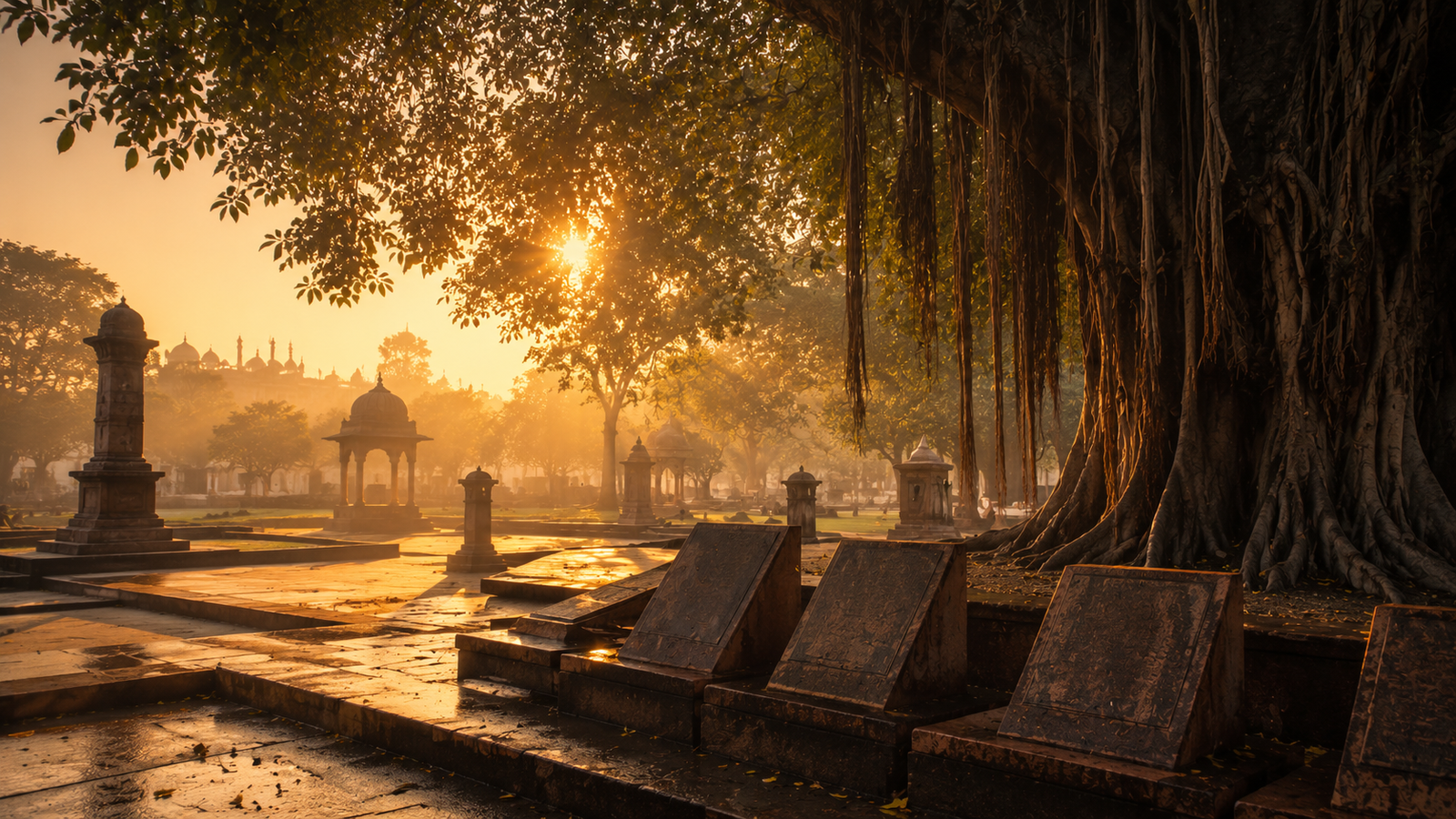
Historical memory is not a passive record; it is actively constructed, and the construction happens through specific institutions. School textbooks, largely shaped by national and state curricular boards, must compress two centuries of resistance into a limited number of chapters, which inevitably privileges figures with clear, teachable narratives over those whose stories are regional, fragmentary, or archivally thin. University history departments, until relatively recently, tended to concentrate research resources on the Congress-led national movement, partly because its documentation — Congress proceedings, viceregal correspondence, leaders’ own prolific writing — is comparatively abundant and centrally archived. Public memorials and the naming of streets, institutions, and currency notes follow political and administrative decisions that reflect the priorities of the era in which they were made, particularly the early decades after 1947, when a still-young state needed unifying national symbols. Cinema and television, driven by commercial as well as narrative logic, gravitate toward figures whose lives already contain dramatic arcs — courtroom trials, assassination plots, iconic last words — which some revolutionaries’ lives supply more readily than others’. None of this reflects a coordinated effort to suppress anyone; it reflects the ordinary, uneven way that institutions with limited space make choices, choices that compound over generations until certain names become synonymous with the freedom struggle itself and others recede into regional or specialist memory.
IV. Names Worth Knowing Better- Forgotten Freedom Fighters
Ram Prasad Bismil (1897–1927)
A poet and founder of the Hindustan Republican Association, Bismil organised the 1925 Kakori train robbery to fund revolutionary activity and was hanged at Gorakhpur jail on December 19, 1927. His verse, including the line urging that his shroud be dyed saffron, became an anthem of the revolutionary current within the movement — one that ran parallel to, and was often in tension with, Gandhian non-violence.
Ashfaqulla Khan (1900–1927)
Bismil’s closest associate in the Kakori conspiracy, Ashfaqulla Khan was hanged the same day at Faizabad jail. His friendship with Bismil across religious lines, and his own refusal to name accomplices even under pressure, made him a symbol of the composite character of the revolutionary movement — a dimension of the story that receives less classroom attention than it might.
Batukeshwar Dutt (1910–1965)
Dutt threw a bomb alongside Bhagat Singh in the Central Legislative Assembly in April 1929, deliberately designed not to kill, as an act of political theatre rather than assassination. Unlike Singh, Dutt survived his sentence, lived on after 1947 in relative obscurity, and died in 1965 requesting cremation at Hussainiwala beside his co-conspirators — a request honoured decades later. His post-independence years are a useful reminder that survival, not just martyrdom, is part of the movement’s story, and survivors are often remembered less vividly than martyrs.
Alluri Sitarama Raju (c. 1897–1924)
Raju led the Rampa Rebellion of 1922–24 in the hill tracts of the Godavari agency in present-day Andhra Pradesh, mobilising tribal communities against colonial forest restrictions that had cut them off from traditional livelihoods. Waging a guerrilla campaign against British forces for nearly two years before his capture and execution, he is remembered locally as “Manyam Veerudu” — hero of the forests — but remains far less known outside the region than his sustained, organised resistance would seem to warrant.
Matangini Hazra (1870–1942) and Kanaklata Barua (1924–1942)
During the Quit India movement, Hazra, then in her seventies, was shot dead while leading a procession carrying the national flag in Tamluk, Bengal, reportedly continuing to chant “Vande Mataram” as she fell. In Assam, seventeen-year-old Kanaklata Barua was killed the same year attempting to hoist the flag at a police station. Their deaths illustrate how deeply the 1942 movement penetrated beyond urban, English-educated leadership into small-town and rural India, and how women’s participation in it was neither peripheral nor symbolic.
This is a necessarily partial list. It could easily be extended to Rani Gaidinliu, the Naga spiritual and political leader imprisoned by the British for over a decade; Birsa Munda, whose Ulgulan rebellion against land alienation in the 1890s remains foundational to tribal political memory in Jharkhand; Usha Mehta, who ran an underground Congress Radio station during Quit India; Aruna Asaf Ali, who hoisted the flag at Bombay’s Gowalia Tank in August 1942; and Captain Lakshmi Sahgal, who commanded the all-women Rani of Jhansi Regiment of the Indian National Army. The point is not that these names are unknown to historians — they are well documented — but that the gap between archival knowledge and public familiarity remains wide.
V. Why Some Names Rose Above the Rest
The prominence of Gandhi, Nehru, Bose, and Bhagat Singh is not accidental, nor is it simply a matter of state patronage. Gandhi and Nehru led the Congress, the only pan-Indian political organisation with the reach to coordinate mass campaigns, and both were prolific writers whose speeches, letters, and autobiographies gave later historians an unusually rich and centrally archived record to work from. Bose’s leadership of the Indian National Army carried genuine international dimensions — alliances with Axis powers, a government-in-exile — that generated diplomatic and military documentation across multiple countries. Bhagat Singh’s trial, his hunger strikes in prison, and his execution at twenty-three gave his story a dramatic compression that later found a natural home in cinema and popular retelling. After 1947, the new state also had practical reasons to build unifying national symbols around figures already associated with the mainstream nationalist movement, since currency, postage, and the naming of institutions required choices, and those choices tend to reinforce existing prominence rather than distribute it evenly. None of this diminishes these leaders’ actual historical weight; it simply means that visibility and historical significance, while related, are not identical, and the gap between them is where lesser-known figures tend to fall.
VI. Signs of Rediscovery
The last decade has seen a deliberate, if uneven, effort to close that gap. The Azadi Ka Amrit Mahotsav commemorations launched around the 75th anniversary of independence explicitly foregrounded regional and tribal forgotten freedom fighters alongside national icons, and several state governments have since built museums and memorials to local revolutionaries who previously had little more than a plaque. Digital archival projects, including efforts by the National Archives of India and various state archives to digitise district-level forgotten freedom fighter records, have made source material accessible to researchers and the public in ways that were impractical a generation ago. Curriculum revisions in several states have added regional case studies to freedom-struggle chapters. These are genuine gains. They are also incomplete: digitisation projects remain patchy across states, museum funding is uneven, and curriculum changes vary enough between boards that a student’s exposure to this fuller history still depends heavily on which state and which board they study under. Rediscovery, in other words, has begun; it has not been completed or standardised.
VII. What a Fuller Memory Teaches
There is a pedagogical case for this recovery work beyond historical completeness. A curriculum built only around a handful of national figures teaches, implicitly, that resistance was centrally organised and that agency belonged to a small elite. A curriculum that also includes tribal uprisings, peasant movements, underground networks, and regional armed resistance teaches something closer to the truth: that the end of colonial rule was the cumulative result of resistance mounted from many different social positions, using many different methods, often without knowledge of what parallel movements elsewhere were doing. For students, this is not a diminishment of Gandhi or Bose but a more accurate account of how large historical change actually happens — through the aggregation of many acts of courage, not the isolated genius of a few.
VIII. Other Nations, Similar Reckonings
India is not alone in this exercise. The United States has spent decades expanding civil-rights memory beyond Martin Luther King Jr. to include figures such as Ella Baker and Bayard Rustin, and more recently institutionalised Juneteenth to recover a history of emancipation long overshadowed by a single narrative. France’s memory of the wartime Resistance has moved, over successive generations, from a Gaullist-centred account toward greater recognition of the ordinary résistants, including many women and immigrants, who did not become national symbols after 1945. South Africa’s post-apartheid reckoning, anchored in the Truth and Reconciliation Commission, deliberately built space for figures like Steve Biko and Robert Sobukwe alongside Nelson Mandela, whose global fame had come to stand in for a much larger movement. Ireland has spent the decade of its 1916–1923 centenary commemorations recovering the roles of women and rank-and-file volunteers in the Easter Rising, previously overshadowed by leaders like Patrick Pearse and James Connolly. Vietnam’s national narrative, similarly, has broadened over time from a Ho Chi Minh-centred account to acknowledge the wider revolutionary cadre. In each case, the process was gradual, contested, and never fully finished — a pattern India’s own rediscovery is likely to follow.
IX. A Fuller Room, Not a Different One
The story of India’s freedom struggle is too vast to be told through a handful of names, however extraordinary those names remain. Gandhi, Bose, Bhagat Singh, Nehru are foundational to that story and will remain so. But a nation’s collective memory is not a fixed space with room for only a few portraits; it is a room that can be built larger. Honouring the revolutionaries, tribal leaders, women, soldiers, and ordinary citizens whose names appear only in district archives and local memory does not crowd out the icons already on the wall. It simply ensures that the room reflects the scale of the sacrifice that actually produced independence.
As Azad’s anniversary tribute reminds a new generation of his courage, the more lasting tribute may be to ask which other names deserve the same annual remembrance, and to begin building the institutions — in classrooms, archives, and public commemoration — that make that remembrance possible.
This editorial draws on established historical scholarship on the Indian freedom movement, official commemorative statements issued on July 23, 2026, and publicly documented archival records. Where historians differ in interpretation, this piece has sought to note that difference rather than resolve it. News24Media.org | Editorial Desk
Discover more from
Subscribe to get the latest posts sent to your email.