
One Wrong Tap and Private Life Public — Digital Privacy Alert | News24Media


One Wrong Tap… and Your Private Life Can Go Public
A private video accidentally posted to a WhatsApp Status — and the question every smartphone user should ask themselves before hitting send
[ ]
]
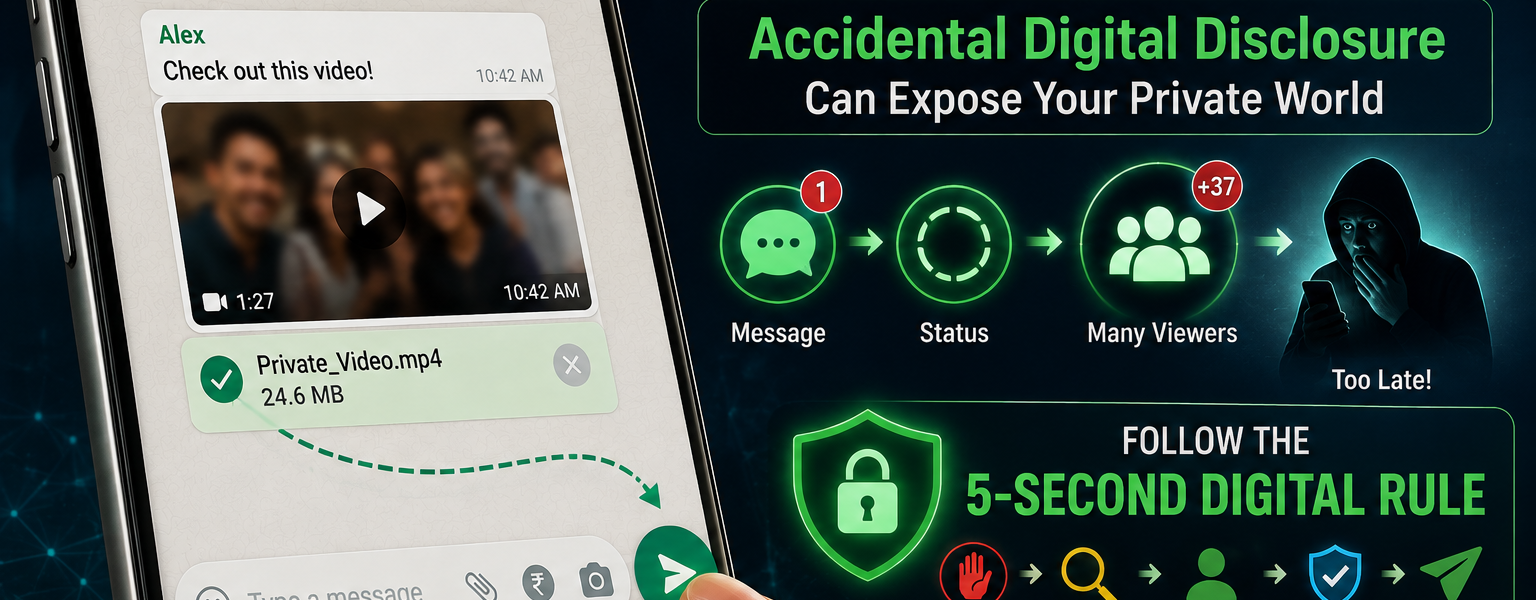
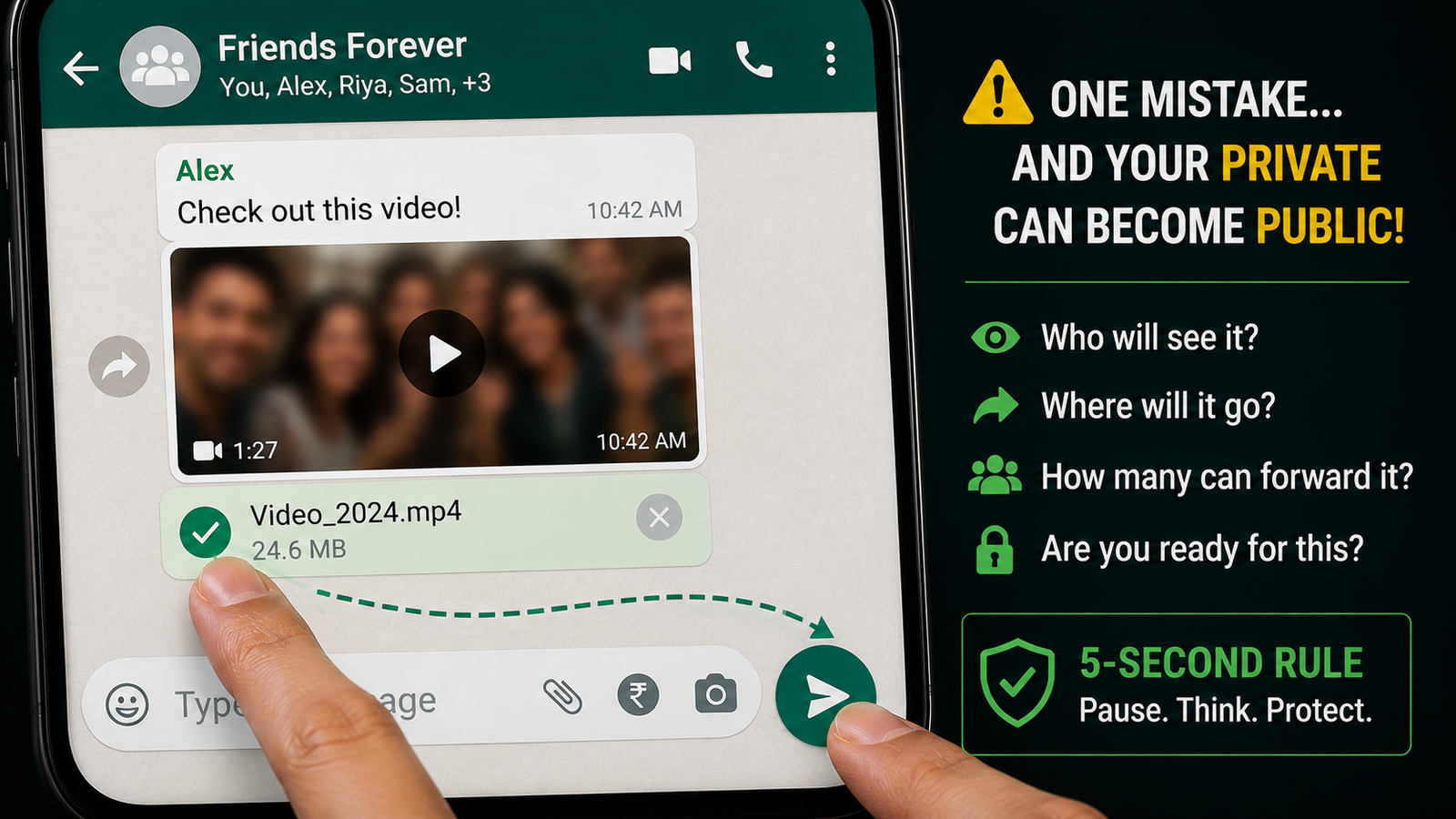
Picture this — you’re sending a friend a private video. A few taps, hit Send, and you assume it reached only them. Minutes later, your phone rings. Your friend, sounding alarmed, says: “What did you just put on your Status? Take it down, now!” In that instant, it becomes clear that what you thought was private was actually visible to hundreds of your contacts.
This isn’t a hypothetical scenario. A real case of this kind has come to our attention, in which an individual was privately sharing some sensitive content with friends. But somewhere in the process of sharing, a small slip occurred — content meant to stay within a private exchange ended up posted to that person’s WhatsApp Status. The most troubling part: they had no idea it had happened. It was only when an acquaintance called to flag it that the truth came out.
The Threat Isn’t Always a Hacker
When people think of cybersecurity, hacking, phishing, malware, and OTP fraud usually come to mind first. But one of the biggest threats to digital privacy often doesn’t come from outside at all — it comes from our own hands. It can be called Accidental Digital Disclosure . Selecting the wrong contact, sending a document to the wrong group, or having a private photo land on your Status — none of these involve a hacker . Sometimes, one wrong tap is all it takes.
Delete Doesn’t Mean Gone
A basic truth of the digital world is that deleting something doesn’t always erase it completely. If someone saw your Status, took a screenshot, or made a screen recording before you deleted it, your control over that content is effectively gone. That’s why the real question shouldn’t be what to do after a mistake happens — it should be whether you checked thoroughly enough before you hit send.
It’s Not Just About an Embarrassing Video
Today’s smartphones don’t just hold personal photos and videos — they hold bank documents, identity proofs such as PAN and Aadhaar, passport copies, medical reports, office files, school records, and payment screenshots. If any of these sensitive documents accidentally end up in the wrong place, the damage isn’t limited to embarrassment — it can put your identity security, your job, and organizational confidentiality at risk.
The Real Cause: Our Auto-Mode Habit
Constant use of messaging apps has trained our fingers to work almost automatically — open, select, forward, send. The more frictionless technology becomes, the easier it becomes to make a mistake. The solution isn’t to slow down technology — it’s to slow down our own decisions, even if just by a few seconds.
The 5-Second Digital Rule
Before sending anything sensitive, pause for a moment (STOP), check exactly what you’re sending (CHECK), confirm who you’re sending it to (SELECT), and most importantly, verify where it’s going — a private chat, a group, a community, or a Status (VERIFY). Only then should you hit send.
One more useful question to ask yourself: “What if this becomes public tomorrow?” If that thought makes you uncomfortable, it’s worth reconsidering whether sending it at all is necessary. The safest private content is the content that was never unnecessarily circulated in the first place.
- Double-check both the recipient and the destination before every send
- Avoid using the Status/Story feature for sensitive documents
- Review group settings and digital privacy controls regularly
- Keep an eye on auto-download and auto-backup settings
The Bottom Line
Today’s smartphone isn’t just a phone — it’s our photo album, our bank, our office, our identity, and our personal diary, all in one. But that same phone also has a button that can make private information public within seconds. So think before you click, check before you share, and verify before you publish — because sometimes, all it takes to cause harm is one wrong tap.
Discover more from
Subscribe to get the latest posts sent to your email.









1 COMMENTS