
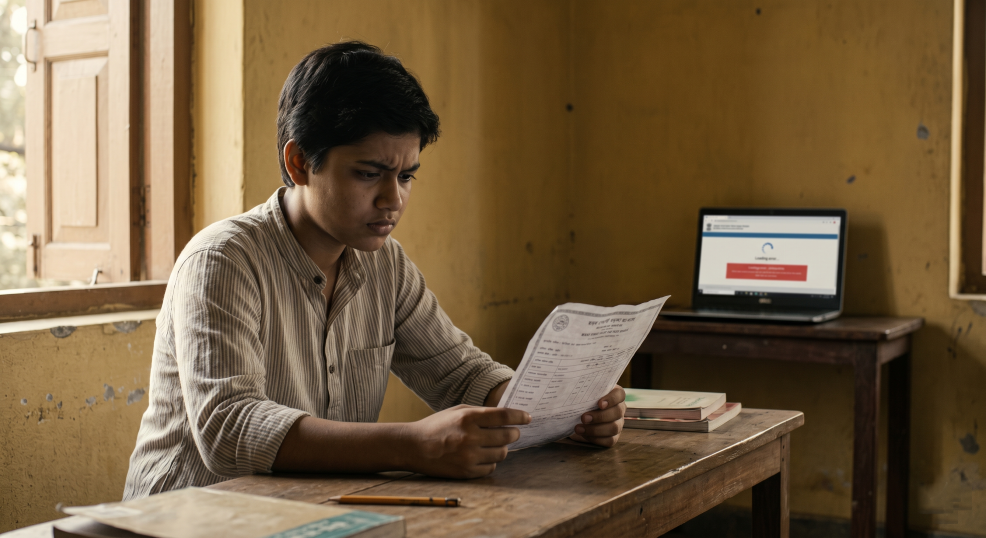
CBSE OSM Controversy 2026: Shocking Exam Crisis That Exposed India’s Evaluation System


CBSE OSM Controversy 2026: How India’s Biggest Exam Crisis Unfolded
A rushed digital transition, a seven-year low in pass rates, a cyberattack that hit 1.5 million times in two minutes, and two top officials removed. This is the full story of what went wrong.
When the CBSE declared Class 12 results on May 13, 2026, millions of students, parents and teachers expected a routine announcement. What followed instead was a national crisis — one that would see India’s most powerful school board lose its chairperson and secretary, face a cyberattack of extraordinary scale, and trigger a parliamentary inquiry driven, remarkably, by a 17-year-old student from Jharkhand.
At the centre of the storm was a single, ambitious decision: the introduction of On-Screen Marking, or CBSE OSM, for the first time across all Class 12 examinations. The idea was sound. Instead of physical answer sheets being transported across the country to marking centres, they would be scanned, uploaded to a secure digital platform, and evaluated by teachers remotely from their own schools. CBSE promised it would eliminate totalling errors, speed up results, and reduce logistical costs. The board was so confident in the reform that it simultaneously discontinued post-result verification of marks for Class 12 — removing a familiar safety valve before the new system had proven itself.
When the Numbers Came In
The pass percentage landed at 85.20% — a drop of 3.19 percentage points from 88.39% in 2025, and the lowest figure in seven years. Out of 17,68,968 students who appeared, 1,63,800 were placed in the compartment category and face supplementary examinations on July 15. Students flooded social media with complaints about suspected scanning errors, mismatched answer sheets, and missing pages. The anxiety was amplified by a cruel irony: the very system designed to reduce errors was now suspected of creating new ones.
Warning signs had been visible months earlier. During a mandatory mock evaluation session on February 26, 2026, teachers reported portal failures, slow system performance, inadequate connectivity, and errors in the examiner database. Those warnings were not heeded publicly. The full-scale rollout proceeded — and the consequences arrived with results day.
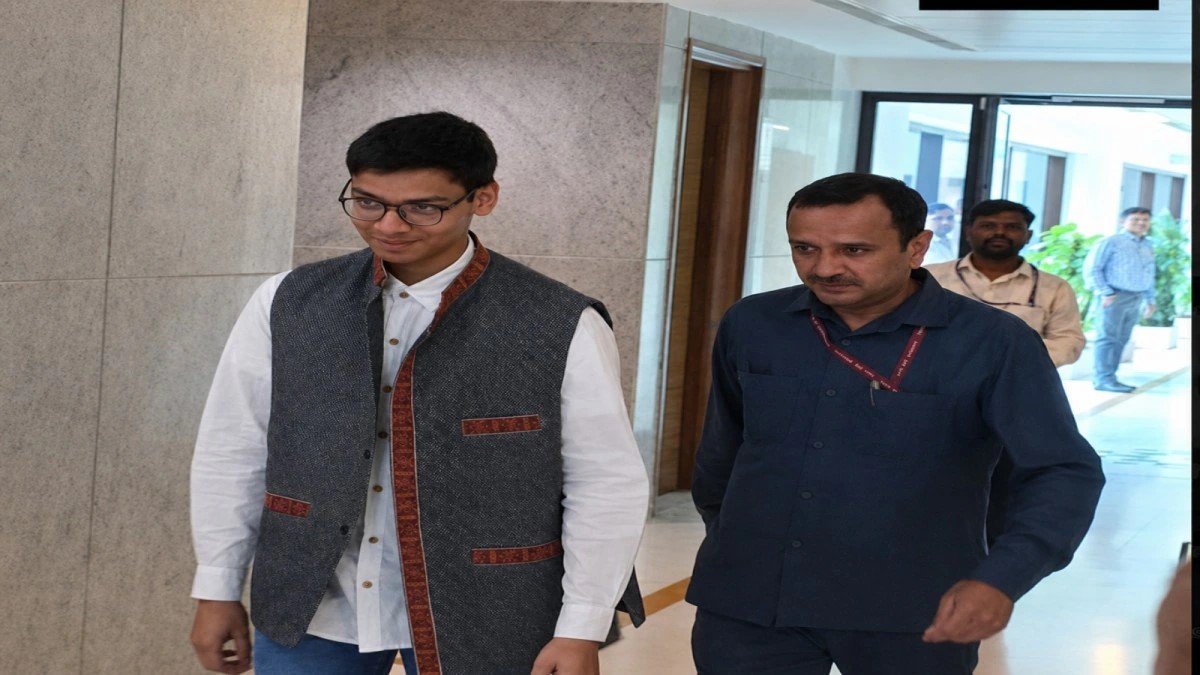
“A 17-year-old student from Jharkhand walked into Parliament and presented a seven-page submission on CBSE’s tendering process. He named at least 15 alleged discrepancies. The committee listened.”
The Cyberattack
On June 2, when CBSE launched its post-result portal for re-evaluation applications, a coordinated assault began. The board confirmed a Denial-of-Service attack that generated 1.5 million hits on the portal within just two minutes. Over one lakh attempts at unauthorised file access were also recorded in the same window. Separately, an ethical hacker alleged that an Amazon Web Services cloud storage bucket containing scanned answer sheets was publicly accessible without any login — a potentially catastrophic exposure of student data.
CBSE stated that its databases were not compromised and no confirmed data breach occurred. But the board was also forced to acknowledge the vulnerabilities publicly, deploy cybersecurity experts from IIT Madras and IIT Kanpur for an emergency audit, shift data to government-controlled cloud infrastructure, and file a complaint with Delhi Police’s IFSO unit. For a system entrusted with the academic records of nearly 18 lakh students, the fact that these measures were taken after controversy erupted — rather than before — is the central accountability failure.
Leadership Removed, Parliament Engaged
On June 3, the government acted. CBSE Chairman Rahul Singh and Secretary Himanshu Gupta were transferred. New appointments were made: Lokhande Prashant Sitaram as Chairman and Varun Bhardwaj as Secretary. A one-member inquiry committee under S. Radha Chauhan was constituted through the Cabinet Secretariat to examine how the CBSE OSM vendor was selected and whether the procurement process was sound.
Before Parliament’s Standing Committee on Education, chaired by Congress MP Digvijaya Singh, a student named Sarthak Sidhant — 17 years old, from Ranchi — presented a seven-page submission documenting at least 15 alleged discrepancies in CBSE’s tendering process for CBSE OSM vendor selection. Senior CBSE officials and Ministry representatives appeared before the same committee. It is a remarkable image: a student who sat the examination holding the institution to account before the nation’s lawmakers.
The Lesson India Must Learn
By June 4, over 70,433 students had applied through the grievance portal — 7,314 for mark verification and 63,119 for re-evaluation. CBSE reduced fees, extended deadlines, and made portal improvements based on student feedback. These corrections were welcome. But they came after the damage was done.
The CBSE OSM crisis is not an argument against digital evaluation. Modernising examination infrastructure is essential for a country that evaluates tens of millions of answer scripts annually. The argument it makes — loudly — is against unprepared digital evaluation. Against platform deployment without stress-testing. Against vendor selection without scrutiny. Against removing grievance safety nets before their digital replacements are proven. Against treating a reform announcement as equivalent to a reform delivered.
India’s 18 lakh Class 12 students of 2026 deserved better. Their results are not just numbers. They are the foundation of decisions about colleges, careers, and confidence. The board that holds that responsibility must earn trust long before results day — not spend three weeks trying to recover it after.
Supplementary examinations for compartment students are scheduled for July 15, 2026. The re-evaluation portal closed at midnight on June 6. The one-member procurement inquiry under S. Radha Chauhan is ongoing.
CBSE Three Language Policy: A Bold Learning Reform or a New Burden on Students?
Prepared by: News24Media
Date: June 6, 2026 | Canonical URL: https://news24media.org/cbse-osm-controversy-2026-digital-evaluation-cyberattack-student-trust
Discover more from
Subscribe to get the latest posts sent to your email.








2 COMMENTS