
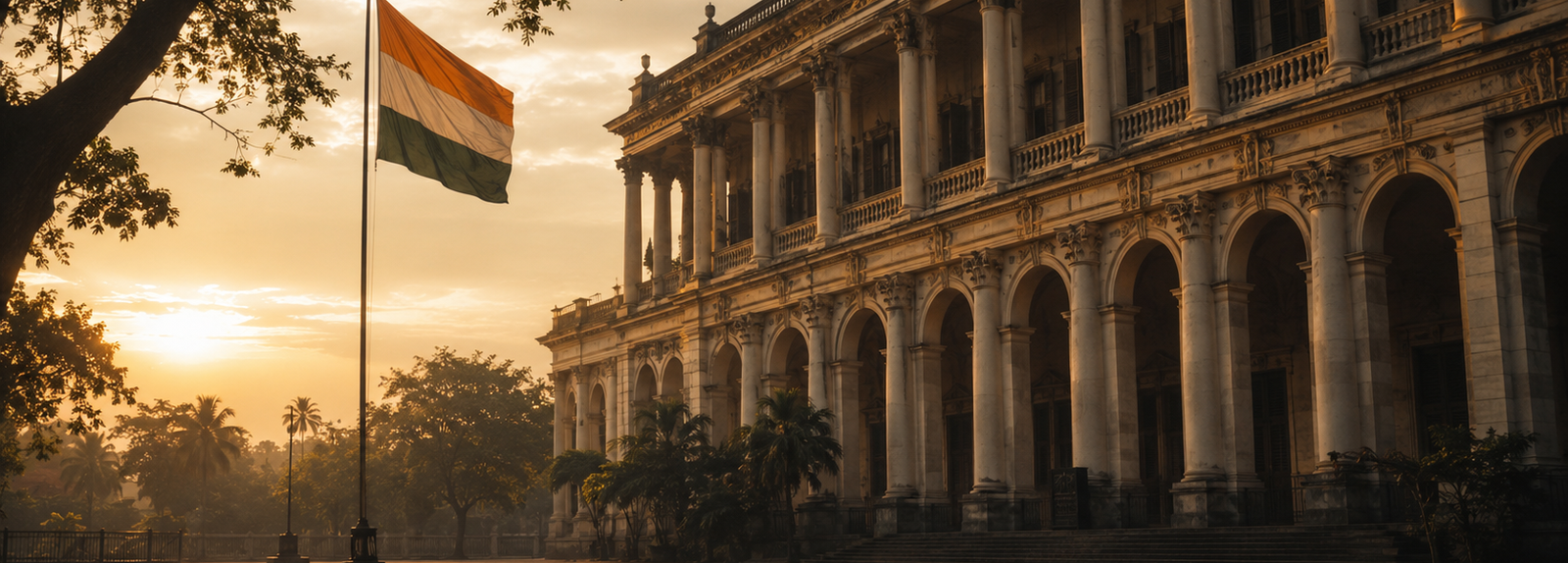
Syama Prasad Mookerjee: The Man Who Saved Bengal & India’s Unity


Editorial · 125th Birth Anniversary · 6 July 2026
Syama Prasad Mookerjee: The Man Who Helped Save Bengal and Died for India’s Unity
On the day India remembers the 125th birth anniversary of Dr. Syama Prasad Mookerjee, News24Media revisits the life of a Bengal-born scholar-statesman whose political courage shaped the map of West Bengal and whose death in a Srinagar detention cell remains one of independent India’s most painful unanswered questions.
Every year on 6 July, the Government of India marks the birth anniversary of a man most Indians know only through a road name, a port, or a tunnel — never through the full weight of what he actually did. This year is no ordinary anniversary. It falls within a two-year national commemoration that the Ministry of Culture announced to mark the 125th birth anniversary of Bharat Kesari Dr Syama Prasad Mookerjee, running from 6 July 2025 to 6 July 2027. Union Home Minister Amit Shah is leading a special commemorative programme in Kolkata this very day, at Milan Mela Prangan, and will lay the foundation for a 125-foot statue of Mookerjee at Eco Park — a scale of tribute that itself signals how long overdue this reckoning has been.
Dr. Syama Prasad Mookerjee was, in the truest sense, a man of the soil — born in Calcutta, educated at Calcutta University, and rooted in Bengal’s intellectual and civic life even as his politics acquired an all-India dimension. To understand why Bengal owes him a debt it has rarely acknowledged, one must return to the terrifying uncertainty of 1946-47.
Bengal on the Brink
In the aftermath of the Great Calcutta Killings of August 1946 and the horrors of Noakhali that followed, Bengal’s political future hung in the balance. The Muslim League, led provincially by H.S. Suhrawardy, pushed for the whole of undivided Bengal — Hindu and Muslim majority districts alike — to go to Pakistan. When that push faltered, Suhrawardy pivoted to a subtler plan: an independent, sovereign “United Bengal,” neither joining India nor Pakistan, with a Muslim premier and a Hindu home minister. Congress leaders Sarat Chandra Bose and Kiran Shankar Roy were drawn into this proposal, and even Mahatma Gandhi initially found merit in a united Bengal. Sarat Bose and Kiran Shankar Roy were drawn toward this scheme by Suhrawardy, but Mookerjee had by then already persuaded most other Bengali Hindu leaders that the plan was dangerous, and he pushed his case directly to Nehru, Patel, and Congress president J.B. Kripalani in a round of urgent meetings. Kripalani rejected the United Bengal plan the very next day, and Nehru and Patel followed suit.
Mookerjee’s argument was blunt and, in hindsight, prescient: a Bengal that remained whole would eventually be absorbed into a Muslim-majority political entity, whatever safeguards were promised on paper. At the Bengal Provincial Hindu Conference in Tarakeshwar in April 1947, delegates backed the idea of a Hindu-majority Bengal staying inside India and put Mookerjee in charge of driving that campaign forward; roughly a lakh volunteers signed up to work on it. He carried that mandate to Delhi and, crucially, to Viceroy Lord Mountbatten, helping shape the formula under which Bengal’s legislature would vote in two notional halves — a formula that gave Hindu-majority western Bengal the chance to opt out of a Muslim-majority union.
“Divided Bengal in United India” — the position Mookerjee carried against every rival plan for the province’s future.
On 20 June 1947, the Bengal Legislative Assembly cast its historic votes. Members from the non-Muslim majority areas of Bengal voted 58 to 21 in favour of partitioning the province — the vote that ultimately kept West Bengal within India rather than seeing the entire province, including Calcutta, absorbed into East Pakistan. Historians continue to debate how much credit belongs to Mookerjee alone versus the wider Bengal Congress and the collective anxiety of Bengali Hindus after Noakhali; his critics on the Left have long argued that communal politics, not statesmanship, drove the outcome. But even sympathetic historians who complicate the story do not dispute that Mookerjee was the most visible, most organised, and most persistent voice pressing the case in 1947 — a fact West Bengal’s present state government has moved to formally commemorate through Paschimbanga Divas on 20 June.
One Nation, One Constitution, One Flag
Mookerjee’s Bengal campaign was never separatist in character — it was, paradoxically, a campaign for unity within India rather than fragmentation from it. This is the thread that runs through the rest of his public life. Having served briefly in the undivided Bengal cabinet and later as India’s first Minister for Industry and Supply in Jawaharlal Nehru’s cabinet, Mookerjee resigned in 1950 over the Liaquat-Nehru Pact, which he believed failed to protect the interests of Hindus displaced from East Pakistan. He went on, in 1951, to found the Bharatiya Jana Sangh, the forerunner of today’s BJP.
His central political conviction found its sharpest expression in his opposition to Jammu and Kashmir’s special constitutional status. The line he coined — “Ek desh mein do Vidhan, do Pradhan aur do Nishan nahi chalenge” (one nation cannot function with two constitutions, two heads of government, and two flags) — became the rallying cry of a movement that outlived him by nearly seven decades, until Article 370 was abrogated in 2019.
Before politics fully consumed his public life, Mookerjee had already made his mark in education. As speakers noted at a recent Ministry of Culture commemoration, he took charge as Vice-Chancellor of Calcutta University at just 33, a milestone never since matched, joined the Union Cabinet at 45, established the Jana Sangh at 50, and was gone by 52. Few Indian public figures have combined academic distinction, administrative command of a university, and sustained political courage within a single, compressed life.
Syama Prasad Mookerjee-Kashmir, Arrest, and Sacrifice
In May 1953, Mookerjee set out from Delhi for Jammu and Kashmir to protest the permit system that barred ordinary Indian citizens — even, in principle, the President of India — from entering the state without permission from its own government. He travelled deliberately without a permit, intending to court arrest and expose the anomaly of “two constitutions” within one country. He was joined on that journey by associates including a young Atal Bihari Vajpayee. Police stopped and detained him as soon as he crossed into the state at a border checkpoint on 11 May 1953; he was subsequently moved to a small hillside lodging near Srinagar’s Nishat Bagh that had been hastily repurposed as a place of confinement — a site his supporters have long described as isolated, poorly equipped, and difficult for a man with a chronic leg ailment to access.
A Death Still Unexplained
Mookerjee’s health deteriorated through his detention. He was never formally tried or produced before a court in the six weeks he was held, and on 23 June 1953, he passed away while still in that custody in Srinagar. What followed his death compounded the tragedy: his family was not informed promptly, his personal physician Dr. Bidhan Chandra Roy was not consulted at the time, and repeated requests — from his grieving mother Jogmaya Devi, from the West Bengal Legislative Assembly, and later from his own party — for an independent judicial inquiry were deflected between the governments of West Bengal, Jammu and Kashmir, and the Union, each maintaining the matter was properly the other’s responsibility. No such inquiry was ever held.
This is a chapter that deserves to be stated soberly rather than sensationally. The available record does not offer definitive proof of foul play; what it offers, unambiguously, is the failure of the state to conduct the transparent investigation that the death of a sitting Member of Parliament and former Union Minister, dying in official custody, plainly warranted. That failure — not any settled verdict on the cause of death — is what has kept the questions alive for seven decades, and why successive BJP leaders have continued to demand accountability from that unresolved chapter.
Why He Still Matters
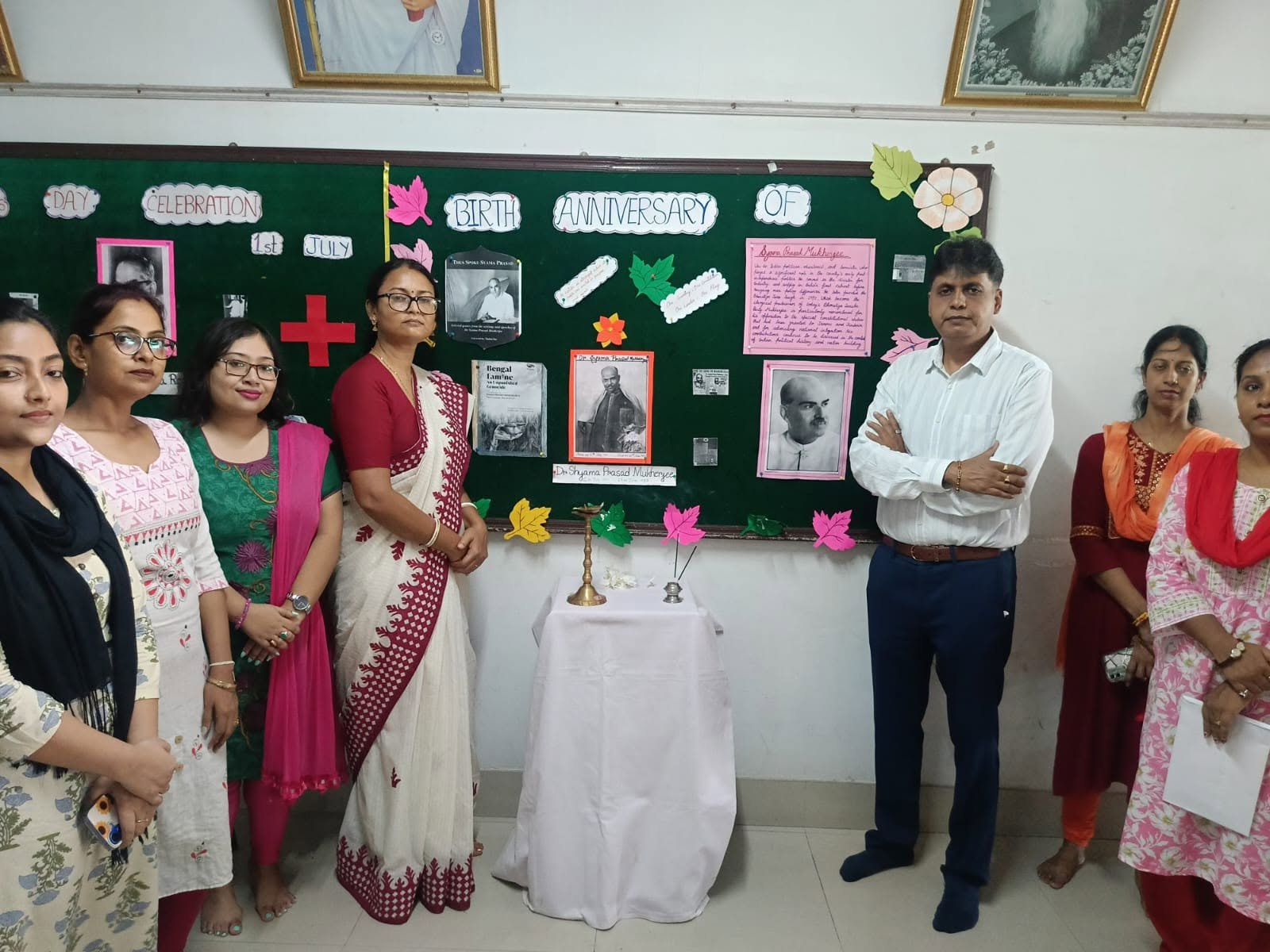
Dr. Syama Prasad Mookerjee’s legacy resists easy partisan capture, however often it is invoked in partisan terms today. Bengal exists in its present form partly because of the political battle he fought and largely won in 1947. India’s constitutional debate over asymmetric federalism carries his imprint, for better or worse, in every argument about uniform citizenship and uniform law. And the manner of his death remains a standing reminder that the transparency owed to public figures — and to their families — is not a courtesy but an obligation of the state.
On his 125th birth anniversary, as Kolkata hosts a national commemoration and a monumental statue rises at Eco Park, the honest tribute to Mookerjee is not simply admiration but historical accuracy: recording what he did, what remains disputed about how he did it, and what was never properly answered about how he died. That is the debt Bengal — and India — still owes him.
Discover more from
Subscribe to get the latest posts sent to your email.





1 COMMENTS