When Gesture Politics Overtakes Gravitas: Rahul Gandhi and the Cost of Parliamentary Spectacle


From Gestures to Controversies: Why Rahul Gandhi’s Parliamentary Conduct Keeps Triggering National Debate
India’s Parliament is designed to be a forum for ideas, arguments, and accountability. Yet over the years, attention has repeatedly shifted away from policy debates to moments of spectacle involving Rahul Gandhi, now the Leader of the Opposition.
From unusual gestures inside the Lok Sabha to sharp personal exchanges outside it, Rahul Gandhi’s conduct has sparked recurring controversy—raising deeper questions about political maturity, institutional discipline, and the growing dominance of performative politics.
A Pattern That Refuses to Fade
2018: The Hug-and-Wink Moment
During the 2018 no-confidence motion, Rahul Gandhi crossed the aisle to hug Prime Minister Narendra Modi. As he returned to his seat, television cameras captured what appeared to be a wink.
The moment instantly went viral. While Congress supporters described it as symbolic defiance, critics across party lines argued that it reduced parliamentary debate to theatrics, overshadowing the substance of the motion itself.
2023: The ‘Flying Kiss’ Controversy
Five years later, another no-confidence debate triggered fresh outrage. BJP leaders accused Gandhi of making a “flying kiss” gesture while leaving the House. Congress disputed the claim, but the damage was already done.
Once again, headlines focused less on speeches and more on gesture politics, reviving questions about decorum in India’s highest legislative body.
2026 Flashpoint: ‘Traitor Friend’ and a Public Standoff
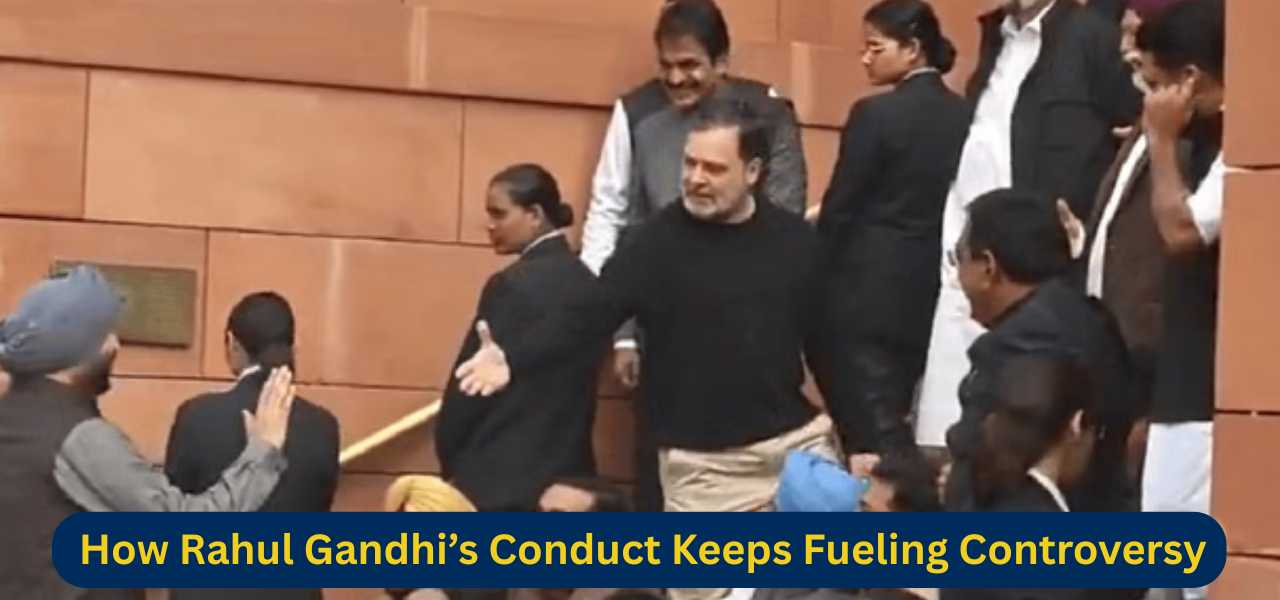
The controversy resurfaced sharply in February 2026 after a confrontation near Parliament between Rahul Gandhi and Union Minister Ravneet Singh Bittu.
According to multiple reports, Rahul Gandhi greeted Bittu with the phrase “Hello, my traitor friend.” Bittu refused to shake hands and later described Gandhi as an “enemy of the nation,” escalating the exchange into a national political flashpoint.
A Serious Allegation — But Still an Allegation
In media interactions following the incident, Bittu alleged that Rahul Gandhi appeared intoxicated or under the influence of drugs.
It is important to underline: this claim has not been independently verified and remains a political allegation, not a fact.
Yet the statement intensified scrutiny, shifting public discourse from political disagreement to questions of conduct and credibility.
Why These Moments Keep Dominating Headlines
The Attention Economy of Modern Politics
In the era of social media and 24/7 news cycles, politics increasingly rewards moments that are visually striking and emotionally charged. A hug, a gesture, or a sharp personal remark travels faster than a policy argument.
This creates an incentive structure where symbolism often eclipses substance, especially in high-visibility spaces like Parliament.
Norm-Breaking as a Risky Strategy
Some leaders deliberately challenge conventions to appear bold or relatable. But when such actions occur inside Parliament, where decorum itself carries constitutional significance, the strategy frequently backfires—reinforcing perceptions of unseriousness rather than courage.
Escalation Through Identity Language
Words like “traitor” or “enemy of the nation” shut down debate instead of advancing it. Once such language enters the conversation, de-escalation becomes nearly impossible, and institutional dignity is the first casualty.
The Image Problem That Won’t Go Away
For years, Rahul Gandhi has struggled to shake off a reputation for political immaturity. Whether fair or not, each controversy strengthens that narrative, especially when gestures overshadow governance.
In a parliamentary democracy, leadership—particularly in opposition—demands restraint, clarity, and respect for institutions. Repeated distractions raise uncomfortable questions about readiness for executive responsibility.
What Institutional Maturity Would Look Like
Political observers point to clear benchmarks:
- Criticism rooted in issues and evidence, not personal labels
- Arguments over gestures, especially inside Parliament
- The ability to de-escalate, even when provoked
In a nation of over a billion citizens, symbolism matters—but so does seriousness.
The Larger Question
Are these incidents isolated lapses, or do they reflect a deeper reliance on spectacle-driven politics?
That judgment ultimately lies with voters. But one reality is clear:
When gestures dominate headlines, governance takes a back seat—and democracy bears the cost.
Discover more from
Subscribe to get the latest posts sent to your email.