Strait of Hormuz Crisis 2026: What the Iran–US Ceasefire Pause Means for Global Oil Prices


The Strait of Hormuz Crisis 2026: The Pause Is Not Peace
Why the world’s most dangerous oil chokepoint still holds the global economy hostage — and what India must understand right now
The Strait of Hormuz crisis 2026 has already entered the history books — not as a chapter that is finished, but as one that is being written in real time, with consequences that have not yet reached their full force. When the United States and Israel launched Operation Epic Fury on 28 February 2026 — killing Iran’s Supreme Leader and striking nuclear and military infrastructure across the country — the world’s most critical oil chokepoint became a battleground. Iran’s response was swift, deliberate, and economically devastating: it closed the Strait of Hormuz to Western-affiliated shipping, triggering what the International Energy Agency has since called “the greatest global energy security challenge in history.”
A temporary ceasefire was brokered by Pakistan on 8 April. Diplomatic negotiations — mediated through Islamabad, with China and Russia providing political weight — have continued, most recently in Rome on 23 May, without a breakthrough. But do not be misled by the language of ceasefire and dialogue. As of today, the Strait of Hormuz crisis 2026 is not resolved. It is paused. And that distinction matters enormously for every nation, every business and every household that depends on affordable energy.
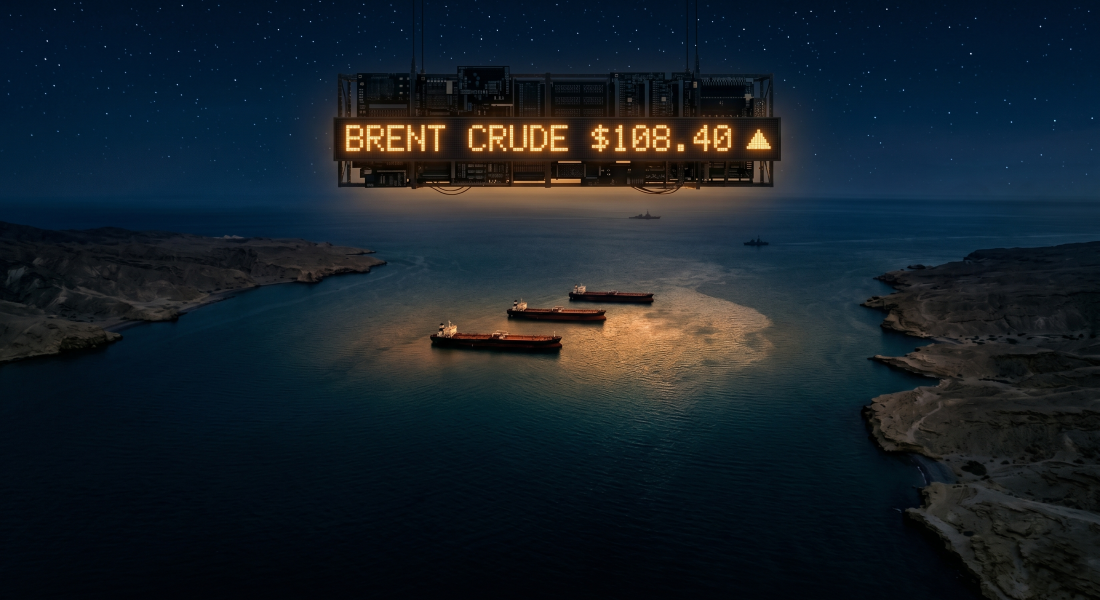
The scale of the disruption is unprecedented. Global oil supply plummeted by 10.1 million barrels per day in March 2026 alone — far exceeding the 1973 Arab Oil Embargo in severity. Brent crude, which traded near $70 per barrel before the war, soared to nearly $150 per barrel in physical markets in April. Goldman Sachs estimated that attacks on regional infrastructure and the Strait closure had removed 14.5 million barrels from daily global production. The World Bank’s April report confirmed: this was the largest oil market shock in recorded history. Even after the April ceasefire, Brent remained above $100 per barrel — 50 percent above pre-war levels — as ship traffic through the Strait ran at just 5 percent of pre-war volume, according to shipping analytics firm Kpler.
The Strait of Hormuz is 33 kilometres wide at its narrowest. Through it flows 20 percent of the world’s crude oil and 20 percent of its liquefied natural gas. Qatar’s LNG exports, which supply Europe, India and Asia, pass exclusively through this corridor. There is no credible bypass at scale: the pipelines that bypass the Strait carry only 5 million barrels per day — a fraction of the 20 million that normally flows. When the Strait closes, the world loses its fuel supply with no immediate substitute. The Strait of Hormuz crisis 2026 demonstrated, in the most costly terms possible, that this theoretical risk was always a real one.
— Oxford Institute for Energy Studies, March 2026
Iran’s strategic logic is transparent. The IRGC’s closure of the Strait was not merely retaliation — it was the activation of Tehran’s ultimate economic lever. Iran understood that it could not match American and Israeli military power conventionally. But it could impose pain on the entire world simultaneously. The establishment of the Persian Gulf Strait Authority on 5 May — Iran’s unilateral attempt to regulate and toll transit through an internationally recognised shipping lane — was a declaration that Iran intends to permanently redefine the rules of access to the Gulf. This is not a posture it will easily abandon at the negotiating table.
For India, the Strait of Hormuz crisis 2026 has been a harsh education. India imports 85 percent of its crude oil, with 91 percent of its LPG coming from Gulf sources. When QatarEnergy declared Force Majeure on LNG contracts in March, fertiliser plants and power grids immediately shifted to 70 percent capacity. The rupee plunged beyond 95 per dollar — an all-time low — triggering Reserve Bank emergency interventions. India’s strategic petroleum reserve of just 11 days of consumption was exposed as dangerously inadequate. The government improvised admirably — securing a US Treasury emergency waiver to buy stranded Russian crude, imposing export duties on diesel and aviation fuel, accelerating piped gas connections — but improvisation is not strategy. India must now treat energy security as a national security priority, not an afterthought.
China’s role in this crisis has been one of the most consequential geopolitical developments of the year. Holding 120 days of oil in storage and deep diplomatic channels to both Tehran and Washington, Beijing has positioned itself as the indispensable broker — condemning the US strikes publicly while quietly pressing Iran to accept the ceasefire, allowing Chinese vessels to transit the Strait when Western ships were blocked, and hosting Iran’s Foreign Minister in Beijing on 6 May for what analysts described as a pivotal meeting. US Treasury Secretary Bessent’s admission, on 14 May, that “China has a much bigger interest in reopening the strait than the US does” was a remarkable public acknowledgement of American dependence on its principal strategic rival to manage its own conflict.
The Strait of Hormuz crisis 2026 has also exposed the fragility of the US-led security order in the Middle East. When Trump demanded NATO help reopen the Strait, Europe said: “Not our war.” The resulting geopolitical vacuum is being filled — by China, by Pakistan, by new diplomatic formats — in ways that will persist long after this specific crisis is resolved. The world is entering a multipolar energy security order, whether it is ready for that transition or not.
As of today, the dual blockade continues. Iran holds the Strait; the US holds Iranian ports. Negotiations remain stalemated on the fundamental question of Iran’s nuclear programme. Netanyahu has declared the ceasefire “a stop on the way” to achieving Israel’s objectives. Iran’s new leadership is under existential domestic and external pressure, making predictable diplomacy nearly impossible. The next military incident — a miscalculation by a naval commander, an Israeli strike in Lebanon, a US warship engagement — could collapse the ceasefire within hours.
The Strait of Hormuz crisis 2026 is not over. It is in suspension. The world’s fuel supply, food prices, currency stability and economic growth prospects all hang on a 33-kilometre stretch of contested water — and on the diplomatic ingenuity, or the recklessness, of the men and women who must now decide what comes next. For India, for Asia, for the world: the time to watch passively has already passed.
Discover more from
Subscribe to get the latest posts sent to your email.