
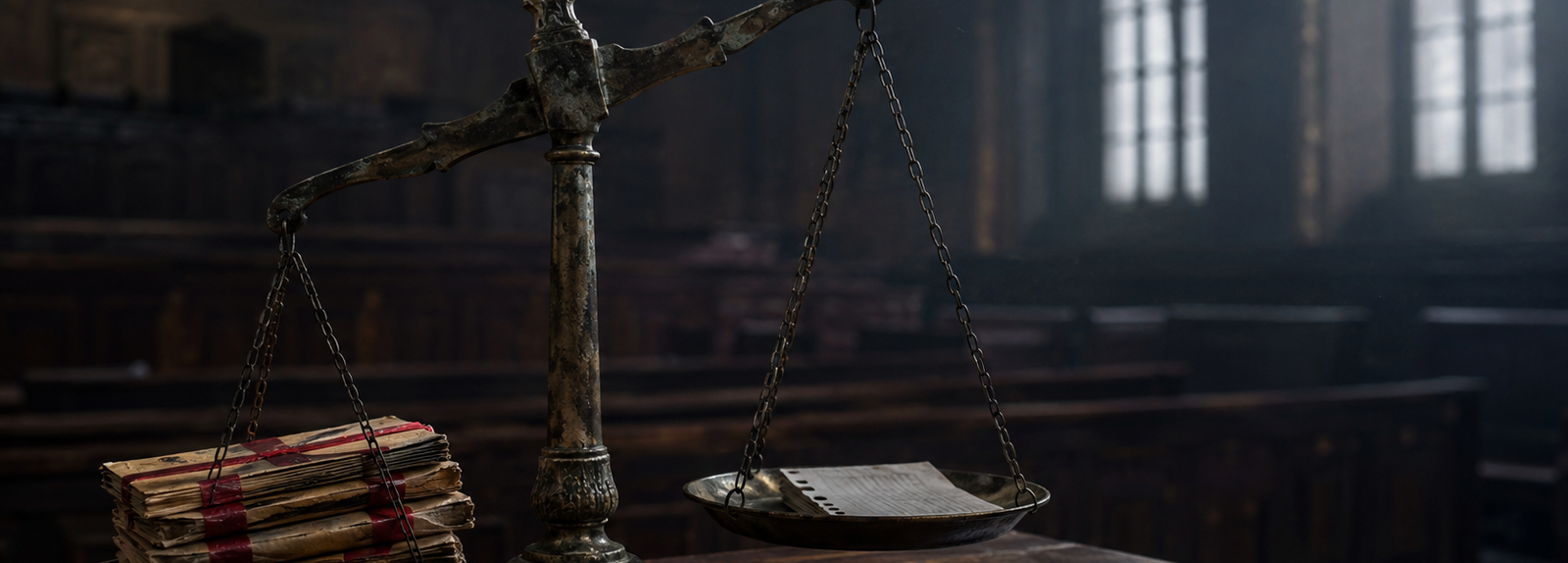
Britain’s Grooming Gangs: Victims, Silence and Institutional Failure


The True Face of Britain’s Grooming Gangs: Victims, Silence, Institutional Failure and the Fear of Speaking the Truth
For decades, thousands of vulnerable British girls were groomed, raped, trafficked, and silenced by organised criminal networks while the state looked away. The Baroness Casey audit of 2025 confirmed what survivors always knew: this was not confusion. It was failure — chosen, systematic, and shameful.
There are crimes that a society commits twice: once when the act is carried out, and again when those who should have stopped it choose silence. Britain is now confronting both. The renewed national debate around organised child sexual exploitation — commonly referred to as the “grooming gang” scandal — is not new news. The crimes are not new. The victims are not new. What is new is that the state has finally, formally, run out of places to hide.
On 16 June 2025, Baroness Louise Casey’s National Audit on Group-Based Child Sexual Exploitation and Abuse, commissioned by the British Prime Minister and Home Secretary, was presented to Parliament with what Home Secretary Yvette Cooper called “devastating clarity.” A statutory independent inquiry under the Inquiries Act 2005 has since been established, chaired by Baroness Anne Longfield CBE. Meanwhile, on 16 June 2026, Conservative MP Rupert Lowe released a separate privately-funded Rape Gang Inquiry Report — a 219-page document drawing on court records, survivor testimonies, and whistleblower accounts — claiming (grooming gangs) networks operated across at least 149 local authority areas in England. Together, these documents have forced Britain to confront a reality that was always there, always documented in police files, social worker notes, and the nightmares of thousands of girls.
The Scale: A Number That Cannot Be Confirmed — and May Be Far Worse
The figure that has circulated most widely — and most controversially — is 250,000 victims. It was first used in the House of Lords by Lord Pearson of Rannoch and was amplified internationally when Elon Musk cited it in January 2025. Rupert Lowe’s 2026 report has reiterated the figure as a conservative lower-bound estimate, derived by extrapolating known exploitation rates from three high-profile inquiry areas — Rotherham, Telford, and Oxfordshire — to the national population.
This figure is not an official count. It must be stated clearly. Baroness Casey herself concluded in her June 2025 audit that the true national scale remains unknown because ethnicity data is not recorded for two thirds of grooming gang perpetrators, and that the data is, in her words, “not good enough to support any statements about the ethnicity of group-based child sexual exploitation” at a national level. The Office for National Statistics estimates that roughly 7.5% of adults in England and Wales experienced sexual abuse before age 16 — equivalent to approximately 3.1 million people — though this covers all forms of abuse, not gang-based exploitation specifically.
Rotherham (2014 Jay Report): At least 1,400 children sexually exploited between 1997 and 2013 in a single borough.
Telford (2022 IITCSE Report): Hundreds of girls abused over decades; police and councils repeatedly warned, repeatedly failed.
Rochdale: Seven men convicted in 2025 of treating teenage girls as sex slaves between 2000 and 2006. Perpetrators included taxi drivers and market traders of Pakistani heritage. Justice took 20 years.
Rupert Lowe Report (June 2026): Claims networks operated in at least 149 of approximately 380 UK local authority areas — nearly 40% of the country. Privately funded; not an official government document.
Casey Audit (June 2025): Found “serious and repeated failures to protect children” and called for a new national police operation. The National Crime Agency subsequently launched Operation Beaconport to review previously closed cases.
Whether the true victim count is 50,000 or 500,000, the moral calculus does not change. The British state did not collect reliable national data for decades. That absence of data was not an accident. It was — as this article will argue — the result of institutional cowardice dressed up as procedural caution.
The Survivor Experience: What Was Actually Done to These Girls
The language of official reports can sanitise horror. “Child sexual exploitation” sounds bureaucratic. It is not. Let it be described plainly.
Vulnerable girls — many as young as 11, most between 11 and 16, the majority from working-class backgrounds, care homes, or difficult family situations — were identified by organised grroming gangs networks as targets. They were approached with warmth, gifts, attention, food, alcohol, drugs, and the simulation of romantic interest. This was not spontaneous. It was methodology. A script, tested and shared across networks.
Once trust was established, control began. Girls were driven to houses, flats, restaurants, hotels, and back-streets. There, they were raped — repeatedly, by multiple men, often filmed, sometimes beaten. They were passed between abusers across towns and cities. Some were trafficked to other regions. Some were blackmailed with their own filmed abuse. Some were told they were “white trash” or “kuffar/Kaafir” — a term for non-Muslim — who deserved what was happening to them. Some became pregnant. Some were forced into abortions. Many contracted sexually transmitted infections. The psychological damage was, in many cases, permanent.
“Children were “submitted to beatings and gang rapes,” that many contracted sexually transmitted infections, that some were forced to have abortions, and that others had their children taken from them. “
Home Secretary Shabana Mahmood told the House of Commons, Hansard, 9 December 2025.When these girls sought help — from police, social workers, teachers, health workers — they were frequently dismissed. They were labelled “troubled” or “promiscuous.” Their abuse was categorised in case files as “lifestyle choices.” They were told they had brought it on themselves. In several cases, they were arrested for related offences while their abusers walked free. That secondary betrayal — by institutions paid to protect them — is a wound that many survivors describe as worse than the original crime.
Institutional Failure: The State That Chose to Look Away
The Casey Audit confirmed what inquiries in Rotherham, Rochdale, Telford, Oxford, and elsewhere had already established: the failure to protect these children was not the result of ignorance. It was the result of choices — choices made by police commanders, council managers, social services leaders, Crown Prosecution Service officials, and local politicians, many of whom were warned, repeatedly, and did nothing meaningful in response.
In Rotherham, Professor Alexis Jay’s 2014 inquiry found that police dismissed victims as “undesirables” and council officials buried their own reports for fear of political embarrassment. South Yorkshire Police logged girls as having consented to their own abuse. Social workers recorded 12-year-olds as making “lifestyle choices.”
In Telford, the 2022 inquiry found that police at times treated victims as criminals rather than children requiring protection, and that multiple agencies failed to share information that could have ended the abuse years earlier.
The Casey Audit recommended a new national police investigation — the National Crime Agency’s Operation Beaconport — specifically to re-examine cases that were closed without proper investigation. The fact that such an operation was needed in 2025 says everything about the thoroughness of the original responses.
The Ethnicity Question: Pakistani-Heritage Perpetrators and the Evidence
Honest journalism requires honest language. Multiple official inquiries, conviction records, and Baroness Casey’s 2025 audit all found that in the specific cases examined — Rotherham, Rochdale, Telford, Oxford — the perpetrators of organised, group-based child sexual exploitation were disproportionately men of Pakistani heritage and Muslim background. A 2017 Quilliam Foundation analysis of 264 convictions for group-based child sexual exploitation from 2005 to 2017 found that 84% of offenders were South Asian, with Pakistani-heritage men constituting the overwhelming majority. Lowe’s 2026 report cites a figure of between 87% and 95% of abusers having Pakistani heritage in the cases it examined, with smaller groups from Somali, Iranian, Turkish, and other backgrounds also identified.
The term “Asian gangs” — still used in some reporting — is both inaccurate and disrespectful to the hundreds of millions of people across Asia who have no connection to these crimes. Where the evidence in specific cases points to Pakistani-heritage offenders, that is what should be written. Vague collective labels serve no one: they confuse the public, dilute the evidence, and insult communities that are not implicated.
Baroness Casey found evidence of “disproportionate numbers of men from Asian ethnic backgrounds” among suspects in local datasets where data was available. She concluded, however, that national data was too inconsistently collected to support firm national conclusions. She specifically recommended making mandatory the recording of ethnicity and nationality data in all child sexual exploitation cases going forward — an implicit acknowledgement that decades of non-recording had made analysis impossible and accountability harder.
None of this justifies collective blame. The Pakistani-heritage community in Britain numbers in the millions. The perpetrators number in the thousands at most. To conflate them is both morally wrong and factually illiterate. But the existence of a disproportionate pattern in specific forms of organised, group-based exploitation — documented across multiple independent inquiries over thirty years — demands explanation, not avoidance.
The “Islamophobia” Silence: When Protecting a Narrative Became More Important Than Protecting Children
The Casey Audit, the Rotherham inquiry, and the Telford report all found evidence that officials — police officers, council workers, social workers, elected councillors — were aware of the pattern of Pakistani-heritage perpetrators and deliberately chose not to act, name, or investigate it fully out of fear: fear of being accused of racism, fear of “inflaming community tensions,” fear of jeopardising good relationships with Muslim community leaders, and fear for their own careers.
This is not a political allegation from the right. It is a documented institutional pathology identified by the state’s own investigators. In Rotherham, Professor Jay found that “several” officials had explicitly cited fear of being labelled racist as a reason for not acting. In Rochdale, the same fear delayed prosecutions. In multiple towns, the pattern was identical: the girls were white and working-class; the perpetrators were Muslim and Pakistani; and the prevailing political culture in those councils made the investigation of Pakistani men by white officials feel, to those officials, like a professional and social risk they were unwilling to take.
That calculation — that the reputations of institutions and the sensitivities of communities outweighed the safety of children — is one of the most damning findings in the entire scandal. Children were raped while adults managed their own discomfort.
There is a legitimate counterargument: careful language is necessary to prevent a genuine and dangerous slide from accountability toward collective punishment. Communities should not be stigmatised for the crimes of a minority. Mosques, community centres, and ordinary British Pakistani families were not running grooming gang networks — and have in many cases been vocal in condemning these crimes. Those distinctions matter and must be maintained.
But the counterargument does not excuse what happened. There is a profound difference between exercising care not to stigmatise communities and choosing institutional silence that leaves children unprotected. Britain spent thirty years confusing the two. That confusion cost thousands of girls their childhoods.
The Cultural Question: Evidence, Not Prejudice
Criminologists, prosecutors, and sociologists who have studied these grooming gangs networks over two decades have identified several cultural factors that appear — in the specific context of organised, gang-based exploitation — to have facilitated the targeting of non-Muslim, white, working-class girls.
These include: attitudes in certain social networks that view non-Muslim women as sexually available in ways Muslim women are not; hierarchies of honour and shame that make certain communities unwilling to speak to police even when abuse is known; and the exploitation of white working-class vulnerability as a mark of dominance.
These are matters for evidence, testimony, criminological inquiry, and targeted policy — not for collective generalisation. Islam as a faith tradition does not teach the exploitation of children. The vast majority of British Muslims are as horrified by these crimes as anyone else. The cultural factors identified in these cases are specific, contextual, and cannot be extrapolated into a theology or a civilisational claim. Serious analysts must distinguish between the two, because that distinction is both intellectually honest and practically necessary.
The Language Problem: How Soft Words Buried Hard Crimes
Language shaped this scandal as much as any individual failure. Consider the terms that were used for decades in police reports, council minutes, and press coverage:
“Child prostitution” — a phrase that implies consent and agency in a child who has neither. Children cannot legally consent to sexual activity. There is no such thing as child prostitution. There is child rape and child trafficking.
“Sexual activity with children” — bureaucratic language that strips violence from the act. Gang rape of a twelve-year-old is not “sexual activity.”
“Asian gangs” — a geographic euphemism deployed to avoid naming what multiple inquiries found: that in specific cases, the perpetrators were overwhelmingly Pakistani-heritage men.
“Community tensions” — official language for the discomfort of officials who did not want to investigate crimes committed by a minority community.
Language is not neutral. Calling a rape a “relationship” protects the rapist. Calling a trafficking victim a “troubled teenager making bad choices” abandons the child. Every euphemism in the official record of this scandal was a small institutional decision to protect adult comfort over child safety. Those decisions accumulated into decades of impunity.
Political Hypocrisy: Across Every Party, Every Institution
This is not a scandal that belongs to one political party, one council type, or one era. Left-wing councils in South Yorkshire failed. Conservative-run authorities failed. Police forces under successive governments — Labour, Coalition, Conservative — failed. The Crown Prosecution Service failed. Ofsted failed. The Home Office failed. The Department for Education failed.
Politicians on the right who now speak loudest about grooming gangs governed some of the councils and police forces during which these grooming gang networks operated. Politicians on the left who correctly warn against Islamophobia sometimes used that warning to insulate institutions from scrutiny. The media — including newspapers that now run front-page investigations — spent years treating these stories as too risky, too local, or too complicated.
The central question is not who was in power. It is simpler and harder: who protected the children, and who protected the narrative? The evidence, across thirty years and multiple parties, is that very few chose the children.
Accountability and Justice: What Must Now Happen
The establishment of the statutory Independent Inquiry into Grooming Gangs under Baroness Longfield is a necessary first step. It must be a final step toward impunity, not another step in decades of review without consequence. The following are the minimum requirements for credible accountability:
Full survivor-centred inquiry: Victims and survivors must be at the centre of the inquiry’s work — not treated as witnesses to an institutional story, but as people to whom the state owes a formal reckoning.
Review of closed cases: Operation Beaconport by the National Crime Agency must have full resources, full cooperation from local forces, and its findings must be made public. No living perpetrator who escaped justice through institutional failure should benefit from the passage of time.
Accountability for officials: Where senior police officers, council leaders, social services managers, or political figures ignored documented warnings, there must be professional and, where applicable, criminal accountability. Retirement is not immunity.
Mandatory data collection: As Casey recommended, ethnicity and nationality data must now be recorded mandatorily in all child sexual exploitation cases. Without data, there is no accountability. That simple principle was resisted for thirty years. It must be resisted no longer.
Mandatory reporting duty: The Crime and Policing Bill’s provision for mandatory reporting — which the Home Secretary noted had been called for over a decade — must be enacted and rigorously enforced.
Compensation and lifelong support: Survivors carry lifelong trauma. The state that failed to protect them has an obligation that does not end with an inquiry report. A national compensation scheme, combined with long-term psychological, medical, and practical support, is a moral non-negotiable.
Transparency on offender profiles: Where ethnicity and cultural factors are relevant to organised offending patterns — as multiple inquiries have found they are in these cases — they must be discussed openly in policy, training, and safeguarding frameworks. The silence that protected institutions must not be replaced by a new silence designed to protect inquiry conclusions.
The Only Moral Position
Britain is now at a moment of reckoning that it has been approaching for thirty years. The arrival of that moment should not be celebrated — it comes thirty years too late, and it comes carrying the weight of every girl who was raped while officials debated the political optics of naming her attacker.
The truth of this scandal is not the property of any political faction. It is not a weapon for those who wish to stigmatise Islam, Pakistani communities, or immigration. It is not a problem to be managed with careful language and institutional review cycles. It is, at its core, a simple and devastating fact: thousands of children were systematically abused, and the adults and institutions paid to protect them chose, repeatedly and consciously, not to.
No fear of being called racist should stop the truth from being investigated. That principle is not Islamophobia. It is child protection.
And no anger at the perpetrators — however justified — should become hatred toward the millions of British Muslims and British Pakistanis who committed no crime, who are not complicit in these abuses, and who deserve to live in a country where they are judged as individuals under a single standard of law.
The only moral position available is this: truth, justice, child protection, and equal accountability under law — for every victim, for every perpetrator, and for every official who chose their own comfort over a child’s safety. Everything else is politics. And politics, in this case, already did enough damage.
Discover more from
Subscribe to get the latest posts sent to your email.





2 COMMENTS