

Global Whey Shortage Is Rewriting India’s Protein Market Playbook
A worldwide scramble for whey is pushing Indian protein prices sharply higher — just as the country is having its loudest-ever conversation about how much protein people actually need.
For years, whey protein occupied a specialised corner of India’s fitness market — a tub on a gym-goer’s shelf, rarely a fixture in an ordinary kitchen. That has changed. whey protein now turns up in breakfast cereals, flavoured beverages, snack bars and even ice creams marketed to people who have never set foot in a gym. But just as protein becomes a mainstream aspiration, the world is running short of the very ingredient that powered much of this boom.
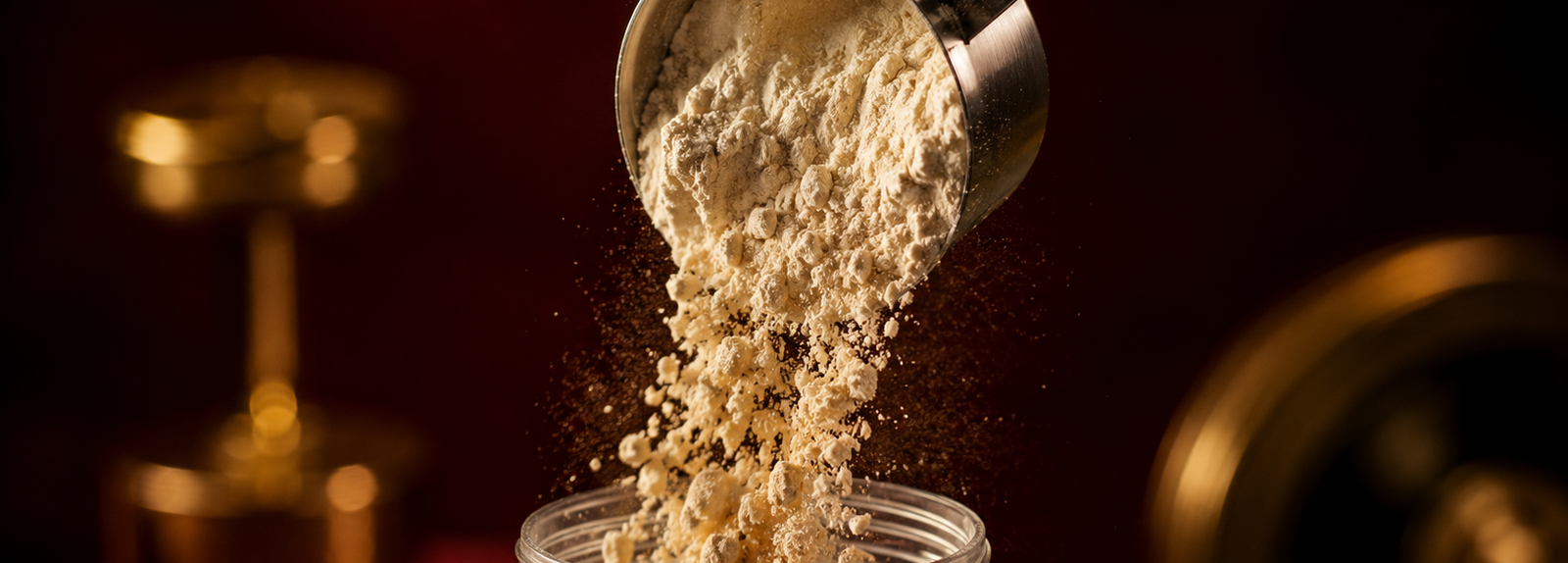
Whey is what remains after milk is turned into cheese — a liquid by-product that, once considered nearly worthless, is now processed through filtration and spray-drying into whey protein concentrate (WPC) or the more refined whey protein isolate (WPI). Global demand for high-protein foods has outrun the industry’s capacity to produce that refined powder, and the arithmetic has become brutal for Indian buyers and consumers alike.
1. Why the world is short of whey protein
The shortage is not a story about too little milk. Cheese production, which generates whey as a by-product, has stayed broadly steady. What has changed is how much of that whey gets pulled into high-protein foods rather than exported or discarded. American food companies have begun adding whey protein to everything from cereal and chips to bagels, tortillas and coffee-chain drinks, with the average US supermarket now carrying tens of thousands of products that advertise their protein content.
Layered on top of that consumer shift is a newer, medically driven source of demand. Physicians treating patients on GLP-1 weight-loss medicines such as Wegovy and Zepbound are commonly advising them to eat enough protein to preserve muscle mass and stay full for longer as their overall food intake drops sharply. With thin patents on some of these drugs due to lapse in several large markets — including India — over the coming year, industry observers expect the medically driven slice of protein demand to keep growing rather than plateau.
Supply has not kept pace. A large share of the whey protein that once left the United States for buyers such as China is now being retained domestically to feed the country’s own high-protein food and supplement industry, with exports of 80%-protein whey to China falling roughly 47% in the first four months of the year compared with the same period last year. That has pushed China and other former US customers toward Europe, which is now facing its own tightening supply as a result, with European whey protein prices more than doubling within a year and crossing roughly €26,450 a tonne by late May.
Dairy processors are responding, but slowly. Glanbia is adding capacity through a joint venture in New Mexico, Ireland’s Tirlán has committed roughly €126 million to expand premium whey protein production, and Idaho Milk Products has put around $200 million into new facilities — yet most of this new capacity is not expected to come fully online before 2027, since dairy-processing plants take years to plan, permit and build. It matters, too, which category of whey is being discussed: whey protein isolate (typically over 90% protein) is the most refined and expensive form, whey protein concentrate sits below it, and plain whey protein powder is a far less processed, lower-protein commodity — the three are not interchangeable, and price movements in one do not automatically apply to the others.
2. Why India is particularly exposed
India’s domestic milk supply is enormous, but supplement-grade whey is a different, far more specialised product — one that depends on advanced filtration and spray-drying infrastructure that the country has historically imported rather than built at scale. That dependence is now costing Indian brands and consumers directly.
Domestic whey protein concentrate prices have risen from roughly Rs 700–800 per kg before 2024 to over Rs 2,000–2,300 per kg, while whey isolate prices have nearly tripled over the same two years, with industry executives citing input-cost increases of up to 200–250% linked to global demand, freight disruption and currency pressure. Retail prices of protein supplements in India have risen by an estimated 15–25% as a result, and some domestic brands are turning to milk-protein blends or plant-based formulations to manage costs. Individual consumers are feeling this directly: one Bengaluru buyer described her regular whey protein pack rising from around Rs 2,400 per kilogram to close to Rs 4,500 within two months, an increase her supplement brand attributed to the global shortage pushing up procurement costs.
Setting up India’s own supplement-grade whey processing is neither quick nor cheap. Industry estimates put the cost of a new whey-processing plant anywhere between roughly Rs 60 crore and Rs 250 crore depending on the level of refinement required, on top of persistent gaps in India’s cold-chain infrastructure and raw-milk quality consistency. Expect, over the coming months, more Indian brands to shrink pack sizes, blend whey with milk protein or casein, or pivot marketing toward plant-based alternatives rather than simply absorbing costs.
3. India’s protein problem was never just a whey problem
It is tempting to read the whey shortage as a crisis for gym-goers alone. It isn’t. India’s underlying protein challenge predates the shortage by decades and has little to do with supplement powders.
A widely repeated figure — that 73% of Indians are protein-deficient — traces back to a 2017 market-research survey of about 1,800 respondents across major cities, commissioned as part of an industry-backed “Right to Protein” awareness push. It is a useful signal that awareness and dietary habits are weak points, but it describes a specific urban, largely higher-income sample surveyed nearly a decade ago — not a clinically verified, nationally representative measure of protein-energy malnutrition. It should be read as one data point about self-reported dietary patterns, not as settled medical fact about the whole country.
The more durable problem, documented across nutrition research, is that a large share of Indian dietary protein has traditionally come from cereals rather than pulses, dairy, eggs, meat or fish — sources with a weaker amino-acid profile and lower digestibility. Official Indian guidance recognises this directly: nutrition scientists recommend a cereal-legume-milk ratio of roughly 3:1:2.5 for good protein quality, and note that people relying mainly on cereal-based diets with lower-quality protein may need higher total intake — closer to 1 gram per kilogram of body weight per day — to compensate. Low reported intake, poor dietary diversity, low protein quality, and clinical deficiency are related but distinct problems, and conflating them tends to produce alarmist headlines rather than useful guidance.
4. Are Indians also vitamin deficient?
Protein is not India’s only nutritional gap, and it should not be treated as a stand-in for the whole picture. Deficiencies or inadequate intake of specific micronutrients — iron, vitamin B12, vitamin D and folate among them — are documented in particular population groups, especially adolescents, pregnant women and children, rather than as a uniform national condition. National survey data on children and adolescents, for instance, has found meaningfully higher rates of B12 and folate insufficiency among teenagers than among younger children, with wide regional variation. Vitamin inadequacy and protein inadequacy are separate issues that can overlap in monotonous, poorly diversified diets — but self-diagnosing either, and reaching for high-dose supplements without testing or medical advice, carries its own risks and is not something this article recommends.
5. Jyotika’s one-gram remark: a useful nudge, not a formula for everyone
Actor Jyotika recently drew attention to protein intake in Indian households, reportedly saying that protein becomes especially important after a certain age and suggesting people may need roughly one gram per kilogram of body weight — a point she raised particularly in relation to women. The remark is not a diagnosis of any individual, including Jyotika herself, and this article does not treat it as one; it is best read as a public conversation-starter rather than a medical prescription.
On the constructive side, the comment lands on something real: Indian women in particular are known to underestimate their own protein needs, and awareness of muscle and strength as long-term health assets — not just aesthetic ones — remains low. But the actual science around “one gram per kilogram” is more layered than a single number suggests.
What the guidelines actually say
- ICMR-NIN 2020 sets the Estimated Average Requirement for a healthy Indian adult at 0.66 g/kg/day and the Recommended Dietary Allowance (RDA) — the safe intake level for the vast majority of people — at 0.83 g/kg/day.
- For adults relying heavily on cereal-based, lower-quality protein diets, ICMR guidance itself notes requirements may rise closer to 1 g/kg/day.
- Independent international research on older adults commonly points toward a higher range, often 1.0–1.2 g/kg/day or more, to counter age-related muscle loss.
- Pregnant and lactating women, athletes, people recovering from illness or surgery, and those undertaking regular resistance training typically need more than the baseline RDA.
- People with kidney disease, liver disease or other metabolic conditions should not raise protein intake without a doctor’s guidance, since higher intake is not universally safe.
- Targets are sometimes calculated against ideal or healthy body weight rather than current body weight, particularly for people who are overweight or obese — a detail that changes the number considerably.
In short: “roughly one gram per kilogram” is a reasonable, defensible ballpark for many healthy adults — not far from what several expert bodies suggest for older adults or those on lower-quality diets — but it is not a universal rule, and it should not substitute for a doctor’s or dietitian’s advice for anyone with an existing health condition.
6. Why protein matters more with age
Muscle mass declines gradually from early middle age onward, a process called sarcopenia, and ageing muscle also becomes less responsive to small protein servings — meaning the same 10-gram portion that once triggered muscle repair may do less as a person gets older. Two practical adjustments matter more than chasing a single daily number: spreading protein across breakfast, lunch and dinner rather than loading it almost entirely into dinner (a common Indian dietary pattern), and pairing protein intake with regular resistance or strength exercise. Protein without adequate total calories, sleep and physical activity is not, on its own, a strategy for healthy ageing.
7. Does everyone need whey protein? No.
Whey is convenient, rich in essential amino acids and highly digestible — genuine advantages. But it is a food-derived supplement, not a compulsory part of a healthy diet. It tends to be genuinely useful for people who cannot realistically meet their needs through meals alone: athletes with high requirements, older adults with poor appetite (ideally under professional guidance), and people with limited time for cooking or eating full meals around exercise. It is often unnecessary for people who already eat adequate protein through dal, milk, curd, eggs, paneer, soy or meat.
Buyers should also watch for practical red flags: lactose intolerance or milk-allergy reactions, added sugars and artificial sweeteners masking a thin protein base, “amino-spiking” (bulking up protein numbers with cheap free amino acids rather than genuine protein), counterfeit or mislabelled products, and missing FSSAI licensing. The most useful single number to check on a label is price per 20–25 grams of actual protein delivered — not price per tub.
8. Indian alternatives poised to gain ground
The shortage is accelerating interest in home-grown alternatives: milk protein concentrate, casein, high-protein curd and paneer-based products on the dairy side; and soy, pea, rice, chickpea and lentil protein on the plant side. None of these is a perfect one-to-one substitute for whey protein — plant proteins generally have lower leucine content, a key trigger for muscle repair, and can vary in taste, texture and digestibility — but combining complementary sources, such as a cereal with a pulse, meaningfully improves the overall amino-acid quality of a meal, echoing the cereal-legume-milk logic already built into India’s own nutrition guidelines.
Whey vs. the alternatives: a quick comparison
| Source | Protein quality | Typical use case | Cost trend (India, 2026) |
|---|---|---|---|
| Whey isolate | Complete, very high leucine, fast-digesting | Post-workout, clinical, elderly (under guidance) | Sharply up |
| Whey concentrate | Complete, high leucine, slightly slower | General supplementation | Sharply up |
| Milk protein / casein | Complete, slow-digesting | Overnight recovery, blends | Rising, but domestically produced |
| Soy protein | Complete, moderate leucine | Vegan/vegetarian supplementation | Stable to slightly up |
| Pea/rice/chickpea protein | Incomplete alone; strong when blended | Plant-based blends | Stable |
| Pulses (dal, chana, rajma) | Good with cereals; needs pairing | Everyday meals | Stable, budget-friendly |
| Paneer | Complete, moderate | Everyday meals, vegetarian | Stable |
| Eggs | Complete, gold-standard reference protein | Everyday meals | Stable |
| Chicken | Complete, high leucine | Everyday meals | Stable to seasonal |
9. Can ordinary Indian meals cover the gap?
For most healthy adults without a medical condition, yes — through planning rather than powders. Rough per-serving protein figures (values vary with brand, recipe and portion): a bowl of dal (100g cooked) provides about 7–9g; a cup of chana or rajma about 8–9g; 100g of soy chunks (dry) around 50g; 100g paneer about 18g; a glass of milk about 7–8g; a cup of curd about 6g; a boiled egg about 6g; 100g roasted chana about 20g; two tablespoons of sattu about 6–7g; 100g chicken breast about 27g; 100g fish around 20–22g.
A vegetarian day built around two servings of dal or pulses, a glass of milk, a bowl of curd, a portion of paneer and some roasted chana or nuts across meals can realistically approach 60–70g of protein for an average adult without any powder. A non-vegetarian day adding eggs, chicken or fish to a similar base can comfortably exceed that. These are illustrative examples, not personalised diet plans, and should sit within an overall pattern that also includes vegetables, whole grains, fruit, healthy fats, fibre and adequate water — not protein pursued in isolation.
10. Winners, losers and a market reshaped
The shortage is likely to favour Indian dairy processors with domestic milk-protein and paneer capacity, soy and blended plant-protein brands, and companies willing to be transparent about protein-quality claims and pricing. It is likely to squeeze smaller nutrition brands and contract manufacturers dependent on imported whey, and to punish consumers drawn to unusually cheap powders that may be diluted or mislabelled. There is a genuine risk on the other side too: as “high protein” becomes a premium marketing label, it can be slapped onto ultra-processed snacks that remain high in sugar, saturated fat or sodium — a protein claim on the front of a pack is not, by itself, a health claim about the whole product.
11. A practical protein guide for readers
- Estimate your own need based on body weight, age, activity level and any medical condition — not a single viral number.
- Count protein across the whole day’s diet, not only from supplements.
- Spread intake across meals rather than concentrating it at dinner.
- Prioritise regular foods — dal, dairy, eggs, soy, meat, fish — where practical and affordable.
- Treat whey or any powder as a convenience option for a demonstrated gap, not a purchase driven by celebrity endorsement.
- Pair protein intake with regular strength or resistance activity.
- Consult a registered dietitian or doctor for pregnancy, older age, kidney or liver disease, diabetes, obesity or recovery from illness.
Fact-check box: Protein — what is true, and what is marketing?
True: Global whey prices have risen sharply and Indian supplement prices have followed. Protein needs genuinely rise with age and with resistance training. Cereal-heavy Indian diets often carry lower-quality protein than diets with more pulses, dairy, egg or meat.
Marketing, not medicine: That everyone needs a fixed “1 gram per kilogram” target regardless of age, activity or health status. That a protein claim on a packaged snack makes the whole product healthy. That whey is the “only complete” protein source. That the 2017 “73% deficient” statistic is an up-to-date, clinically verified national measurement rather than a decade-old market survey of a specific urban sample.
Sidebar: How to calculate your daily protein — without treating one formula as universal
Start with the ICMR-NIN baseline of 0.83g per kilogram of healthy body weight per day. Adjust upward toward 1.0–1.2g/kg if you are over 60, exercise regularly, are recovering from illness, or eat a largely cereal-based diet. Adjust further only under medical or dietitian guidance if you are pregnant, breastfeeding, managing a chronic condition, or significantly overweight, where ideal rather than current body weight may be the better reference point. There is no single number that applies to everyone in the same way — the formula is a starting estimate, to be refined with professional advice, not a final answer.
Frequently Asked Questions
1. Why has whey protein become so expensive in 2026?
Global demand from high-protein packaged foods and GLP-1 medicine users has outpaced dairy processors’ capacity to produce refined whey concentrate and isolate, while new processing plants take years to build.
2. Is the whey shortage caused by a shortage of milk?
No. Cheese production, which generates whey as a by-product, has remained broadly stable; the shortage is about processing capacity and where existing whey is being allocated.
3. Do all Indians need one gram of protein per kilogram of body weight?
No. The official ICMR-NIN baseline for healthy adults is 0.83g/kg/day; roughly 1g/kg may suit people on lower-quality, cereal-heavy diets, older adults or active individuals, but it is not a universal rule.
4. Is 73% of India really protein deficient?
That figure comes from a 2017 industry-backed survey of about 1,800 urban respondents, not a nationally representative clinical study — useful as a signal, not as a precise current statistic.
5. Can vegetarians meet their protein needs without whey?
Yes, through a planned combination of pulses, dairy, soy, paneer and grains, particularly when cereals and legumes are eaten together to improve amino-acid quality.
6. Is it safe for people with kidney disease to increase protein intake?
Not without medical supervision. Higher protein intake is not universally safe and should be individually assessed for anyone with kidney, liver or metabolic conditions.
7. Will the whey shortage push more Indian brands toward plant proteins?
Likely yes, alongside blends of whey with milk protein or casein, as manufacturers try to manage costs while maintaining protein content.
8. Does a “high protein” label mean a packaged food is healthy?
Not necessarily. A protein claim describes one nutrient; the product can still be high in sugar, saturated fat or sodium, so the full nutrition label still matters.
Sources consulted: ICMR-NIN Nutrient Requirements for Indians (RDA/EAR 2020) ; Business Standard/IndiFoodBev reporting on Indian whey pricing (July 2026); The CapTable market report on India’s protein sector (July 2026) ; AP News/Ynet reporting on the global whey shortage (2026); IndexBox/Supply Chain Dive whey market data (May 2026); IMRB “Understanding Protein Myths & Gaps Among Indians” survey (2017, via Business Standard); Indian Express report on Jyotika’s protein comments. All figures current as of publication date and subject to revision as market conditions change.
Discover more from
Subscribe to get the latest posts sent to your email.