Prabowo’s Powerful ‘Indian DNA’ Remark: The Hidden Truth Behind Asia’s Forgotten Roots


Prabowo’s ‘Indian DNA’ Remark: What Genetics, History and Civilisation Tell Us About Asia’s Forgotten Bonds
DNA may not define identity, but Indonesia’s President has reopened a deeper conversation on ancestry, culture and the Indian civilisational imprint across Southeast Asia.
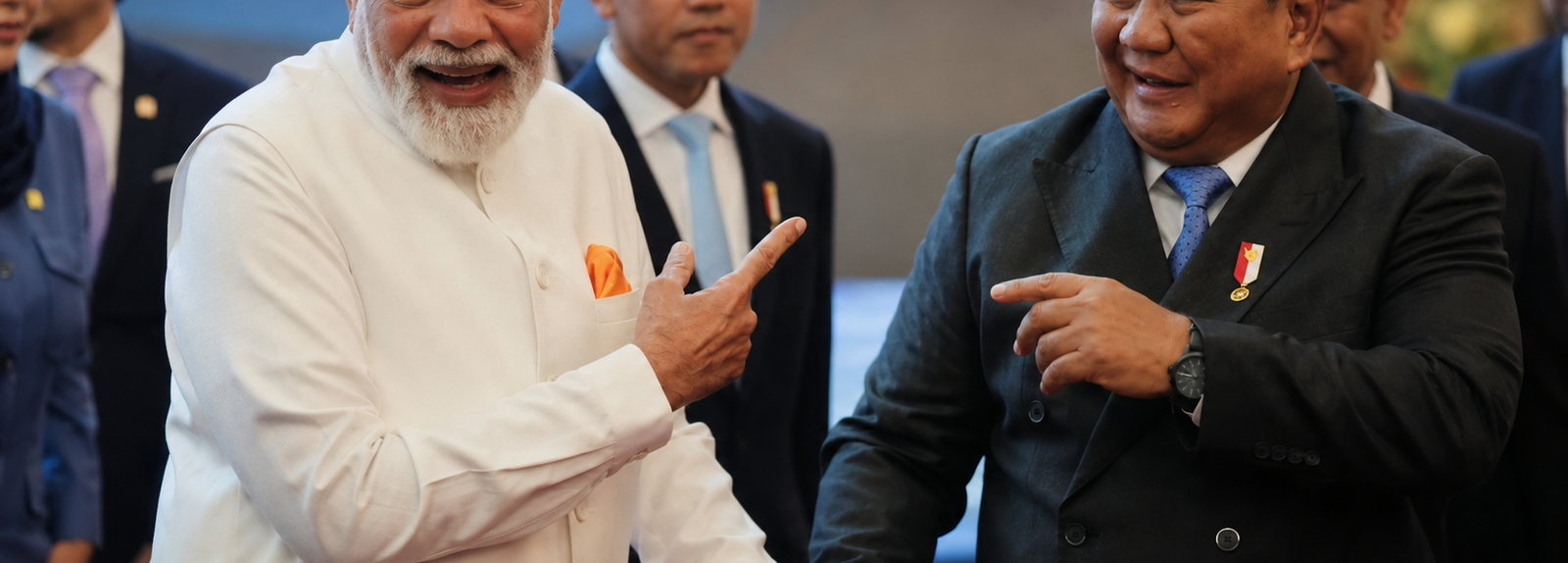
In Jakarta this week, at an event meant to be a routine stop on Prime Minister Narendra Modi’s state visit , Indonesian President Prabowo Subianto said something that was not routine at all. Speaking to the Indian diaspora, with Modi seated beside him, Prabowo revealed that a genome sequencing test he had taken just before his own visit to India had turned up something unexpected: Indian ancestry. He said it lightly, almost as a joke, adding that it explained why Indian music made his body move, and why his generals and ministers — most of whom, he speculated, may carry the same inheritance — could not resist singing along at state banquets. The room erupted. Modi, visibly moved, replied that the remark had touched the hearts of Indians, describing the shared Indian DNA as something built from trust, shared heritage and shared memory.
It was a warm moment, tailor-made for headlines and social media clips. But it deserves to be read as more than diplomatic charm. Prabowo’s remark, however casually delivered, opened a door into questions that Indian and Southeast Asian societies rarely examine together: What does it actually mean to have “Indian DNA”? What can a genetic test tell us — and what can it not? And why does a Muslim-majority nation’s head of state feel free to claim Indian ancestry with pride, while inside India itself, acknowledging the subcontinent’s own deep civilisational memory is sometimes treated as a fraught, even divisive, act?
What an Indian DNA Test Can and Cannot Tell You
Consumer and research-grade genomic ancestry tests work by comparing a person’s genetic markers against reference panels built from populations with well-documented geographic and historical roots. When a test reports “South Asian” or “Indian subcontinent” ancestry, it is describing statistical similarity to those reference populations — patterns built up over thousands of years of migration, settlement and intermixing across the subcontinent and its neighbouring regions. This is genuine, measurable science. It is not guesswork.
But it is also narrower than it sounds. A genetic signature that lights up as “Indian” does not specify a religion, a region, a language, a caste, or a century. It cannot tell a person whether their ancestors were traders sailing the Bay of Bengal, soldiers, priests, artisans, or itinerant scholars. It cannot tell them what gods their ancestors worshipped, what language they spoke at home, or what stories they told their children. Ancestry composition reports are windows into population history — useful, real, and often moving — but they are not identity cards. The distinction matters enormously: ancestry is biological, inherited silently across generations without anyone’s consent or choice. Identity is something else entirely — it is built, chosen, practised and lived, through language, faith, custom, memory and belonging.
This is precisely why Prabowo’s remark should not be mistaken for a scientific verdict on Indonesian nationhood, nor should it be weaponised as proof of anything beyond what it is: one man’s genome carrying traces of a very old and very real connection between two civilisational spaces.
A Connection Older Than Any Test Could Prove
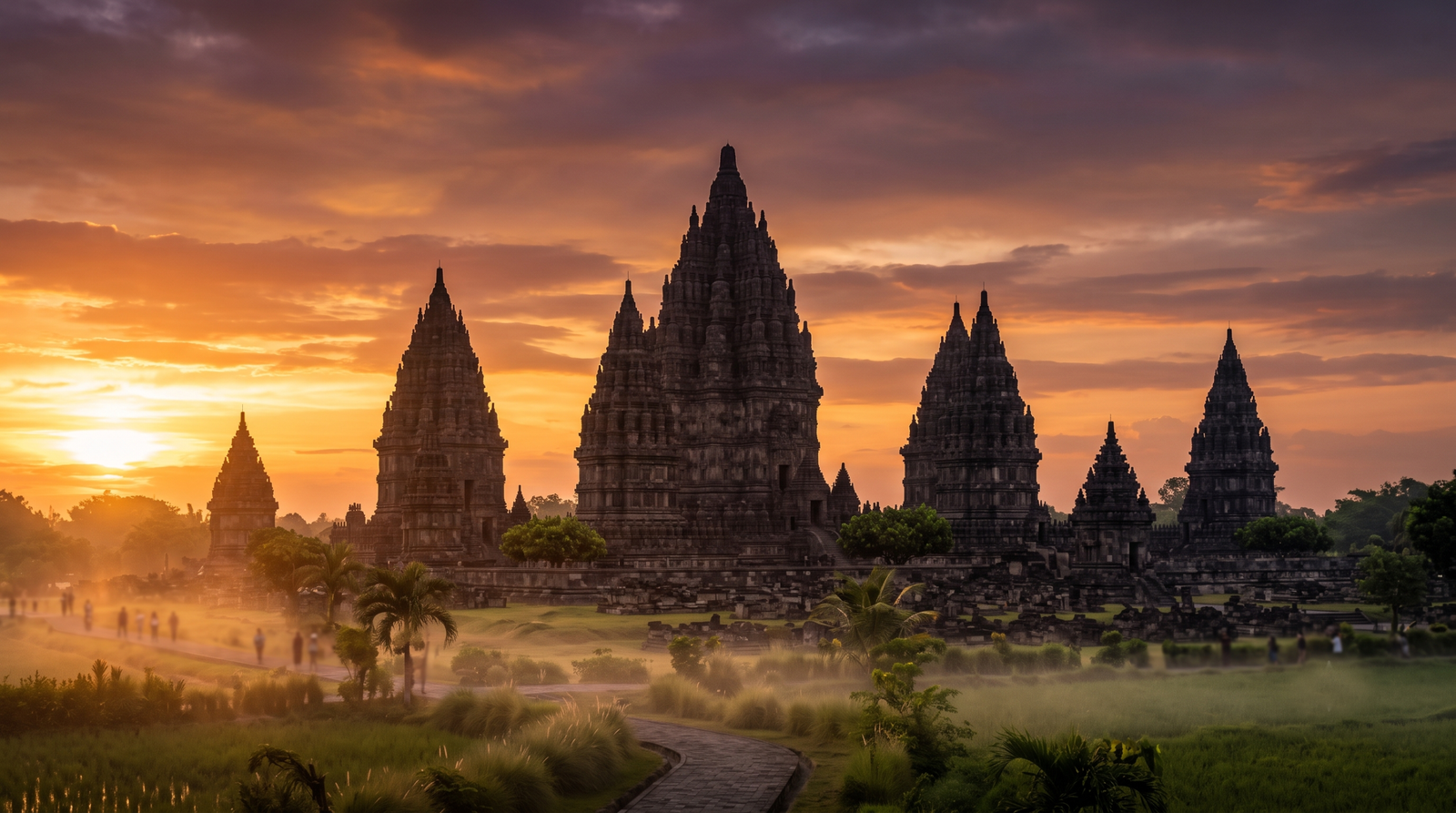
Long before genome sequencing existed, the evidence of India’s imprint on Indonesia was written into stone, language and story. The Ramayana and Mahabharata are not foreign texts in Indonesia — they are living traditions, performed nightly in Bali’s temple courtyards, carved into the relief panels of Prambanan, retold through wayang kulit shadow puppetry across Java, and woven into place names, honorifics and court literature for over a thousand years. Old Javanese literature drew directly from Sanskrit; Bahasa Indonesia itself retains hundreds of Sanskrit-derived words for everything from state (negara) to language (bahasa) to knowledge (ilmu, via Arabic-Sanskrit layering) and much more. Bali remains one of the world’s most vivid living Hindu civilisations outside the subcontinent, its temple architecture, ritual calendar and caste-inflected social order tracing directly back to Indic templates absorbed and transformed over centuries.
Borobudur, the world’s largest Buddhist monument, and Prambanan, its towering Shaivite counterpart, were not built by outsiders imposing a foreign faith — they were built by Javanese kingdoms that had made Indian religious and architectural grammar entirely their own, blending it with local cosmology to produce something distinctly Indonesian. Long before either monument rose, the maritime trade routes linking the Coromandel and Malabar coasts to Sumatra, Java and beyond had already carried merchants, monks, scripts and ideas across the Bay of Bengal for centuries — a two-way traffic of goods, gods and grammar that historians have long described as part of a wider zone of Indic cultural influence across Southeast Asia.
The Indian Ocean was not, for most of history, a border. It was a bridge — carrying scripts, deities, epics and trade winds in equal measure.
None of this required anyone in Java, Bali or Sumatra to become “Indian” in a political or ethnic sense. It required only what history actually shows: sustained contact, mutual exchange, and the absorption of ideas into something locally rooted and permanently transformed. That is how civilisational influence has always worked — not through conquest of identity, but through circulation of memory.
How Colonial Categories Fragmented Civilisational Memory
If this influence is so well documented, why does it so often feel forgotten — treated as a curiosity rather than a living inheritance? Part of the answer lies in the last two centuries of colonial scholarship, which had strong administrative incentives to draw hard lines between societies that history had never separated so neatly. Colonial administrations across Asia tended to catalogue populations into discrete racial, religious and linguistic boxes — categories that were useful for governance and control, but that often severed communities from their own layered, overlapping civilisational pasts. Faiths that had absorbed and reinterpreted older regional traditions were recast as wholly separate from them. Cultural continuities that ran across religious lines were reframed as belonging exclusively to one community or another.
The effect, in many parts of Asia, was a kind of civilisational amnesia — not because the history disappeared, but because the categories through which people were taught to see themselves stopped making room for it. Reclaiming that memory today is not an act of majoritarian assertion. It is closer to historical correction: restoring context that administrative convenience once flattened.
The Paradox Worth Sitting With
Here is where Prabowo’s remark becomes genuinely interesting rather than merely charming. Indonesia is the largest Muslim-majority nation on earth. Its president can stand before an audience, name a genetic and civilisational connection to India, and treat it as a source of warmth and pride — without it being read as any threat to his Islamic faith or to Indonesian nationalism. The Hindu-Buddhist substrate beneath Indonesian Islam is simply understood as part of the national story, not a contradiction of it.
Contrast that with a tendency, still visible in parts of India’s own discourse, where acknowledging the subcontinent’s deep civilisational roots — its languages, philosophical traditions, artistic and architectural inheritance — gets filtered through anxiety, as though it belongs only to one religious community rather than to the entire, plural society that produced it. Some sections of Indian public life have, at times, looked outward for cultural templates — Arab, European, or otherwise — as if turning toward India’s own layered past were somehow parochial or exclusionary, rather than simply historical.
This is the paradox worth naming plainly: a Muslim head of state, four thousand kilometres away, can claim Indian ancestry as a point of pride, while inside India the conversation about civilisational memory is sometimes treated as combustible. That asymmetry says less about DNA and more about how differently nations have chosen to relate to their own layered pasts.
Ancestry Does Not Imprison — It Reminds
None of this is an argument for genetic essentialism, and it should not be mistaken for one. Nobody’s identity is determined by a percentage figure on an ancestry report, and no nation’s culture can be reduced to the genome of its president. Prabowo remains, in every meaningful sense, Indonesian — shaped by Indonesian language, faith, family and history, exactly as he understands himself to be. His Indian DNA result does not change that. What it does is gesture toward something larger and older than any individual biography: a shared civilisational ocean that once connected the Indian subcontinent to island Southeast Asia through centuries of trade, pilgrimage, scholarship and settlement.
That is the distinction this editorial has tried to hold throughout — ancestry is biological, but identity is historical, cultural, linguistic and personal. The two are related, but never interchangeable. What ancestry does, at its best, is remind civilisations of connections that time, distance, or colonial categorisation had allowed them to forget. It does not obligate anyone to anything. It simply restores a fuller picture of where ideas, stories and traditions actually travelled from.
President Prabowo’s remark should not be read merely as a genetic claim, and it should certainly not be reduced to a political talking point on either side of the Bay of Bengal. It is, more usefully, an invitation — to remember that the Indian Ocean was once not a border but a bridge, carrying epics and deities, scripts and spices, monks and merchants, in both directions, for well over a thousand years. Asia’s future may not depend on genome sequencing at all. It may depend on something far simpler: the willingness of its nations to recover the civilisational memories that colonial history worked so hard to fragment, and to hold them — plainly, confidently, and without fear — as shared inheritance rather than contested property.
Discover more from
Subscribe to get the latest posts sent to your email.