Why 90-Second Mini Series Are the Future of Entertainment in the Age of Short Attention Spans


Between Meetings and Metro Stops: How 90-Second Mini Series Are Redefining Entertainment
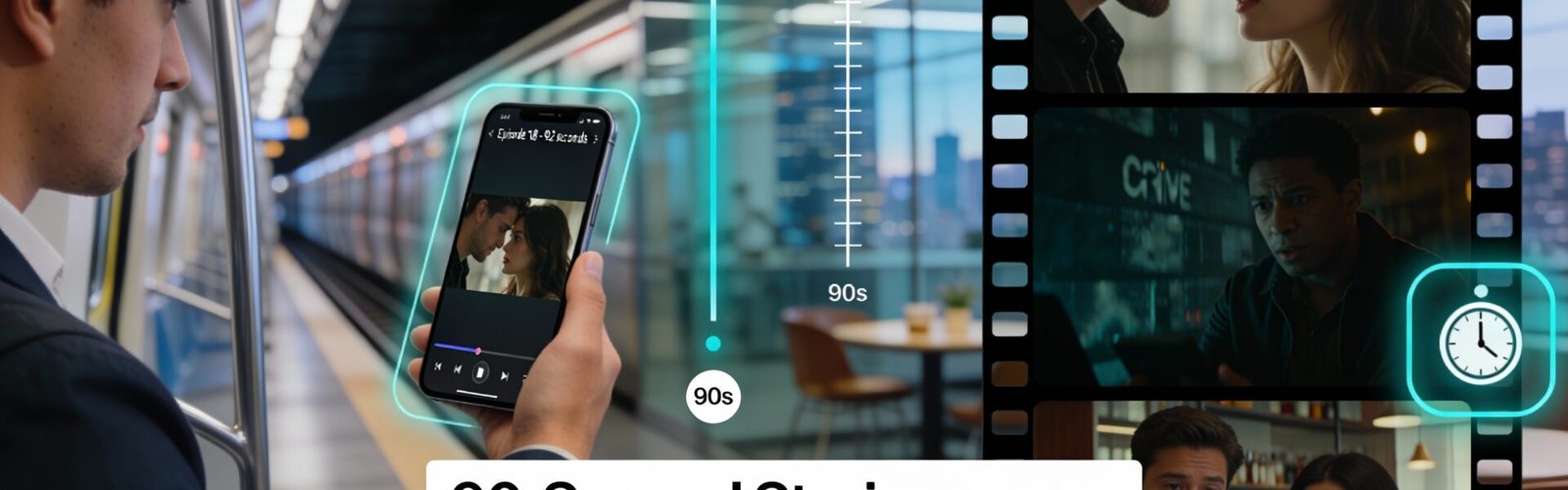
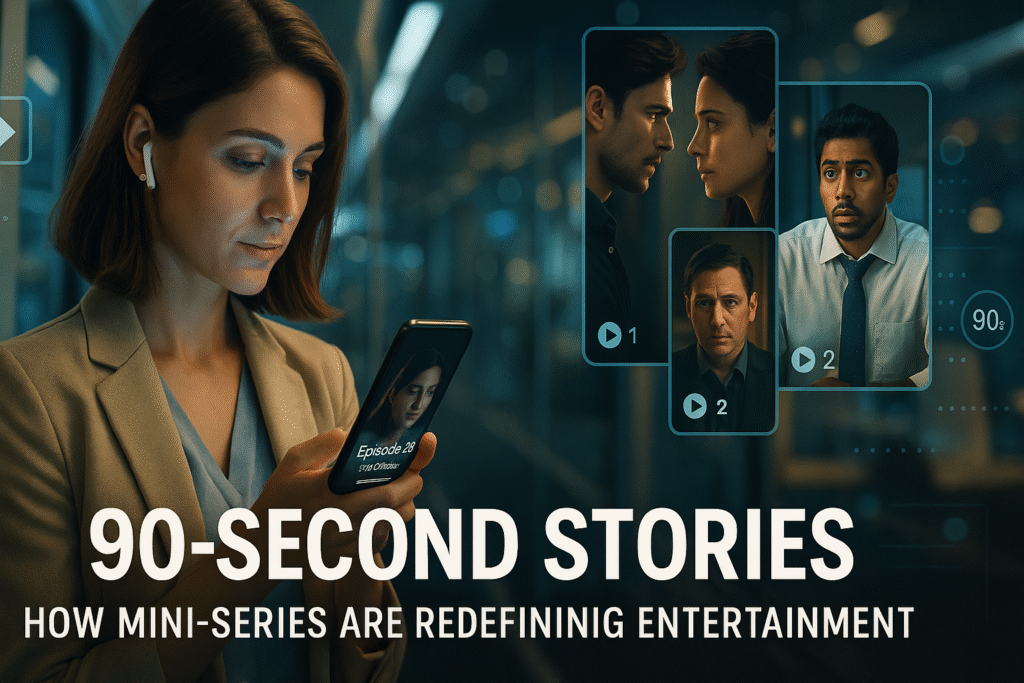
At 8:47 am, somewhere between a crowded metro platform and the office elevator, a young professional taps her phone. It’s not a YouTube vlog or a random Reel. It’s Episode 17 of a story she’s been following all week — a 92-second burst of romance, tension and cliffhanger, ending just as the lift doors open.
She’ll watch Episode 18 at lunch.
Welcome to the era of ultra-short mini series — also called micro dramas or snackable storytelling — where episodes run for just 90, 100 or 120 seconds, but seasons can stretch into 30, 50 or even 100 tightly linked episodes. This is not casual scrolling content. It’s structured, episodic storytelling — compressed for a world that no longer has the patience (or time) for half-hour commitments during the day.
From China’s Micro-Drama Boom to a Global Format Shift
The ultra-short mini series phenomenon didn’t emerge overnight. Its modern form took off in China, where dedicated apps and platforms began producing and distributing 1–2 minute drama episodes designed exclusively for mobile viewing.
These platforms cracked a powerful formula:
- Episodes under two minutes
- Long, soap-like seasons are released daily
- Strong hooks, melodrama, suspense and emotional payoffs
- Vertical video, subtitles, and cliffhangers every 60–90 seconds
The results were staggering. Some Chinese micro-drama apps clocked hundreds of millions of views, with users bingeing 10–15 episodes in a single sitting — yet never feeling like they had “wasted” time.
Producers quickly realised the upside. As one Asian content strategist put it, “You can test a story in weeks instead of years. If it fails, you move on. If it clicks, you scale.”
That logic is now travelling fast — across Southeast Asia, parts of the US creator economy, and increasingly, India.
India’s Quiet But Rapid Adoption of Short-Shot Mini Series
India may be the world’s largest market for long-form storytelling — daily soaps, three-hour films, multi-season web series — but it is also one of the most mobile-first audiences on the planet. That combination is proving fertile ground for ultra-short narratives.
Across Instagram Reels, YouTube Shorts and similar short-video ecosystems, creators and small production houses are experimenting with episodic stories released in parts.
Popular Indian micro-series genres include:
- Office romances and workplace comedy
- Crime bites — mini series thrillers with one twist per episode
- Slice-of-life stories about friendships, marriage, and middle-class struggles
- Regional-language narratives, especially in Hindi, Tamil, Telugu, Bengali and Marathi
For Indian viewers already accustomed to daily soaps and web series, these “short-shot series” feel intuitive — almost like a digital cousin of the episodic TV habit, but faster, lighter and easier to consume.
As one Mumbai-based viewer summed it up: “It’s like a stress-buster. I don’t need to plan. I just watch one episode and move on — or watch five if I have time.”
Why Ultra-Short Storytelling Works Right Now
The success of the 90-second mini series isn’t accidental. It mirrors how modern life actually functions.
1. Fragmented Attention, Packed Schedules
Urban audiences jump between meetings, classes, commutes and chores. Long episodes demand dedicated time blocks. Micro-dramas slip into the cracks of the day.
2. Instant Emotional Payoffs
Each episode is engineered to deliver a joke, a reveal, a twist or a cliffhanger — fast. The dopamine hit comes quickly, making viewers eager for the next part.
3. True “Anytime, Anywhere” Viewing
Waiting for food. Standing in a queue. Sitting in a cab. Ultra-short episodes don’t require headphones, silence or commitment.
4. Mobile-First, Vertical by Design
Shot vertically, edited tightly, subtitled clearly — these series feel native to phones, not adapted from television or cinema.
In short, they are built for how people actually watch content in 2025, not how platforms wish they would.
The Economics: Why Creators and Platforms Love It
From a production standpoint, ultra-short mini series are brutally efficient.
- Lower budgets: Smaller crews, limited locations, short shooting schedules
- Faster turnaround: A season can be produced in days or weeks, not months
- Algorithm-friendly: High retention and repeat views boost visibility
For platforms, short episodic content keeps users engaged longer — hopping from Episode 1 to Episode 12 in a single scroll session.
For creators, monetisation comes through:
- Ad revenue sharing on high-engagement content
- Brand deals embedded into storylines
- Sponsored mini-series where the brand becomes part of the narrative
Some creators quietly admit that a successful short series can earn more, faster, than a mid-length YouTube video or a struggling web show.
Brands, too, are adapting. Instead of intrusive ads, they’re experimenting with native storytelling — sponsoring office romances, college dramas or slice-of-life stories that subtly feature products or services.
How Storytelling Itself Is Changing
The rise of 90-second episodes is reshaping the craft of writing and directing.
Scripts are leaner. Dialogues are punchier. Scenes begin late and end early. There is no room for filler.
Creators rely heavily on:
- Hooks in the first 3–5 seconds
- Cliffhangers every episode
- Visual storytelling over exposition
For emerging actors, writers and directors, this format offers a rare opening. You don’t need a big OTT deal or a TV slot. A phone, a tight script and consistency can build an audience — and a career.
Still, there are concerns. Critics warn of:
- Creative shallowness driven by algorithms
- Over-dependence on trends and formulas
- A risk that stories become disposable rather than memorable
As one industry analyst noted, “The danger is not short content. The danger is forgetting depth.”
A Passing Fad or a Permanent Layer of Entertainment?
So, are ultra-short mini series just another trend — or something more enduring?
The smarter bet is on coexistence.
Long-form storytelling isn’t going away. Viewers will still binge on prestige web series and films on weekends. But day-to-day life increasingly belongs to micro-stories — quick, emotional, episodic narratives that live in our pockets.
In that hybrid future, India is well-placed to become a major hub — blending its storytelling instincts, regional diversity and massive mobile audience into a new global format.
Between metro stops and coffee breaks, the next big story may not be 10 episodes long.
It may be 100 — each just 90 seconds at a time.
ultra short mini series, 90 second mini series, micro drama trend, short video storytelling, snackable content series, Instagram Reels series, YouTube Shorts mini series, mobile first entertainment, short form web series India, digital storytelling trends, vertical video series, creator economy India
Discover more from
Subscribe to get the latest posts sent to your email.