
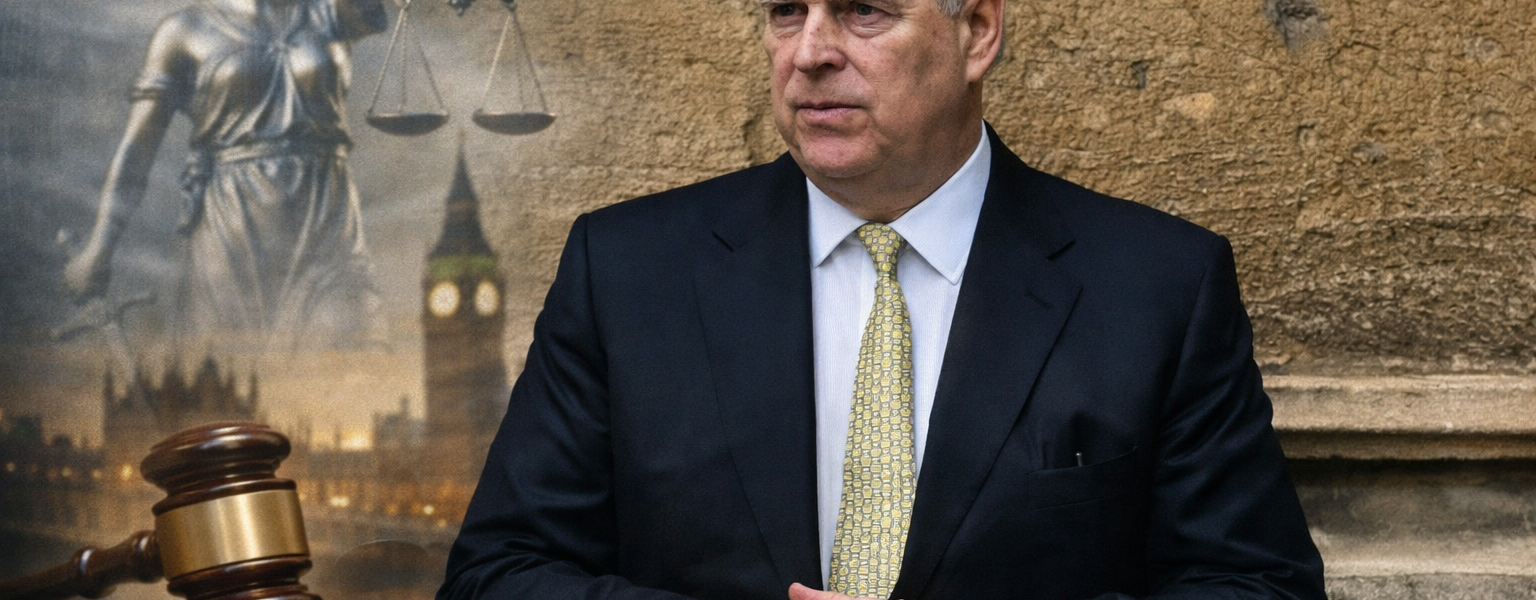
If Charges Are Filed Against Prince Andrew: Legal, Constitutional and Global Consequences Explained


Framing the Scenario
In the wake of the Prince Andrew arrest over Epstein files, police have confirmed detention on suspicion of misconduct in public office and subsequent release under investigation. No charges have been filed at this stage.
But what if prosecutors do decide to charge Prince Andrew? What would that mean legally, constitutionally, and politically?
This analysis explores the potential consequences—based only on the publicly reported elements so far.
1️⃣ The Legal Pathway: From Investigation to Indictment
If the Crown Prosecution Service (CPS) were to bring charges, the case would likely proceed in one of London’s senior criminal courts—potentially the Old Bailey.
The offence under discussion—misconduct in public office—is serious. Prosecutors would need to demonstrate:
- That Prince Andrew was acting in a public office capacity
- That he wilfully abused that position
- That the conduct was serious enough to warrant criminal sanction
The evidentiary burden would be high. Digital records, document trails, communications metadata, and witness testimony would be central.
If charged, he would appear in court as a private citizen, having stepped back from official royal duties.
2️⃣ Constitutional Implications: A Modern Precedent
A prosecution of a senior royal would be constitutionally unprecedented in modern Britain.
Key questions would arise:
- Does royal lineage affect public accountability?
- How clearly defined are the boundaries of quasi-official roles such as trade envoys?
- Would Parliament seek to codify stricter oversight mechanisms?
The monarchy’s survival historically depends on public legitimacy. A transparent legal process could either reinforce institutional credibility or deepen republican arguments.
King Charles III has already signalled institutional distance by stating that “the law must take its course.” If charges were filed, that separation would likely become even more formalised.
3️⃣ International Fallout: Diplomatic and Soft Power Effects
Because the allegations are linked to disclosures involving Jeffrey Epstein, the case already carries international visibility.
A formal prosecution could:
- Intensify scrutiny of Britain’s elite networks
- Affect diplomatic optics during international engagements
- Influence perceptions of UK governance standards
Britain positions itself as a rule-of-law democracy. A transparent prosecution process could strengthen that claim—but any perception of preferential treatment would damage it.
- Emphasise legal equality
- Distance institution from individual
- Avoid interference
- Preserve symbolic continuity
4️⃣ Media and Public Reaction
The British press environment would likely enter a sustained coverage cycle:
- Court filings
- Disclosure battles
- Witness credibility assessments
- Institutional commentary
Public opinion could polarise between:
- “Due process must prevail”
- “Institutional failure at the highest level”
Polling shifts might influence parliamentary debate about royal finances and privileges.
5️⃣ Possible Outcomes If Charged
If charges were filed against Prince Andrew, three broad outcomes exist:
A) Conviction
Would mark a historic legal moment. Sentencing for misconduct in public office can be severe, though courts consider proportionality.
B) Acquittal
Could reinforce arguments that the investigation was politically or media-driven.
C) Case Dismissed / Insufficient Evidence
Would raise questions about the threshold used to justify arrest and prosecution.
Each outcome carries reputational consequences beyond the individual.
6️⃣ The Monarchy’s Strategic Position
The Crown’s long-term strategy would likely focus on:
- Clear institutional separation
- Reinforcing transparency
- Avoiding commentary on judicial proceedings
The Palace historically relies on procedural silence during legal matters. That approach would almost certainly continue.
Final Assessment
If charges are filed in the Prince Andrew arrest over the Epstein files investigation, Britain would face:
- A landmark constitutional test
- A high-stakes legal proceeding
- Intensified international scrutiny
- Renewed debate about royal accountability
However, until a charging decision is made, the case remains an active investigation.
Speculation must remain grounded in confirmed facts—and the presumption of innocence applies unless and until proven otherwise.
Prince Andrew, Legal, Constitutional and Global Consequences Prince Andrew
Discover more from
Subscribe to get the latest posts sent to your email.