
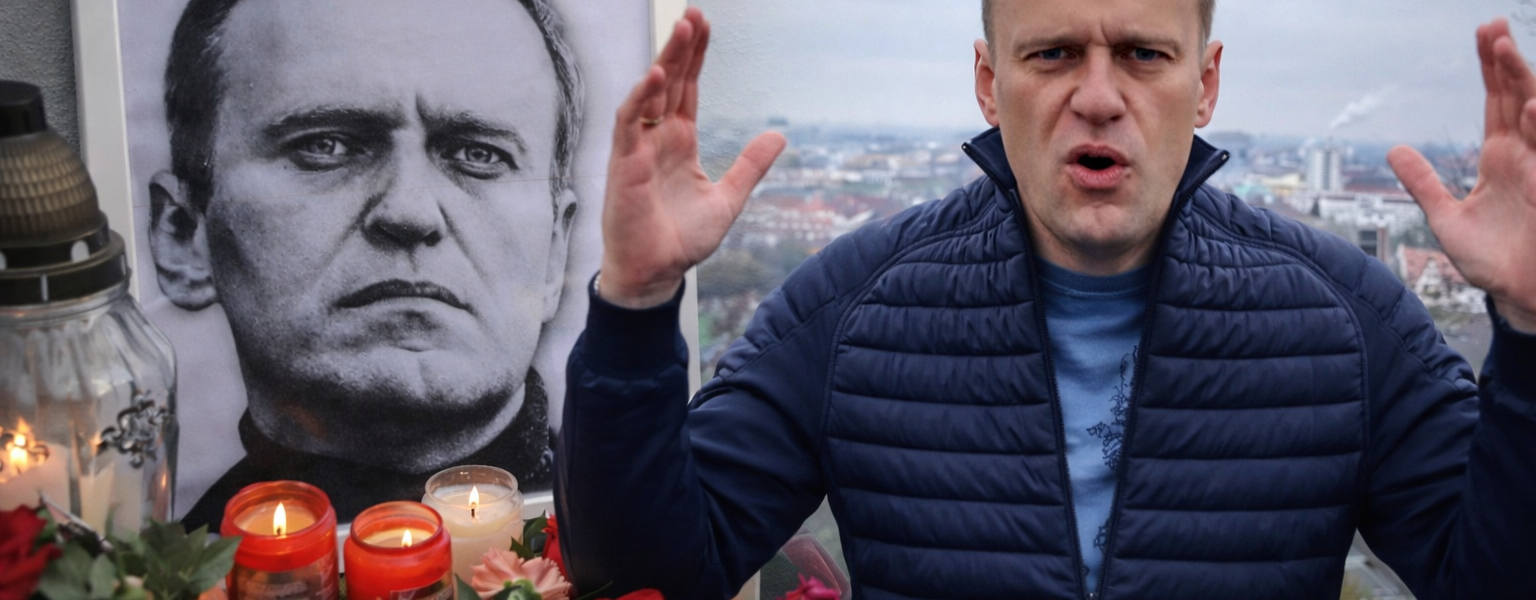
Alexei Navalny Epibatidine Poisoning: Europe Cites Rare Toxin, Russia Rejects Allegations


Europe cites “dart frog” toxin in Alexei Navalny Epibatidine Poisoning case, reigniting a high-stakes standoff with Moscow
Two years after Alexei Navalny died in a Russian penal colony on February 16, 2024, European governments have escalated their accusations against the Kremlin with a new and unusually specific claim: laboratory analyses detected epibatidine, a rare, extremely potent toxin associated with poison dart frogs, in samples linked to Alexei Navalny. The allegation has sharpened an already volatile geopolitical fault line—pitting scientific claims of poisoning against Russia’s blanket denial, while the United States strikes a cautious middle position that supports the findings but stops short of formally joining Europe’s statement.
What Europe says it found—and why it matters
In a joint statement dated February 14, 2026, the UK, Sweden, France, Germany, and the Netherlands said their conclusion is based on analyses of samples from Alexei Navalny that “conclusively confirmed” the presence of epibatidine. They describe it as a toxin found in poison dart frogs in South America and add a political inference: it is “not found naturally in Russia.”
The same statement argues the substance is so toxic, and its reported effects so severe, that poisoning was highly likely—and it explicitly frames state responsibility by noting Alexei Navalny died while imprisoned, meaning Russian authorities had the “means, motive and opportunity” to administer a toxin in custody.
This is not just another diplomatic condemnation. By attaching a named chemical to the allegation, European governments are attempting to convert political suspicion into a forensic narrative—one that can underpin sanctions, multilateral pressure, and potential engagement with international arms-control and weapons-ban norms (even if the dispute remains political rather than adjudicated).
Fact Check: Alexei Navalny Epibatidine Poisoning Claim
Below is a fact-based snapshot of what has been publicly claimed, what is verified, and what remains disputed regarding laboratory findings cited by European governments in the case of Alexei Navalny’s death.
Claim: European governments say laboratory tests detected the rare toxin epibatidine in samples linked to Alexei Navalny.
- Who said it: The UK, Sweden, France, Germany, and the Netherlands in a joint public statement.
- Status: Reported by governments (publicly asserted; full lab reports not released in the statement).
- Why it matters: Epibatidine is described as highly potent and dangerous at very small quantities, implying deliberate poisoning.
Counter-claim: Russia rejects the accusation and calls it unfounded.
- Who said it: Russian officials, including the Kremlin, publicly disputed the allegation.
- Status: Disputed (no consensus between parties).
US position: The United States says it has no reason to doubt the reported findings but did not join the European statement.
- Status: Partially endorsed (supports credibility but not formally co-signed).
What remains unverified publicly:
- Methods: Which instruments and confirmatory protocols were used (e.g., LC-MS/MS details).
- Sample chain-of-custody: How samples were collected, stored, and transported.
- Quantification: The concentration detected and how it relates to cause of death.
- Independent replication: Whether additional labs beyond those cited have reproduced the findings.
Bottom line:
European governments publicly state epibatidine was detected and interpret this as strong evidence of deliberate poisoning. Russia denies the allegation. Without publicly released lab documentation, the claim remains politically explosive and scientifically significant but not independently verifiable from the joint statement alone.
Sources (public statements & reporting): Joint statement by UK/Sweden/France/Germany/Netherlands; reporting on Russia’s rejection and US response via major international news outlets.
Russia’s response: “unfounded” and “biased”
The Kremlin has rejected the accusation, calling it unfounded and politically motivated. According to Reuters, Kremlin spokesman Dmitry Peskov dismissed the European claims as biased, while Russia’s Foreign Ministry said it wanted to see details of the testing before commenting substantively.
That stance fits a broader pattern in previous high-profile cases: deny state involvement, challenge the credibility of Western institutions, and demand disclosure of evidence in formats Russia considers legitimate—while insisting domestic conclusions are sufficient.
The US posture: “no reason to doubt,” but no signature
Washington has not fully aligned itself with Europe’s diplomatic choreography. US officials have said they have no reason to doubt the reported findings, but did not join the European joint statement.
That distinction matters geopolitically. It signals political support for allies and for Alexei Navalny’s family—without committing the US to every element of Europe’s evidentiary framing or the timing of escalation. In practice, this can preserve room for manoeuvre: sanctions calibration, intelligence protection, and legal thresholds that differ from European political statements.
Alexei Navalny’s widow: “This confirms he was murdered”
Navalny’s widow, Yulia Navalnaya, has long alleged the Kremlin ordered her husband’s killing. The new European claim has been embraced by her as confirmation of murder, reinforcing the opposition movement’s narrative that Alexei Navalny’s death was not natural or accidental but politically driven.
What is epibatidine—and why is “microscopic doses” plausible
Epibatidine is a highly potent neuroactive compound that binds to nicotinic acetylcholine receptors. Safety classifications in major chemical databases flag it as acutely toxic.
Politically, epibatidine is significant precisely because it is rarely discussed outside specialist contexts. That “exotic” profile can cut both ways:
- For Europe’s argument, rarity supports the inference of deliberate selection and controlled access.
- For Russia’s rebuttal, rarity raises questions about sample provenance, chain-of-custody, and verification—especially because the public statements are not full lab reports.
The central unresolved issue: evidence exists, but the methods are not public
The European governments’ wording—“conclusively confirmed”—is unusually strong for a political statement, but the public has not been given the technical details that forensic toxicologists typically look for, such as:
- What matrices were tested (blood, tissue, hair, stored specimens).
- Which methods were used (e.g., confirmatory mass spectrometry protocols).
- Quantification (how much was found) and uncertainty.
- Chain-of-custody documentation and replication across independent accredited labs.
None of that absence disproves the claim—but it defines the battleground Russia will likely exploit: “show the full data,” “who collected the samples,” “how were they stored,” and “can an independent body replicate this?”
Why does this reignite tensions now?
This new epibatidine claim lands in a moment of entrenched hostility between Russia and Western governments. Alexei Navalny’s death has become more than a human-rights case; it is now a symbol in a broader conflict over:
- State repression vs. democratic opposition
- Custodial deaths and international accountability
- The credibility of Western institutions vs. Russian state narratives
- The weaponisation of science in diplomatic messaging
The dispute also risks compounding already severe diplomatic friction. If European governments treat the finding as settled, the next steps could include coordinated measures—travel bans, asset freezes, and new pressure within Europe’s political-security forums—while Moscow frames the episode as propaganda designed to justify further containment of Russia.
Alexei Navalny epibatidine poisoning, Epibatidine toxin in Navalny case, Navalny death investigation 2024, European governments accuse Russia poisoning, Navalny penal colony death, UK Germany France Navalny statement, Russia rejects poisoning allegation, Navalny geopolitical tensions, US response to Navalny poisoning, Chemical weapons convention Navalny case, Navalny widow murder claim
Recent Posts
- Switzerland Population Cap 10 Million Vote: Quality of Life Fix or Economic Self-Harm?
- Top Media Houses in Kolkata (2026 Updated List) | Print, TV & Digital Leaders
- Bangladesh 2026 Election: Tarique Rahman’s Victory Reshapes Power, Minority Security and India Relations
Discover more from
Subscribe to get the latest posts sent to your email.