
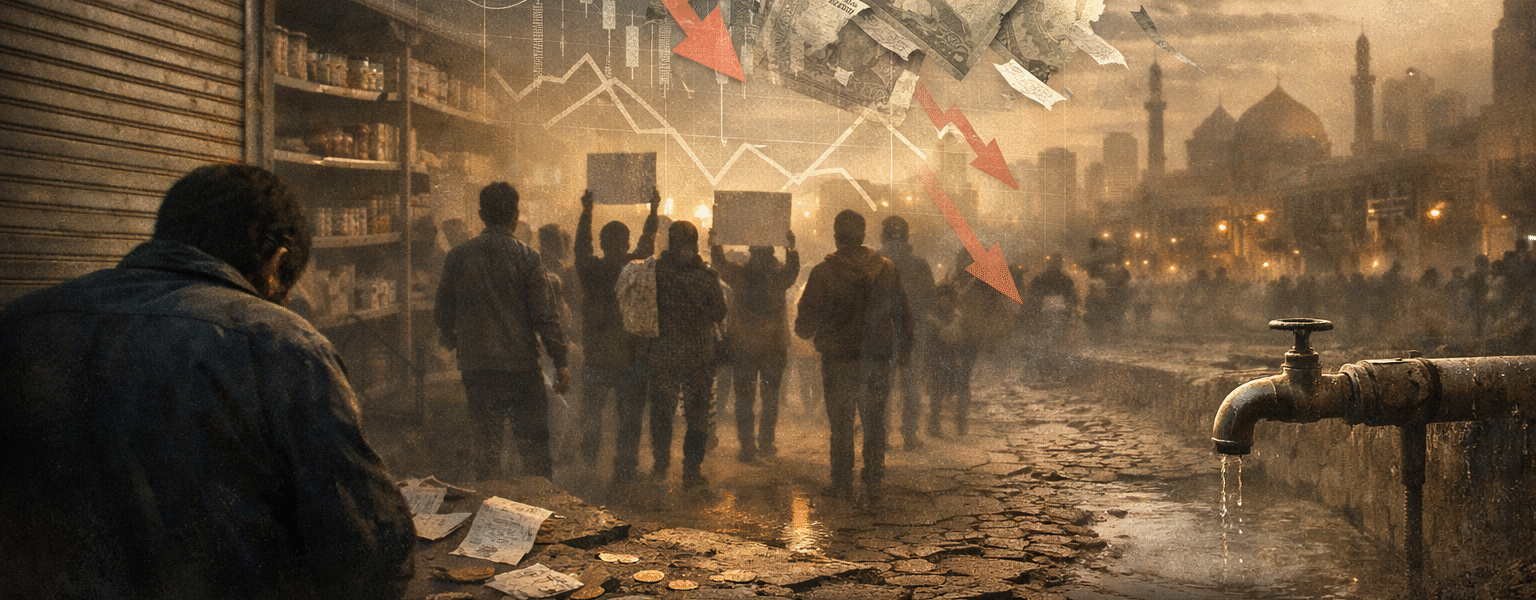
Why Iran protest Are Back on the Streets: Inflation, Currency Collapse and a Growing Water Crisis


Iran protest- Streets Erupt as Inflation, Currency Collapse and Water Shortages Converge
In the labyrinthine bazaars of Tehran, shop shutters are rolling down early, and merchants are abandoning their stalls. Across Iran’s major cities, workers have launched strikes, university students are marching through campuses at night, and angry crowds are gathering in public squares after the Iranian rial plunged to a record low of around 1.42 million to the US dollar, triggering yet another surge in prices.
Official figures underscore the scale of the shock. Iran’s statistics centre reports annual inflation at roughly 42–43%, with food prices increasing by about 72% year-on-year and health and medical items rising by nearly 50%. Economists warn that the speed of the rial’s collapse—nearly 50% against the dollar in 2025 alone—has stoked fears of a slide toward hyperinflation, as day-to-day essentials move out of reach for millions.
What began with Iran protest by traders in Tehran’s commercial heart has now spread nationwide. Strikes, street marches and nightly demonstrations have drawn in factory workers, public-sector employees, pensioners and students, making this one of the largest economically driven Iran protest movements since earlier waves of unrest. Unlike past episodes framed around ideological or political slogans, the dominant chant this time is about survival.
A daily-life crisis in prices and purchasing power
The rial’s collapse has devastated purchasing power almost overnight. Traders say they can no longer price goods with any certainty, as currency swings wipe out margins within days or even hours.
A small electronics seller in Tehran said he had stopped importing new stock altogether. “I don’t know what replacement will cost,” he said. “If I sell today, I can’t buy tomorrow.” Grocery shop owners tell similar stories, with customers balking at prices that change weekly.
For salaried workers and students, the pain is even sharper. Families report cutting back on meat and fruit, skipping medical check-ups, or delaying the purchase of prescription drugs. Rent and transport costs are consuming ever larger shares of monthly incomes, squeezing not only the poor but Iran’s shrinking middle class. University students say stipends and part-time wages no longer cover basic meals, pushing many to join demonstrations that stretch late into the night.
Water shortages add a dangerous second front
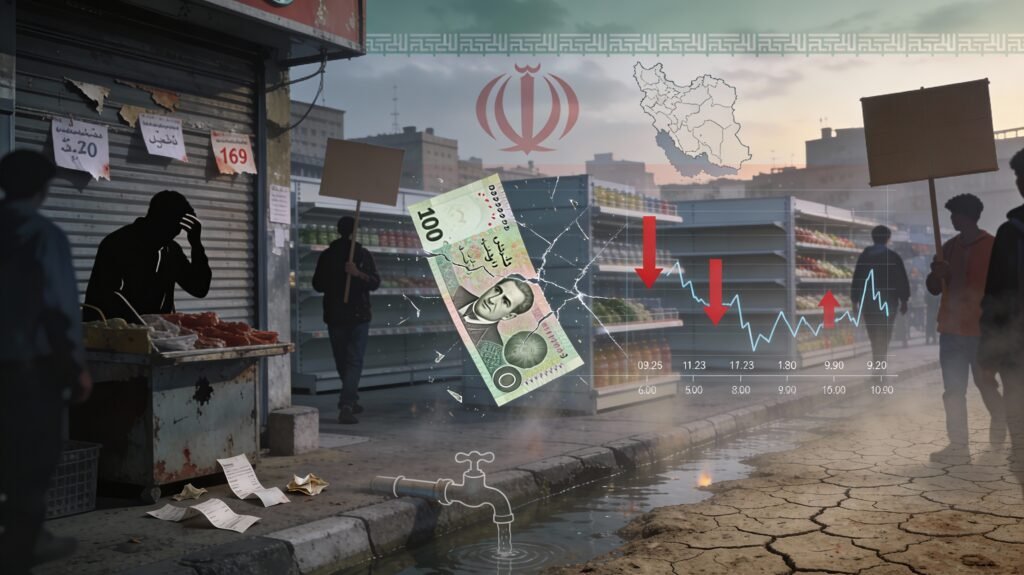
Economic anger is colliding with a deepening water crisis that has already sparked Iran protests in multiple regions. Authorities and experts warn that nearly half of Iran’s urban population now faces “water stress”, as rivers dry up, reservoirs fall, and decades of over-extraction catch up with the system.
From Tehran’s outskirts to provinces such as Khuzestan and Sistan-Baluchistan, residents have endured multi-day water cuts and power outages. Farmers report failing crops, while urban communities fear that parts of the country may become unlivable.
Student-led demonstrations over water rights and so-called “water bankruptcy” have merged with cost-of-living protests. Environmental grievances that once remained local are now feeding into nationwide chants accusing the leadership of incompetence and demanding systemic change.
Sanctions, war shocks and long-term mismanagement
Analysts say Iran’s economic free-fall reflects a convergence of external shocks and internal weaknesses. Years of US and international sanctions have restricted oil exports, banking access and foreign investment. These pressures intensified again after the 2025 Israel–Iran conflict and the reactivation of UN “snapback” nuclear-related measures, further isolating Iran from global markets.
The short but intense 2025 conflict, and subsequent strikes on Iranian-linked infrastructure, added to economic anxiety and raised fears of renewed Western or Israeli action. Even before that, chronic domestic problems—economic mismanagement, corruption, chronic budget deficits and heavy reliance on oil revenues—had hollowed out resilience.
Capital flight and dollarisation have accelerated the currency collapse. While official data on foreign reserves are opaque, many economists say sanctions and outflows have pushed Iran’s usable reserves toward multi-year lows, sharply limiting the government’s ability to defend the rial or subsidise imports of food and medicine.
Government response and risks to stability
Iran’s leadership has sought to strike a delicate balance. Senior officials have acknowledged what they describe as “legitimate demands” over high prices, while blaming foreign enemies, sanctions and “psychological warfare” for the crisis. Authorities have announced targeted subsidies, rationing measures and occasional interventions in the currency market.
At the same time, security forces have been deployed in Iran protest hotspots, with reports of arrests and tighter controls on social media and messaging platforms. Officials insist they want to avoid a repeat of the deadly crackdowns seen during earlier unrest, but analysts warn that repression alone cannot address the underlying pressures.
“The combination of inflation, currency collapse and water scarcity is qualitatively different,” said one Iran-focused economist. “Economic pain is now overlapping with environmental stress, which raises the stakes for regime stability in ways we haven’t seen before.”
Wider geopolitical stakes
Iran’s domestic turmoil is unfolding amid sensitive regional and global negotiations. Talks with the United States over nuclear limits and potential sanctions relief remain fraught, even as Washington and its allies signal readiness to tighten enforcement if Tehran accelerates enrichment.
Tehran has sought to ease isolation through closer ties with Russia and China, and by deepening engagement with emerging multipolar blocs. Officials tout alternative energy markets and financial channels, but so far, these strategies have delivered little immediate relief for ordinary Iranians.
Prolonged instability in Iran also carries implications for oil markets and regional security. Any escalation that disrupts energy flows or shipping routes could ripple far beyond Iran’s borders, complicating Western diplomacy and efforts to manage nuclear risks.
A crisis measured on the streets
As night falls in Tehran, students gather again, chanting over rising prices and empty taps. In the bazaars, merchants count losses and weigh whether to reopen tomorrow. For global observers, the latest Iran protest wave is not just another chapter of dissent, but a warning of how inflation, currency collapse and climate-driven stress can converge—turning economic mismanagement into a nationwide test of political endurance.
Iran protests 2025, Iran inflation crisis, Iranian rial collapse, Iran water crisis protests, Iran economic crisis, Iran food price inflation, Iran currency devaluation, Iran sanctions impact
IranProtests #IranCrisis #IranEconomy #RialCollapse #InflationCrisis #WaterCrisis #MiddleEastNews #GlobalEconomy #HumanSecurity
Discover more from
Subscribe to get the latest posts sent to your email.









2 COMMENTS