
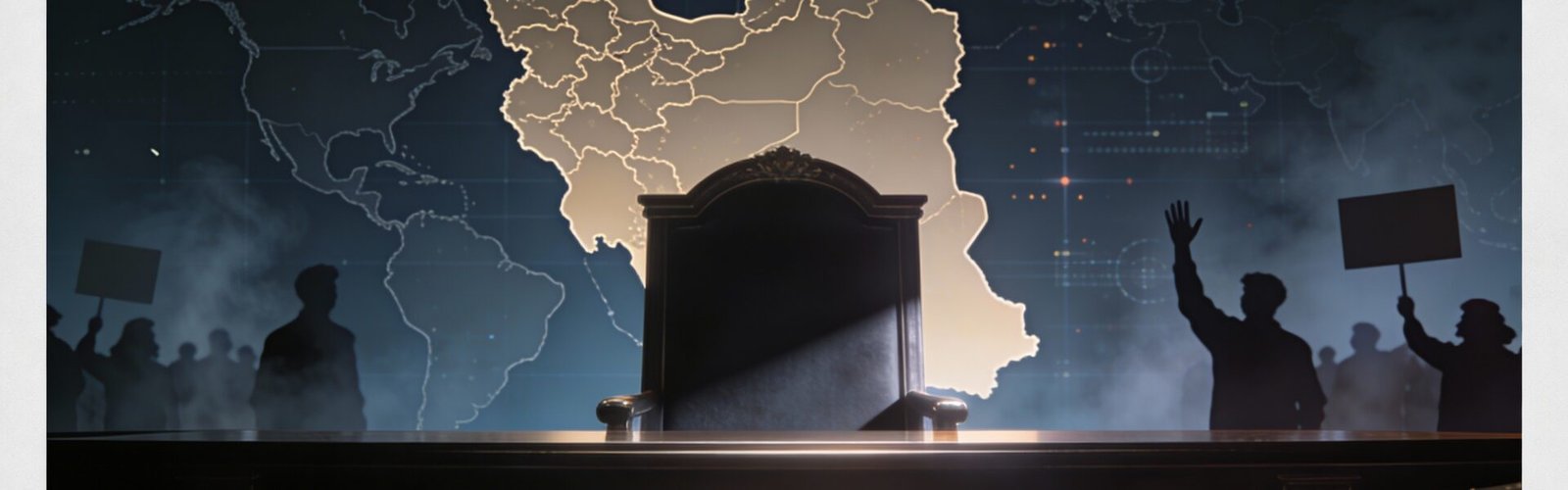
Iran Leadership crisis: What We Know, What We Don’t, and Why the Stakes Are Global


Iran Leadership Crisis Under Pressure: Separating Verified Facts, Credible Signals, and Unverified Claims
Speculation about instability at the apex of Iran’s political system has surged amid renewed protest activity, economic strain, and intense information warfare across social and traditional media. Among the most circulated claims are unverified reports on social platforms alleging that Ali Khamenei, Iran’s Supreme Leader since 1989, may be preparing to leave—or has already gone—the country for Russia. As of publication, no major international newsroom has confirmed such claims, and Iranian state media denies any leadership rupture. This article outlines what is documented, what is plausible but unproven, and what remains speculative, while explaining why careful evidence standards are crucial when covering a potential Iran Leadership Crisis.
1) How Power Works in the Islamic Republic of Iran
Iran’s political architecture blends republican institutions with clerical oversight. The Supreme Leader sits at the apex, wielding authority over the armed forces, the judiciary, state broadcasting, and key security bodies; he also appoints or influences the heads of pivotal institutions. The president and parliament are elected, but their power is constrained by unelected bodies—most notably the Guardian Council, which vets candidates and legislation.
Succession mechanics are defined by law: the Assembly of Experts, an elected clerical body, is constitutionally tasked with selecting (and theoretically supervising) the Supreme Leader. In practice, succession has historically been elite-managed, opaque, and shaped by security considerations. The last transition, from Ruhollah Khomeini to Ali Khamenei in 1989, followed intense internal bargaining during a moment of national stress.
2) Protest Waves: What Is Verified and How Grievances Evolved
Iran has experienced repeated cycles of unrest over the past two decades, each with distinct triggers but overlapping grievances:
- 2009 – Green Movement: Sparked by disputed presidential election results, large demonstrations demanded electoral integrity and civil rights. The state responded with repression; leaders were placed under house arrest.
- 2017–18 Protests: Decentralised, economically driven protests spread to smaller cities, highlighting inflation, unemployment, and inequality.
- 2019 Fuel Protests: A sudden gasoline price hike triggered nationwide unrest; the crackdown was severe, and internet shutdowns limited verification.
- 2022–23 “Woman, Life, Freedom” Protests: Ignited by the death of Mahsa Amini in morality-police custody, these protests fused gender rights with broader anti-authoritarian demands and drew unprecedented diaspora mobilisation.
Across these episodes, documented drivers include economic hardship, perceived political exclusion, and anger at coercive enforcement of religious norms. The intensity and breadth of the 2022–23 protests marked a qualitative shift, even as the state retained coercive capacity.
3) Why Rumours Spike During Unrest—and How Journalists Should Treat Them
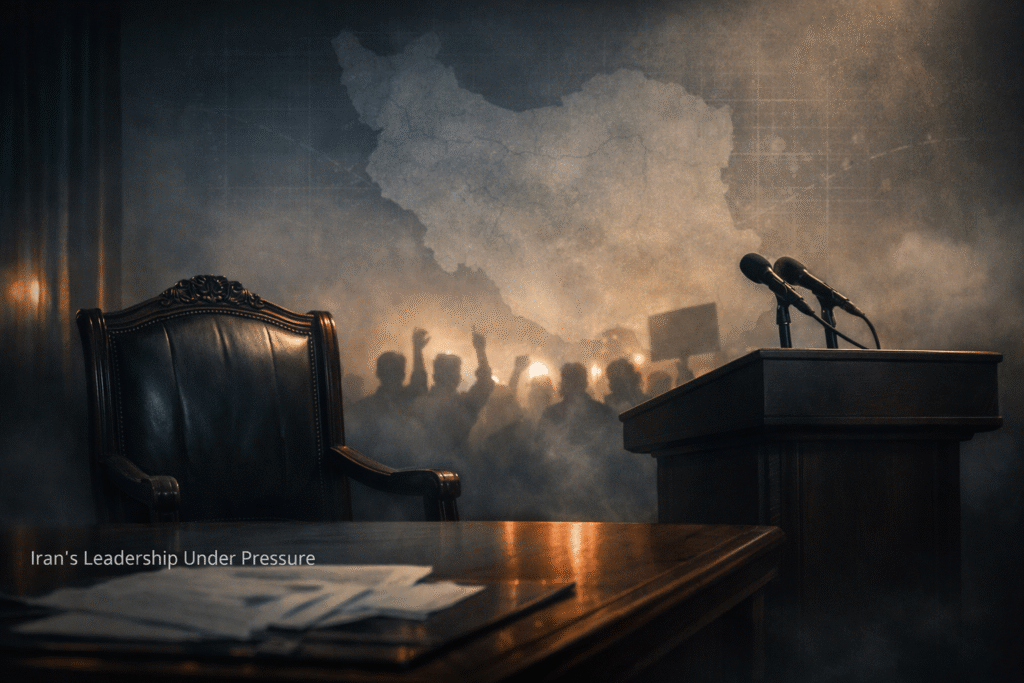
Periods of mass unrest generate information vacuums. Internet throttling, censorship, and the fear of reprisals reduce on-the-ground reporting. Into that void flow:
- Unverified social media narratives (often amplified by diaspora networks),
- Credible leaks (hard to independently verify),
- State messaging (aimed at projecting control).
Responsible journalism distinguishes among these tiers. Unverified claims—including allegations that the Supreme Leader has fled with family and close advisers—must be clearly labelled as such. Absence of confirmation is not proof of falsity, but neither is online virality proof of truth.
Status check (as of publication): Claims of Ali Khamenei’s departure are circulating on social media; mainstream international outlets have not confirmed them. Iranian official channels deny any such move. Outcomes remain uncertain.
4) Geopolitical Stakes of an Internal Iran Leadership Crisis
A genuine Iran leadership crisis in Iran would reverberate globally:
- United States & Europe: Nuclear nonproliferation, maritime security, and energy markets would dominate concerns; policy would balance deterrence with crisis management.
- Gulf States & Israel: Regional security calculations would intensify, particularly regarding proxies and escalation risks.
- Russia & China: Both prioritise stability and sovereignty; Moscow’s ties with Tehran (including defence cooperation) heighten interest in continuity, while Beijing focuses on energy flows and non-interference.
Energy markets, shipping lanes, and regional conflicts could all be affected by leadership uncertainty—even absent regime change.
5) Cautious Comparisons: Iran and Venezuela
Some commentators draw parallels with Venezuela, where leadership legitimacy was contested amid sanctions and international recognition battles. The analogy has limits. Iran’s system is ideologically entrenched, institutionally complex, and security-dense, with succession mechanisms that differ sharply from Venezuela’s presidential model. External pressure played a visible role in Venezuela; Iran’s dynamics are primarily internal, though influenced by sanctions and geopolitics.
Iran Erupts Again: Mass Protests Put Supreme Leader Khamenei’s System Under Severe Strain
6) The Iranian Diaspora and Exiled Opposition
The Iranian diaspora has been pivotal in documentation, advocacy, and narrative amplification. Monarchist currents and “crown prince” narratives—often referencing Reza Pahlavi—circulate widely online. Documented activities include lobbying, media outreach, and protest organisation abroad. Speculation about coordinated leadership transitions or imminent returns should be treated cautiously; diaspora influence on outcomes inside Iran remains contested and uneven.
7) External Narratives, Intelligence, and the Risks of Regime-Change Rhetoric
Foreign governments and intelligence services monitor Iran closely; media ecosystems can become arenas for strategic messaging. History offers cautionary lessons—from Iraq (2003) to Libya (2011)—about the legal, ethical, and human costs of overt or covert regime-change efforts. International law emphasises sovereignty and non-intervention; external calls for regime change can escalate conflict, harden positions, and endanger civilians.
8) What Can—and Cannot—Be Said Now for Iran Leadership Crisis
- Verified: Iran has experienced repeated, significant protest waves; economic and social grievances are real and documented.
- Plausible but Unproven: Elite anxiety during unrest; intensified internal security measures; heightened succession discussions.
- Unverified: Claims that the Supreme Leader has fled Iran or that the system’s collapse is imminent.
Some voices assert that “it is game over” for Ali Khamenei. That conclusion is not supported by verified reporting at this time. Even sustained unrest does not automatically translate into leadership exit, given Iran’s coercive capacities and institutional buffers.
Conclusion: Why Evidence Standards Matter
Covering a potential Iran Leadership Crisis demands rigour, restraint, and transparency. Clear labelling of unverified claims, corroboration across independent sources, and attention to international law are not niceties—they are necessities. In volatile environments, premature certainty can mislead publics, inflame tensions, and distort policy choices. The responsible course is to report what is known, what is uncertain, and what remains unproven, updating continuously as credible evidence emerges and legal constraints are respected.
Iran Supreme Leader crisis, Ali Khamenei succession, Iran protests political instability, Islamic Republic power structure, Iran regime uncertainty, Iran unrest geopolitical impact, Middle East Iran instability, Iran leadership succession rumours, Iran diaspora opposition, Supreme Leader authority Iran, Iran leadership crisis
Discover more from
Subscribe to get the latest posts sent to your email.






3 COMMENTS