India Joins Pax Silica: Strategic AI & Rare Earth Alliance to Reduce China Dependency


India Joins Pax Silica (US-Led): A Strategic AI & Critical Minerals Realignment to Counter China
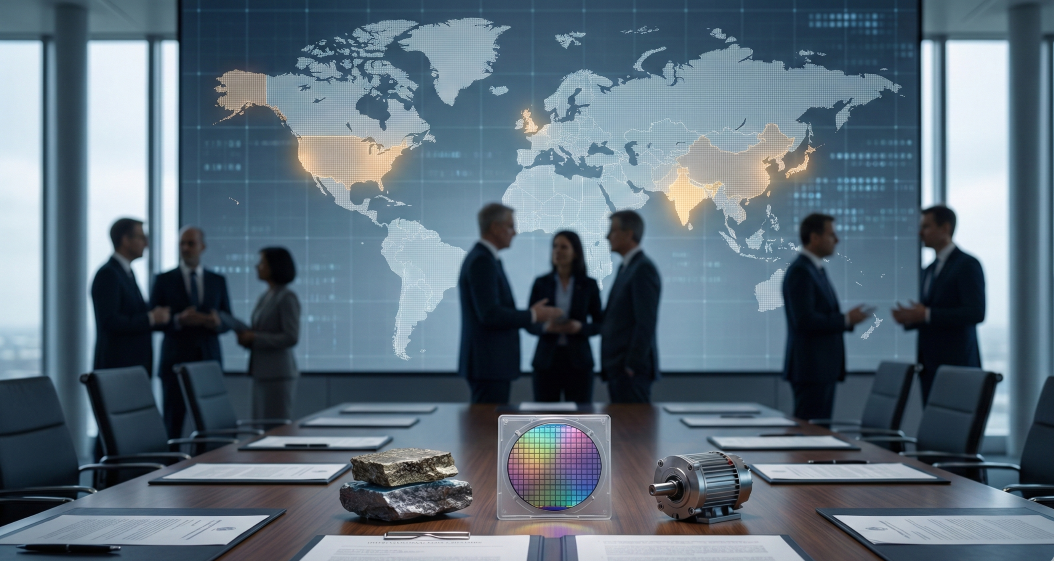
In a major geopolitical and economic development, India has officially joined the U.S.-led Pax Silica alliance, a strategic initiative aimed at reducing global dependence on China for critical minerals, semiconductor inputs, and advanced technology supply chains.
The move signals a deeper shift in the global technology order — one where supply chains are increasingly shaped not just by market forces, but by geopolitical trust, strategic alignment, and economic security.
What Is Pax Silica?
🔎 Fact Check
- Pax Silica is a US-led initiative focused on securing critical mineral, semiconductor, and AI supply chains.
- India officially signed the Pax Silica declaration in February 2026 during the India AI Impact Summit.
- China currently dominates global rare earth processing and magnet manufacturing capacity.
- India holds significant rare earth reserves but is expanding processing infrastructure.
- The alliance aims to diversify — not immediately replace — China-centric supply chains.
Pax Silica is a multilateral technology and supply-chain initiative focused on:
Securing critical minerals (including rare earth elements)
Strengthening semiconductor supply chains
Coordinating AI infrastructure and advanced manufacturing ecosystems
Building trusted partnerships among like-minded economies
The name itself reflects the alliance’s ambition:
“Pax” — stability and strategic order
“Silica” — the foundation of the semiconductor age
The objective is clear: reduce systemic risks arising from over-reliance on a single dominant supplier — particularly China — in strategic technology sectors.
Why India’s Entry Matters

India’s participation is not symbolic. It is structural.
- India as a Strategic Supply Chain Anchor
India is one of the world’s fastest-growing technology markets, with expanding demand across: Electric vehicles, Renewable energy systems, Defence manufacturing, AI data centres and Semiconductor fabrication initiatives.
This domestic demand gives India leverage to help anchor alternative supply chains outside China.
- Rare Earth Potential — Untapped but Significant
India possesses one of the world’s largest rare earth reserves. However, it currently lacks advanced large-scale processing capacity.
China, by contrast, dominates: Global rare earth refining, Magnet manufacturing, and downstream industrial integration.
Pax Silica creates an opportunity for India to move beyond raw reserves and build: Processing plants, Rare earth separation capacity, Permanent magnet manufacturing and Integrated EV and defence component ecosystems.
If executed effectively, India could transition from being an importer to becoming a significant value-added player.
- AI and Semiconductor Geopolitics
India Joins Pax Silica alliance links critical minerals directly to: AI hardware, Chip manufacturing, and advanced computing ecosystems
For India, this aligns with its semiconductor manufacturing push, AI infrastructure development plans and “Trusted tech” positioning among Western economies
India’s inclusion signals that it is being viewed not merely as a market, but as a future manufacturing and technology ecosystem partner.
Can India Joins Pax Silica Challenge China’s Rare Earth Dominance?
The Reality
China’s dominance is deep and structural: Controls the majority of rare earth processing capacity, Leads in magnet manufacturing, Operates vertically integrated supply chains, Has years of technological and industrial advantage and Replacing China entirely is unrealistic in the near term.
The Strategic Possibility
However, India Joins Pax Silica is not about immediate replacement.
It is about: Diversification, Risk mitigation, and Creating parallel trusted supply chains.
India’s realistic path forward:
Short term (3–5 years): Reduce dependency, develop processing infrastructure, attract allied investment, and secure technology partnerships.
Medium to long term (5–10+ years): Become a meaningful alternative processing hub, supply strategic sectors like defence and EVs and strengthen negotiating leverage in global tech trade.
India may not dethrone China soon, but it can significantly dilute China’s monopoly power if policy execution is sustained.
Geopolitical Significance of India Joins Pax Silica
India’s entry into Pax Silica reflects three major trends:
- Supply chains are now geopolitical assets
- Technology alliances are replacing pure globalisation models
- Economic security is becoming central to foreign policy
For the U.S., India represents scale, growth, and strategic reliability.
For India, Pax Silica provides access to: Capital, Technology, Market integration and Strategic alignment in advanced sectors
The Bigger Picture: AI, Minerals, and the New Economic Order
📌 Key Takeaways
- India joins Pax Silica to strengthen AI and critical mineral supply chains.
- The move aligns India with US-led strategic technology partnerships.
- China remains dominant in rare earth processing and magnet production.
- India aims to build domestic processing and manufacturing capacity.
- Long-term impact: diversification of global tech supply chains.
The AI revolution is not just about software. It depends on: Chips, Rare earth magnets, Silicon wafers, and advanced manufacturing ecosystems. Control over these inputs shapes economic power. Pax Silica represents a coordinated attempt to rebalance that power. India’s participation signals its intent to move from: Consumer economy → Manufacturing economy → Strategic technology power.
Conclusion
India joins Pax Silica marks a significant turning point in global AI and mineral geopolitics. It strengthens India–U.S. strategic technology alignment. It positions India as a potential alternative hub in rare earth processing. It contributes to a broader effort to dilute China’s structural dominance in critical supply chains.
Challenging China outright will take time, investment, and sustained industrial policy. But with coordinated action under Pax Silica, India has positioned itself as a central player in the next phase of the global technology order.
India Joins Pax Silica,
Discover more from
Subscribe to get the latest posts sent to your email.