
Gut Transit Time Breakthrough: The Science Revealing Whether Your Digestive System Is Ageing, Healing — or in Danger


Introduction: The One Metric Most People Ignore — But Scientists Now Call a “Master Biomarker”
How long does it take for the food you eat to become… well, the food you eliminate?
Most people never measure it, yet whole gut transit time (WGTT) is emerging as one of the strongest predictors of digestive health, metabolic fitness, and even microbiome balance.
A large BMJ Gut study analysing thousands of stool samples found that the median WGTT in healthy adults is around 28 hours, with a normal range of 10 to 73 hours. Colonic transit alone — the longest stage — averages 20–30 hours.
Why does gut transit time matter?
Because you can have a bowel movement daily and still have poor gut health, scientists warn that stool frequency and consistency (including the Bristol Stool Scale) often fail to reflect digestive efficiency accurately. The blue dye test, validated in Gut (2021, reaffirmed 2025), predicts WGTT far more reliably.
In other words, how long your food stays in your body is more important than how often you poop.
What Exactly Is Gut Transit Time?
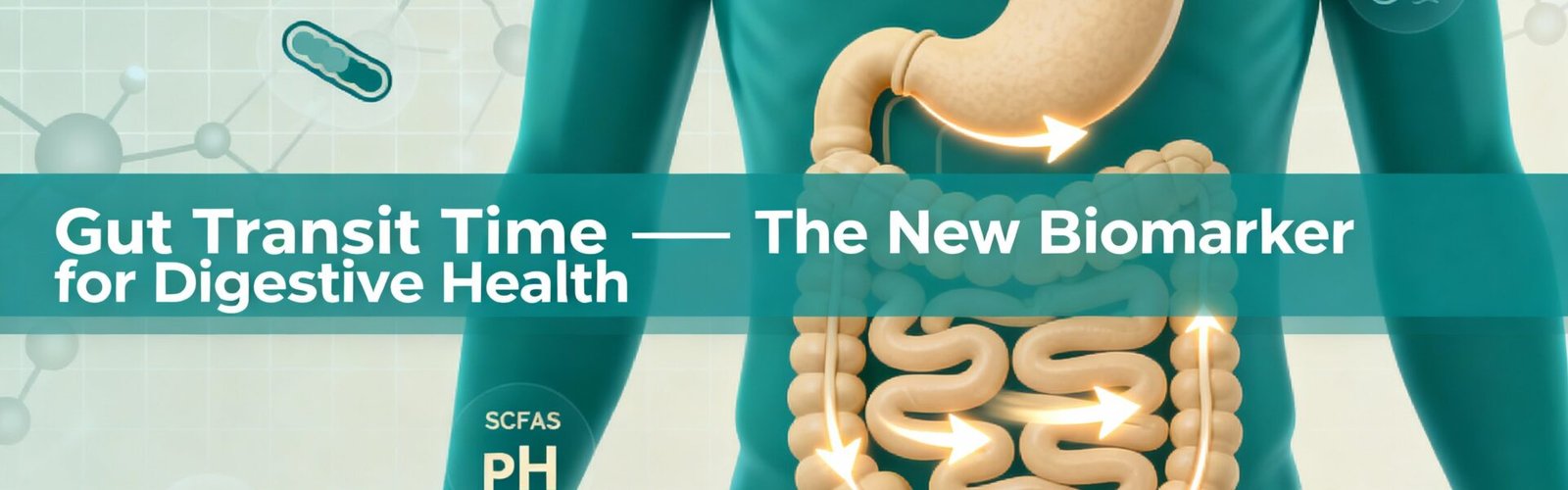
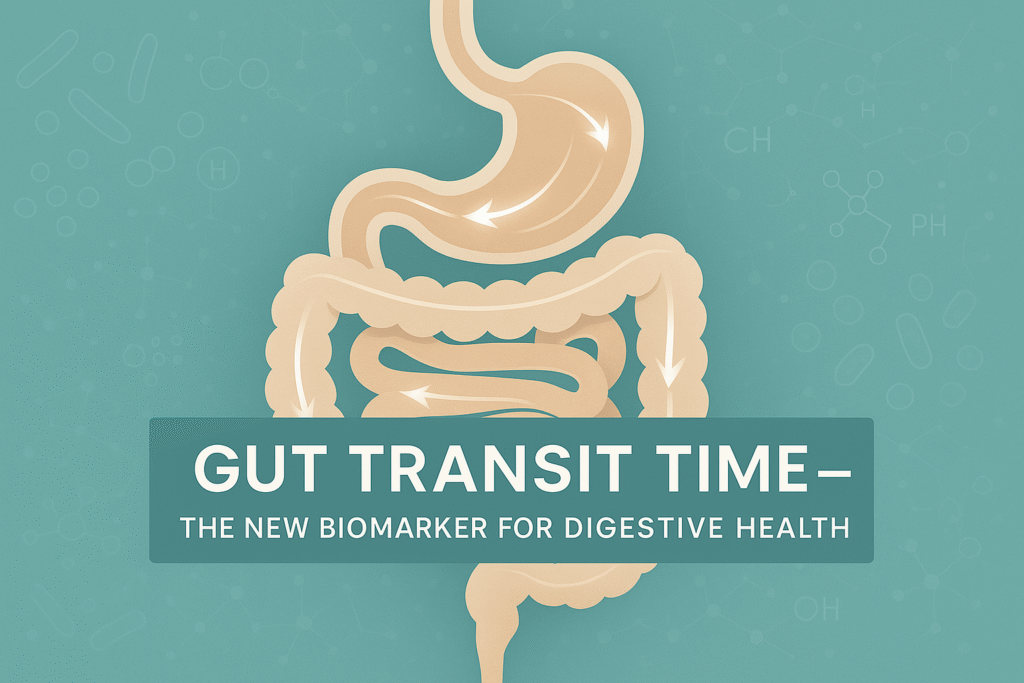
WGTT (whole gut transit time ) refers to the total time from swallowing food to excreting waste. It has four main components:
- Gastric Emptying: 0–6 hours
- Small Intestinal Transit: 2–7.5 hours
- Colonic Transit: Highly variable — 10 to 60+ hours
- Elimination
WGTT is influenced by hydration, fibre, microbiome composition, stress, medications, and underlying diseases.
Scientists now call it a “key functional biomarker” because it reflects how the digestive system, microbiome, and metabolism work together — something stool charts simply cannot capture.
Latest Research (2024–2025): Why Gut Transit Time Is Revolutionising Digestive Science
Microbiome Predicts Gut Transit Time (BMJ Gut, 2021; replicated 2025)
A landmark study (AUC 0.82 accuracy) found that certain gut bacteria strongly correlate with whether a person has:
- Slow transit (>59 hours)
- Normal (14–59 hours)
- Fast (<14 hours)
Key microbial signatures:
- Slow transit: Higher levels of
- Akkermansia muciniphila
- Bacteroides
- Alistipes
- Lower stool moisture and higher pH
- Fast transit: Enriched in bacteria associated with carbohydrate fermentation and soft stool consistency.
The 2025 follow-up confirmed:
“Transit time is a stronger predictor of microbial diversity and metabolic output than diet alone.”
Nature Microbiology (2024): Transit Time Drives Microbiome Individuality
In one of the most comprehensive gut physiology studies:
- Healthy adults showed WGTT from 12 to 72 hours
- Transit time significantly altered:
- pH levels
- Short-chain fatty acid (SCFA) production
- Protein vs. fibre fermentation
- Microbial gene expression
Key finding:
Slow transit increases protein fermentation, generating harmful metabolites, while optimal transit promotes SCFA production — vital for immunity, colon health, and anti-inflammatory action.
2025 Clinical Research Insights
New studies highlighted:
1️⃣ Slow Transit (>58 hours):
- Promotes inflammatory metabolites
- Linked with metabolic syndrome, visceral fat, and insulin resistance
- Elevates colon cancer risk markers
- Reduces beneficial SCFAs (butyrate, acetate)
2️⃣ Fast Transit (<12–14 hours):
- Leads to poor nutrient absorption
- Increases risk of diarrhoea, dehydration, and electrolyte loss
- Impairs absorption of fat-soluble vitamins
3️⃣ Optimal Transit (14–59 hours):
- Balanced microbiome
- Better metabolic markers
- Lower inflammatory load
- Healthier bowel habits (Bristol Stool Scale 3–4)
How Gut Transit Time Impacts Your Health
Why Slow Transit Is Dangerous
When stool sits too long in the colon:
- Excess water is reabsorbed → hard stools, constipation
- Toxins linger → possible reabsorption
- Protein fermentation increases → producing ammonia, phenols, indoles
- Harmful bacteria thrive
- May contribute to:
- IBS-C
- Hemorrhoids
- Small intestinal bacterial overgrowth (SIBO)
- Metabolic dysfunction
- Colon inflammation
Why Fast Transit Is Equally Concerning
When food passes too quickly, the body loses time for nutrient extraction.
Consequences include:
- Low energy
- Micronutrient deficiencies
- Loose stools or diarrhoea
- Gut irritation
- Electrolyte imbalance
How to Measure Your Gut Transit Time (Scientifically Accurate & Home-Friendly)
Scientifically Validated Home Methods
1️⃣ The Blue Dye Test (Gold Standard)
Eat a muffin or yoghurt mixed with blue food dye.
Track the time from eating → passing bright blue stool.
(Validated by BMJ Gut; highly accurate.)
2️⃣ Corn Kernel Method
Eat a tablespoon of whole kernels.
Record the time until the first visible appearance in stool.
Healthy Range:
14–59 hours
Anything beyond should prompt lifestyle adjustments (or medical evaluation).
Science-Backed Ways to Improve Gut Transit Time
1. Increase Fibre Intake (25–50 g/day)
- Oats
- Beans
- Whole fruits
- Psyllium husk
- Ground flaxseed
(Soluble and insoluble fibre balance improves stool softness & microbial fermentation.)
2. Hydration: 2–3 Litres/day
Dehydration is the No. 1 cause of slow transit.
3. Exercise: 150 Minutes/Week
Walking, yoga, and cycling stimulate the colon and autonomic nervous system.
4. Probiotics & Fermented Foods
Research shows improved transit with:
- Bifidobacterium lactis HN019
- Lactobacillus plantarum
- Saccharomyces boulardii
Foods:
- Curd
- Kefir
- Kimchi
- Kanji
- Idli/Dosa batter
5. Limit Red Meat & Ultra-Processed Foods
These slow the colon and promote harmful fermentation.
Ayurveda’s Lens: Agni, Doshas, and Gut Transit Time
In Ayurveda, the concept analogous to gut transit time is Agni — the digestive fire.
Types of Agni & Their Transit Patterns
1️⃣ Sama Agni (Balanced)
- Efficient digestion
- Regular 1–2 bowel movements
- Transit: steady, neither fast nor slow
- Corresponds to optimal WGTT (14–40 hours)
2️⃣ Tikshna Agni (Fast; Pitta-dominant)
- Quick digestion
- Loose stools
- Analogous to fast transit
3️⃣ Mandagni (Slow; Kapha-dominant)
- Sluggish digestion
- Constipation, heaviness
- Analogous to slow transit
4️⃣ Vishama Agni (Irregular; Vata-dominant)
- Unpredictable digestion
- Mixed stool patterns
- Analogous to variable or IBS-like transit
Dosha-Microbiome Correlations (Emerging Research)
Ayurvedic scholars and modern microbiome studies parallel interesting patterns:
- Vata types: Often show higher Bacteroidetes, variability in stool timing
- Pitta types: Enriched in Prevotella, faster metabolism
- Kapha types: Slower motility, higher fermentation
While these correlations are evolving, they show Ayurveda anticipated digestive phenotypes long before microbiology existed.
Ayurvedic Remedies to Optimise Transit
For Slow Transit (Mandagni / Kapha):
- Trikatu (Black pepper + Long pepper + Ginger)
- Guggulu formulations
- Warm water + lemon
- Light meals (moong dal khichdi)
- Spices: cumin, ajwain, hing
For Fast Transit (Tikshna Agni / Pitta):
- Cooling foods: coconut water, buttermilk
- Aloe vera
- Shatavari
- Avoid excess chilli, fried foods
For Irregular Transit (Vishama Agni / Vata):
- Sesame oil massage (Abhyanga)
- Warm, grounding foods
- Triphala at bedtime
- Yoga: Pawanmuktasana, Vajrasana
Panchakarma Benefits
- Virechana for Pitta imbalance
- Basti for Vata imbalance
Both therapies have documented effects on motility and gut microbiota.
Practical, Actionable Tips (Science + Ayurveda)
Daily Routine
- Wake during Brahma Muhurta (4:30–6 am)
- Drink warm water
- Do light stretching or Surya Namaskar
- Eat a high-fibre breakfast (oats + flax)
- Avoid long gaps between meals
- Sleep before 11 pm
Foods That Improve Transit
- Oats
- Moong dal
- Beans
- Papaya
- Apples (with skin)
- Psyllium
- Buttermilk
- Guduchi (Tinospora cordifolia)
Warning Signs to Watch
- WGTT consistently >60 hours
- Fewer than 3 stools/week
- Hard stools (Bristol 1–2)
- Chronic bloating
- Unexplained fatigue
Consult a gastroenterologist if symptoms persist.
Future Outlook: Transit Time Will Become a Standard Health Metric
Emerging technologies — wireless motility capsules, stool pH sensors, microbial metabolite profiles — are transforming how we monitor gut health.
Scientists predict that by 2030, gut transit time will become:
- A routine fitness metric
- A diagnostic tool for early detection of bowel disease
- A personalisation parameter in microbiome therapies
- A core part of metabolic health monitoring
Ayurveda, too, is entering a renaissance: its Agni-based assessments may soon integrate with microbiome analytics for highly personalised digestive health management.
Conclusion: Track Your Gut Transit Time, Transform Your Health
Gut transit time is among the simplest, cheapest, and most powerful indicators of digestive and metabolic health.
Whether you follow modern science or Ayurveda, the message is the same:
A healthy gut moves at the right pace — not too fast, not too slow.
So try the blue dye test. Track your timings. Adjust your diet, hydration, lifestyle, and Agni.
Your gut will thank you — with better energy, immunity, mood, and long-term health.
The Golden Milk: Unveiling the Health Secrets of Golden Elixir
Discover more from
Subscribe to get the latest posts sent to your email.









1 COMMENTS