
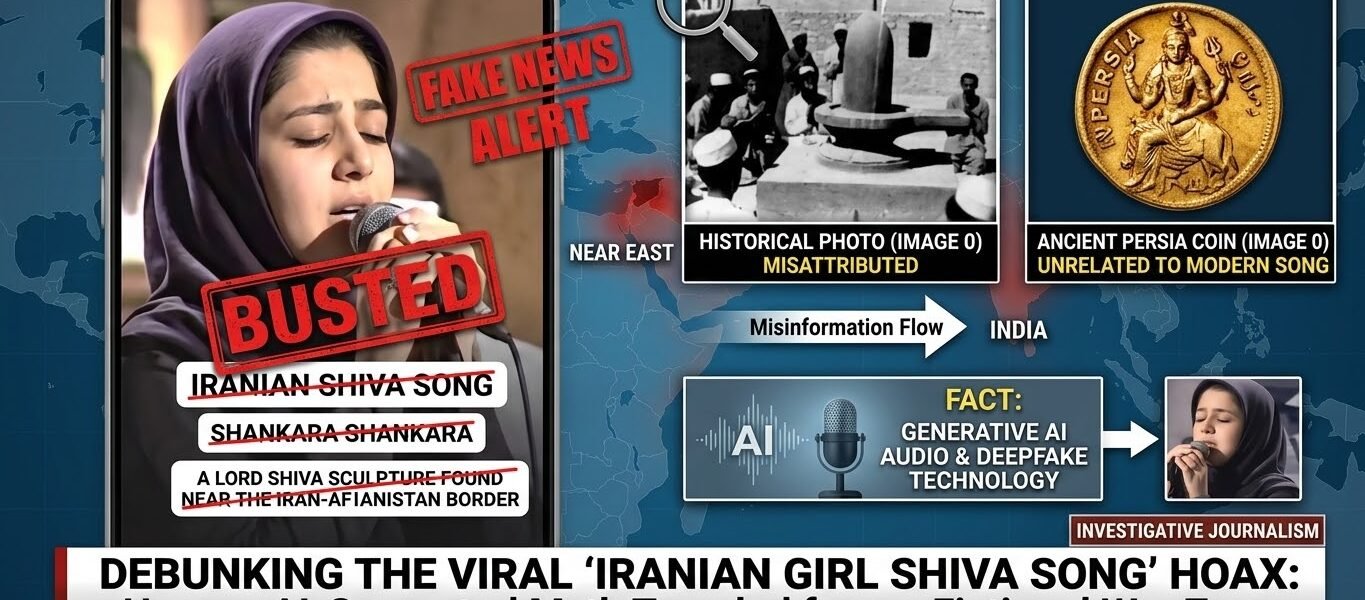
Iranian Girl Shiva Song: Uncovering the Real Truth Behind the Viral Myth


Viral Devotion or Viral Deception? The Truth Behind the ‘Iranian Girl’ Shiva Song
In times of global conflict, stories of cross-cultural harmony and spiritual devotion often provide a much-needed glimmer of hope. Recently, Indian social media and YouTube have been flooded with a highly emotional claim: amidst the devastating ongoing war in the Middle East, a young Iranian girl has allegedly sung a beautiful, soul-stirring song dedicated to God Mahadeva (Shiva).
The narrative is undeniably compelling—art and devotion bridging deep cultural and geopolitical divides. But is this heartwarming tale actually true?
After conducting an in-depth fact-check, here is the reality behind the viral trend.
The Verdict: A Fabricated Viral Trend
The short answer is no. The viral news about an Iranian girl releasing a viral Shiva bhajan from a war zone is a fabricated clickbait trend. There are no credible news reports, verified journalists, or official sources confirming that this event occurred.
Where do these videos originate, and why are they everywhere?
The Mechanics of the Hoax
A closer look at platforms like YouTube reveals a sophisticated, algorithm-driven manipulation tactic designed specifically to farm views from Indian audiences. Here is how the deception works:
- Sensationalised Titles: Content creators are merging two high-traffic, highly emotional topics—the geopolitical tensions involving Iran and the deep religious devotion to God Shiva in India. Titles like “युद्ध के बीच ईरानी लड़की ने बनाया भगवान शिव पर अद्भुत Song” (Amazing Lord Shiva song created by an Iranian girl amidst war) are engineered to generate immediate clicks.
- Audio Illusions: The audio tracks featured in these videos do not belong to an Iranian girl. They are typically AI-generated voices, generic “8D audio” remixes, or audio ripped from existing devotional songs sung by artists from completely different countries.
- Mismatched Visuals: To sell the narrative, uploaders use unrelated stock footage, clips of random people from the Middle East, or AI-generated imagery. The person you see on screen is rarely, if ever, the person actually singing.
A Familiar Pattern of Misinformation
This type of “cross-cultural devotion” clickbait is a recurring genre of misinformation. Content farms frequently take videos of foreigners singing Hindu devotional songs and misattribute their nationality or circumstances to make the story seem more miraculous.
A prime example occurred recently when videos circulated claiming “American girls” were flawlessly reciting Shiva stotras. Fact-checkers quickly debunked the claim, revealing the voice actually belonged to Cass Mae, a visually impaired German singer who has a genuine, well-documented passion for Indian devotional music.
The Takeaway: Trust, but Verify
While the idea of a young girl finding solace in a Shiva bhajan amidst a warzone is a beautiful thought, it is crucial to consume social media critically. When coming across highly emotional claims tied to current wars, keep these tips in mind:
- Check for Mainstream Coverage: If a citizen in a strict, conflict-ridden environment genuinely released a viral, cross-cultural devotional song, major international and Indian news outlets would be covering it extensively.
- Examine the Channel: If the YouTube channel primarily posts sensationalised content, lacks a real human presenter, or relies heavily on AI-generated thumbnails, the story is likely fake.
In an era where clicks are currency, the truth often takes a back seat to a good story. While we can continue to appreciate genuine global appreciation for Indian culture, this specific viral tale is one of deception, not devotion.
Iranian girl
Discover more from
Subscribe to get the latest posts sent to your email.