
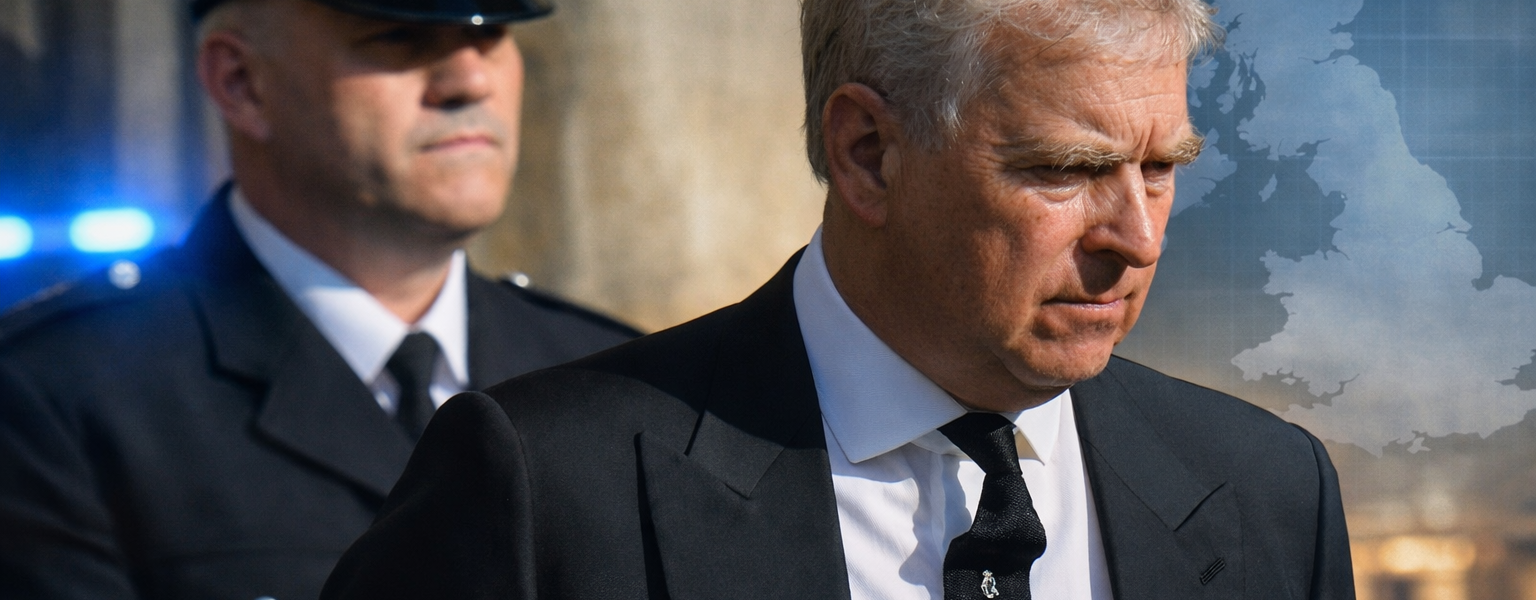
Prince Andrew Arrested Over Epstein Files: Misconduct Probe, Palace Response & Global Fallout


In a development that has shaken Britain’s constitutional and political landscape, Prince Andrew arrest was initiated by UK police on suspicion of misconduct in public office linked to newly released U.S. documents connected to Jeffrey Epstein.
Police later confirmed he was released under investigation, meaning no charges have been filed at this stage and inquiries are ongoing.
The case is being described as the first detention of a senior British royal in modern history, with constitutional, diplomatic, and reputational consequences still unfolding.
What Police Have Officially Confirmed regarding Prince Andrew arrest
✔ Prince Andrew arrested on suspicion of misconduct in public office.
✔ He was later released under investigation.
✔ Allegations relate to potential sharing of confidential material with Jeffrey Epstein around 2010.
✔ No formal charges have been filed as of publication.
✔ King Charles III stated that “the law must take its course.”
✔ Bill Gates cancelled an India AI summit appearance amid renewed scrutiny.
Source reporting: Reuters, Associated Press.
According to reporting by Reuters and Associated Press:
- Prince Andrew Arrested on suspicion of misconduct in public office.
- The investigation relates to allegations that sensitive or confidential material was shared with Jeffrey Epstein around 2010.
- Officers conducted searches at residences connected to Andrew.
- He was subsequently released under investigation, pending further review.
🔎 Important: As of publication, no formal charges have been filed.
What Is “Misconduct in Public Office”?

The offence of misconduct in public office is a serious common law charge in the UK. It applies when:
- A person acting as a public office holder
- Wilfully neglects duties or abuses authority
- In a manner serious enough to amount to criminal misconduct
The offence is triable only on indictment, reflecting its seriousness.
The legal question central to this case will likely be:
- Whether Andrew’s role as a UK trade envoy qualifies as acting in a “public office” for this offence.
- Whether any alleged document sharing constituted wilful misconduct.
The Allegations: What Is Being Examined?
Investigators are reportedly examining whether:
- Confidential government or trade-related documents were forwarded to Epstein in 2010.
- The material was sensitive in nature.
- If proven, the action breached official duties.
Andrew has denied wrongdoing.
At this stage, the evidentiary foundation of the claims has not been publicly disclosed in detail.
Palace Response: Institutional Distance
King Charles III issued a restrained public statement emphasising that:
“The law must take its course.”
The phrasing signals:
- No institutional intervention.
- A clear separation between the monarchy and the legal process.
- A reputational containment strategy to protect the Crown as an institution.
This constitutional distancing is significant in preserving public confidence in policing independence.
Why This Case Is International
The story extends beyond Britain because the newly released “Epstein files” have triggered renewed scrutiny of global figures previously linked to Epstein.
Notably, Bill Gates cancelled a scheduled appearance at India’s AI summit, amid intensified media focus on historical associations. His foundation stated the goal was to keep attention on the event’s agenda rather than controversy.
This demonstrates how reputational risk now spreads rapidly across:
- Politics
- Philanthropy
- Corporate leadership
- International diplomacy
Constitutional and Political Implications
If the investigation progresses, several consequences could follow:
1️⃣ Legal Precedent
A charging decision would mark a constitutional moment regarding the accountability of senior royals.
2️⃣ Oversight of Trade Envoy Roles
Questions may arise regarding:
- Information access controls
- Security vetting
- Documentation protocols
- Lobbying transparency
3️⃣ Monarchy’s Public Standing
While Andrew stepped back from royal duties previously, any criminal proceedings could:
- Intensify republican sentiment
- Trigger parliamentary scrutiny
- Reignite debate on royal accountability
What Happens Next?
The process will likely involve:
- Continued evidence review
- Forensic analysis of communications
- CPS evaluation of evidential sufficiency
- Decision on whether to file charges
Possible outcomes:
- No further action
- Additional questioning
- Formal charging and court proceedings
Until then, the case remains under active investigation.
Final Assessment
The Prince Andrew arrest over Epstein files marks a pivotal moment in modern British institutional history. However, it remains legally unresolved.
No charges have been filed.
The investigation is ongoing.
The constitutional, political, and reputational consequences may take months—if not years—to fully unfold.
Prince Andrew arrest, Prince Andrew misconduct investigation, Epstein files UK reaction, Misconduct in public office explained, Royal accountability law UK, King Charles response Prince Andrew, UK constitutional crisis royal family
Discover more from
Subscribe to get the latest posts sent to your email.









1 COMMENTS