
Turkey Gen Z Rebels: Viral Namaz Mockery, Rising Atheism and a Generational Revolt Against Political Islam


Turkey Gen Z Rebels: From Prayer Mockery Trends to Rising Atheism in a Muslim-Majority Nation
By late 2025, a 15-second TikTok clip from a Turkish high school corridor had ignited a global debate about faith, youth culture and political Islam.
A viral moment that shocked a nation
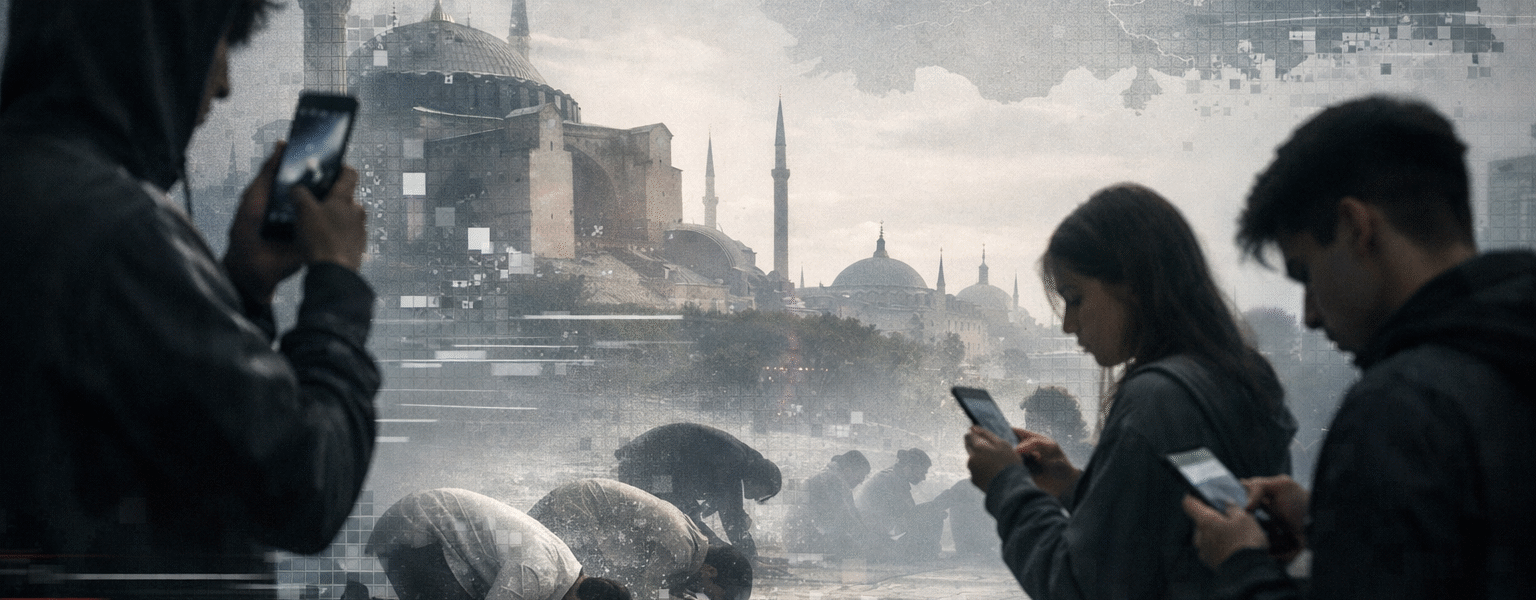
In December 2025, Turkish social media feeds filled with a bizarre, unsettling trend known as the “Ömer Baba Death Scene.” Teenagers—mostly Turkey Gen Z students—filmed themselves lining up in classrooms or playgrounds, mimicking the motions of namaz (Islamic prayer): exaggerated bowing (ruku), prolonged prostration (sajda), whispered mock invocations. The performance ended theatrically, with participants collapsing to the floor as if struck dead, parodying a dramatic scene from a popular Turkish TV series.
Captions such as “Birileri bir şeyler mi yapıyor?” (“Is someone doing something?”) or “Son namaz” (“Final prayer”) accompanied the clips. Within days, millions of views accumulated across TikTok, X and Instagram. Some variants went further—fake beards, distorted Quran recitations, or symbolic gestures of kicking prayer mats—before platforms began removing the most extreme videos.
The backlash was swift and international. Hashtags like #NamazaSaygı (“Respect the prayer”) trended in Turkey and among Muslim communities abroad. Clerics condemned the videos as “vile” and “blasphemous,” parents demanded expulsions, and pro-government commentators called for criminal investigations. Yet the trend did not emerge in a vacuum. It was a symptom of a deeper generational rupture reshaping Turkey’s relationship with Islam.
From provocation to pattern: what the trend revealed
While Turkish authorities framed the videos as juvenile provocation, sociologists and digital culture analysts saw something more structural. The trend’s epicentres were overwhelmingly urban, secular-leaning districts—Istanbul’s Kadıköy and Beşiktaş, Ankara’s Çankaya, parts of İzmir—areas long known for scepticism toward religious conservatism.
What alarmed observers most was participation from students in Imam Hatip schools, religious vocational institutions that expanded massively under President Recep Tayyip Erdoğan. Several viral clips were reportedly filmed inside such schools, intensifying debates about discipline and ideological control.
Islamic scholars and conservative NGOs demanded suspensions, arguing that mockery of prayer crossed from free expression into hate speech. Youth advocates countered that punitive responses would only deepen alienation. “You don’t discipline belief back into someone,” said one Istanbul-based education researcher. “You produce backlash.”
The data behind the Turkey Gen Z rebellion
Hard numbers support the idea that Turkey Gen Z is drifting away from organised religion at an unprecedented pace.
According to the respected Istanbul-based research firm KONDA, Turkey’s religious landscape has shifted dramatically over the past 15 years:
- Self-described “religious” citizens fell from 55% in 2008 to around 46% in 2024–2025.
- Atheists and non-believers rose from 2% in 2008 to roughly 8% in 2025.
- Among young people (18–29), various surveys show irreligion, deism or atheism ranging from 20% to nearly 28.5%, depending on methodology.
- Regular practices—daily prayer and fasting during Ramadan—have declined sharply among urban youth, including those educated in religious schools.
Separate academic studies and polling by Turkish think tanks such as TESEV indicate that many young Turks still identify culturally as Muslim but reject institutional or state-sanctioned Islam. The fastest-growing categories are “believes in God but not religion” and “deist”—labels almost absent in surveys two decades ago.
Even Turkey’s own religious authority, the Diyanet, has quietly acknowledged declining youth engagement in mosque activities, despite record budgets and expanded outreach programs.
A backlash against politicised piety
Analysts increasingly frame the shift as a reaction to state-promoted religiosity, not simply Westernisation or secular influence. Since the early 2010s, Erdoğan’s Justice and Development Party (AKP) has explicitly aimed to raise a “pious generation,” lifting headscarf bans, expanding Imam Hatip schools, and embedding religious language into public life.
For many, Turkey Gen Z—who grew up amid economic crises, corruption scandals and political polarisation—this fusion of faith and power has been corrosive.
One 22-year-old university student in Ankara, who asked to remain anonymous, described his journey away from Islam after the failed 2016 coup attempt. “Religion became something the state used to demand loyalty,” he said. “Questioning politics felt like questioning God. I stopped believing in both.”
Others describe disillusionment after exposure to online debates about hadith authenticity, women’s rights, and clerical privilege. Quranism—a movement rejecting hadith and emphasising the Quran alone—has quietly grown among Turkey Gen Z, serving as a transitional space between orthodox belief and full non-belief.
Turkey versus “hardcore” Muslim states
Turkey’s trajectory stands in stark contrast to countries such as Saudi Arabia, Iran or Pakistan, where Muslim identity exceeds 95% and public religious observance is tightly interwoven with law or social pressure.
Turkey’s difference lies in history. Founded as a republic by Mustafa Kemal Atatürk, it institutionalised secularism (laiklik) decades before most Muslim-majority states. Alcohol remains legal and widespread; public criticism of religion, while controversial, is not systematically criminalised. Even under conservative rule, these secular foundations persist.
This space—messy, contested, but relatively open—has allowed Turkey Gen Z dissent to surface online rather than underground. In more restrictive societies, similar attitudes may exist but remain unrecorded.
Global implications and the road ahead
The viral namaz-mockery trend unsettled Muslims worldwide not because it represented Turkey as a whole—it clearly does not—but because it highlighted how digital native generations reinterpret sacred symbols under political pressure.
For Erdoğan and the AKP, the implications are politically serious. Young voters – Turkey Gen Z are drifting away not only from organised religion but also from the party that claimed moral authority over it. Education policies aimed at religious socialisation appear to be backfiring, producing scepticism rather than devotion.
For the wider Muslim world, Turkey offers a preview of a possible future: a society where belief becomes individualised, contested and openly debated, rather than inherited and enforced.
As one Istanbul sociologist put it, “What we are seeing is not the death of faith, but the collapse of obedience.”
Turkey Gen Z namaz mockery, Turkish youth leaving Islam 2025, Turkey atheism rise KONDA, Turkey Gen Z religion crisis, Viral namaz trend Turkey, Turkey youth culture, Religion and politics, Islam and secularism, Social media trends, Turkey Gen Z activism, Middle East & Eurasia
Discover more from
Subscribe to get the latest posts sent to your email.








1 COMMENTS