
India’s Food Adulteration Crisis: How Toxic Food Is Silently Damaging Public Health


India’s Growing Food Adulteration Crisis: A Silent Emergency Eating Into Public Health
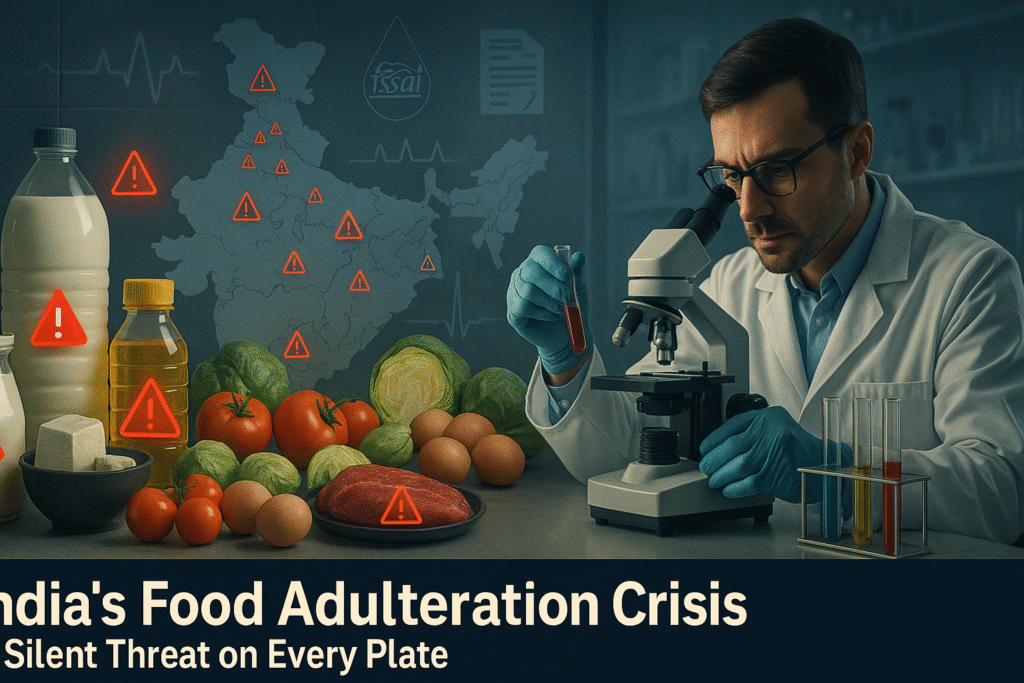
In a country where food is culturally sacred, nutritionally central, and economically foundational, the discovery that much of what Indians consume daily may be contaminated, diluted, or outright toxic has triggered a deep public anxiety. Food adulteration — once dismissed as a marginal problem of unscrupulous traders — has now expanded into a full-blown systemic menace that affects every layer of the nation’s food chain.
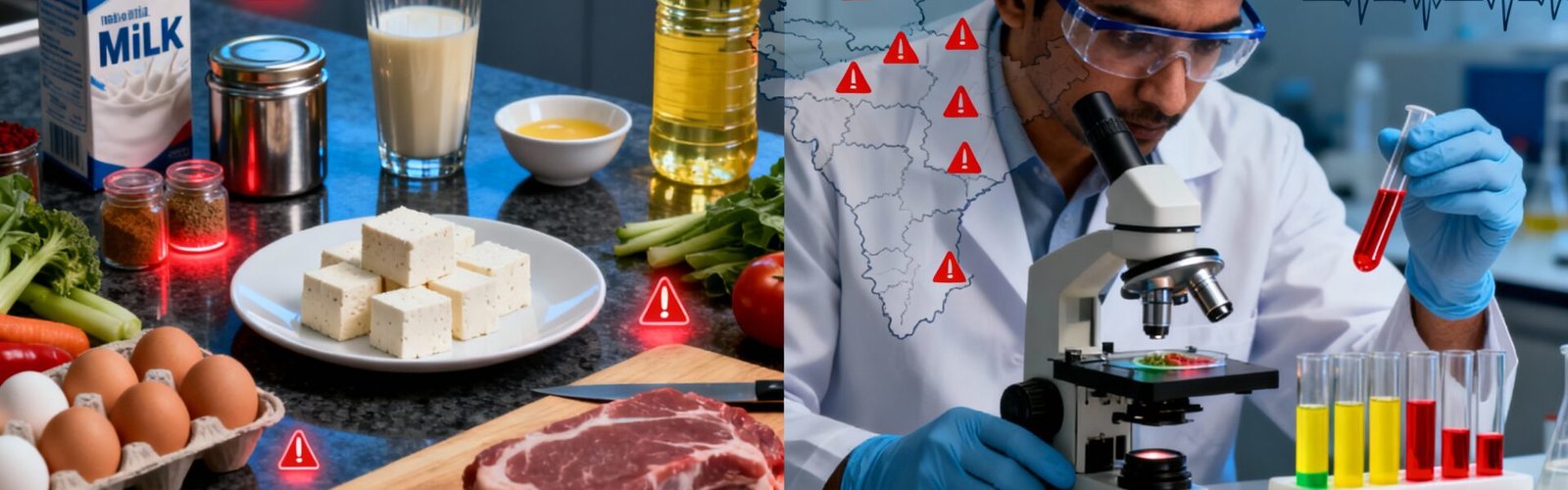
From milk laced with detergent and urea, to ghee adulterated with palm oil, vegetables coated with banned pesticides, eggs containing antibiotic residues, and minced meat bulked with chemicals, India’s food ecosystem is today battling what experts describe as a “silent public-health emergency.”
This crisis is not new. But its scale, sophistication, and consequences have grown exponentially.
A Crisis Quantified: What FSSAI and Government Data Reveal
Recent reports from the Food Safety and Standards Authority of India (FSSAI) paint a grim picture. In its latest nationwide sampling exercise, the regulator found that:
- Nearly 28–30% of food samples tested across India were found to be substandard, misbranded, or unsafe.
- In several states, over 40% of samples failed quality or safety norms.
- Milk and milk products — staples for millions — reported failure rates ranging from 15% to 46% in certain regions.
The National Milk Quality Survey (FSSAI) found that while outright adulteration with hazardous chemicals has declined in some states, contamination with aflatoxins, antibiotics, and excessive residues remains widespread.
Government food inspectors across states also report alarming trends:
- Edible oils are routinely adulterated with cheaper palmolein or recycled oil.
- Ghee and paneer often do not meet basic fat-content criteria.
- Meat products in metros frequently contain synthetic preservatives like sodium nitrite and formaldehyde.
- Restaurant food regularly fails hygiene and licensing standards — with thousands of eateries operating without FSSAI approval.
A 2024 parliamentary standing committee report called it “an epidemic of unsafe food” that India has failed to fully acknowledge.
A History of Food Adulteration: From “Synthetic Milk” to Chemical-Laced Produce
Food adulteration in India is not a modern phenomenon; it has deep structural roots.
The 1980s–1990s: The Age of Synthetic Milk and Spurious Ghee
Several states witnessed the spread of synthetic milk, made using:
- detergents
- urea
- caustic soda
- starch
- vegetable oil
It was cheap to produce and shockingly profitable.
Parallelly, the market saw spurious ghee manufactured from refined vegetable fats and chemical flavouring. Investigations by state authorities regularly uncovered hundreds of illegal dairies producing such counterfeit products.
2000s: The Pesticide and Chemical Wave
As agriculture intensified, India’s fruits and vegetables became increasingly pesticide-heavy. Studies by ICAR and independent labs found:
- Organophosphate pesticides at levels exceeding global safety limits.
- Carbide-ripened mangoes and bananas, despite legal bans.
- Wax-coated apples using industrial-grade wax.
2010s–Present: The Era of Antibiotics and Industrial Contaminants
Modern adulteration is more sophisticated and harder to detect:
- Poultry and egg farms rely heavily on antibiotics — leading to residues in the final product and contributing to antibiotic resistance.
- Fish markets frequently use formalin, a chemical preservative unfit for consumption.
- Spices — a cornerstone of Indian cuisine — are increasingly found to contain metanil yellow, Sudan dyes, lead chromate, and other carcinogenic colourants.
The pattern is clear: adulteration has evolved alongside India’s economic growth, industrial expansion, and gaps in regulation.
Why Adulteration Thrives: A Systemic Failure
1. Lax Enforcement and Regulatory Overload
FSSAI, despite being the central authority, has far fewer inspectors than required to monitor India’s massive food market.
Local food safety officers face chronic challenges:
- Shortage of testing laboratories.
- High caseloads.
- Slow prosecution processes.
- Political or commercial pressure in enforcement.
Conviction rates remain low, and penalties often do not deter offenders.
2. A Fragmented and Informal Food Economy
Nearly 70% of India’s food supply chain is informal, including:
- unregistered restaurants
- small dairies
- roadside vendors
- unorganized slaughterhouses
- small flour mills
This informal sector is difficult to police and operates outside hygiene norms.
3. Economic Incentives
With rising prices of milk, ghee, vegetables, and meat, adulteration provides:
- Higher profit margins
- Lower input costs
- Increased shelf life
For many unscrupulous vendors, the financial temptation surpasses fear of punishment.
4. Consumer Unawareness
Most Indian households lack awareness of:
- how to read FSSAI licenses
- how to check batch numbers
- how to identify adulteration through simple tests
This makes consumers vulnerable.
The Public Health Burden: A Slow Poisoning
Doctors, epidemiologists, and nutritionists warn that food adulteration has long-term consequences.
Chemical Contaminants
Substances like formalin, urea, detergents, and industrial dyes are associated with:
- kidney damage
- liver toxicity
- gastrointestinal infections
- hormonal imbalances
- increased cancer risk
Pesticides and Heavy Metals
Long-term exposure contributes to:
- neurological disorders
- developmental delays in children
- reproductive issues
- endocrine disruption
Antibiotic Residues in Meat & Eggs
India is already facing an antimicrobial resistance crisis, and food adulteration or contamination is a major contributor. Studies in recent years show:
- routine use of colistin (a last-resort antibiotic) in poultry
- high levels of tetracycline, ciprofloxacin residues
Nutritional Loss
Adulteration also dilutes nutrients, leading to:
- malnutrition
- anemia
- weakened immunity
A “well-fed but undernourished” population is emerging.
Expert Observations
Food technologists warn that India must treat adulteration as a food security issue, not merely a law-and-order problem.
Food Safety Expert
“India’s food adulteration is no longer just contamination — it’s industrial fraud. The scale is systemic, and enforcement has not kept pace.”
Public Health Specialist :
“The rise in lifestyle diseases, cancers, and gut disorders has a direct correlation with what we are unknowingly consuming.”
Several policy watchdogs argue that India needs a national food safety audit framework similar to those used in the EU.
The Socio-Economic Cost of an Adulterated Market
Food adulteration impacts India in multiple ways:
1. Erodes Consumer Trust
Markets lose credibility, especially in:
- dairy
- meats
- packaged foods
2. Hurts Honest Businesses
Small and medium enterprises selling genuine products are priced out by cheaper adulterated alternatives.
3. Increases Healthcare Burden
Chronic illnesses linked to unsafe food adulteration cost India billions annually in:
- hospitalizations
- medication
- productivity loss
4. Threatens India’s Export Reputation
Global inspections of Indian spices, seafood, and processed foods occasionally reveal harmful residues, harming international trade credibility.
Government Interventions: Present and Possible
1. Strengthening FSSAI Surveillance
The government has begun:
- increasing sample testing
- upgrading labs
- centralising digital traceability
- launching the Eat Right India campaign
But experts say enforcement capacity must triple to meet India’s needs.
2. Stricter Penalties
Draft amendments propose:
- higher fines
- mandatory jail terms
- faster prosecution mechanisms
3. State-Level Food Safety Courts
Several states now operate special courts to speed up food adulteration cases.
4. Technology Integration
Future measures could include:
- QR-based food traceability
- mandatory supplier audits
- AI-based risk detection
- blockchain for supply chain transparency
5. Consumer Awareness Programs
The government and civil society are working to introduce:
- mobile apps to verify FSSAI licenses
- school-level food safety modules
- national campaigns on identifying adulteration
How Consumers Can Protect Themselves: Practical Advice
1. Basic Home food Adulteration Tests
Some common checks include:
- Milk: Add a few drops of acid (e.g., lemon juice). Detergent-laced milk forms foam; pure milk curdles.
- Ghee: Pure ghee solidifies uniformly; adulterated ghee separates into layers.
- Turmeric: Mix in water — metanil yellow settles at the bottom.
- Chilli powder: Rub on wet tissue — artificial dyes leave stains.
- Salt: The Iodine test can detect adulteration with chalk powder.
2. Check FSSAI License Number
Every packaged item must display a 14-digit FSSAI code, verifiable online.
3. Buy From Trusted Suppliers
Prefer:
- certified dairies
- reputable brands
- registered meat and fish outlets
- verified organic stores
4. Avoid Extremely Cheap Products
If a product is too cheap to be real, it often isn’t real.
5. Wash Produce Thoroughly
Soaking vegetables in a mild salt or baking soda solution helps reduce pesticide residues.
Conclusion: India Must Treat Food Safety as a National Priority
Food adulteration is not merely an economic crime — it is a public health catastrophe that undermines the well-being, productivity, and trust of 1.4 billion citizens. The data is clear: India’s food system requires urgent structural reform, stronger regulation, harsher penalties, and smarter surveillance.
But meaningful change will require more than state action alone. It demands informed consumers, responsible businesses, and a cultural shift that rejects adulteration as “normal” or “inevitable.”
As India aspires to global leadership — in economy, health, and human development — ensuring the purity of the food on every Indian’s plate must become a non-negotiable national mission.
food adulteration in India, India food safety crisis, FSSAI food sample failure data, adulterated milk ghee edible oil, health risks of food adulteration, how to detect adulterated food at home, FSSAI regulations India, pesticide residue in vegetables India, antibiotic residues in meat and eggs India, consumer awareness food safety India
Discover more from
Subscribe to get the latest posts sent to your email.