
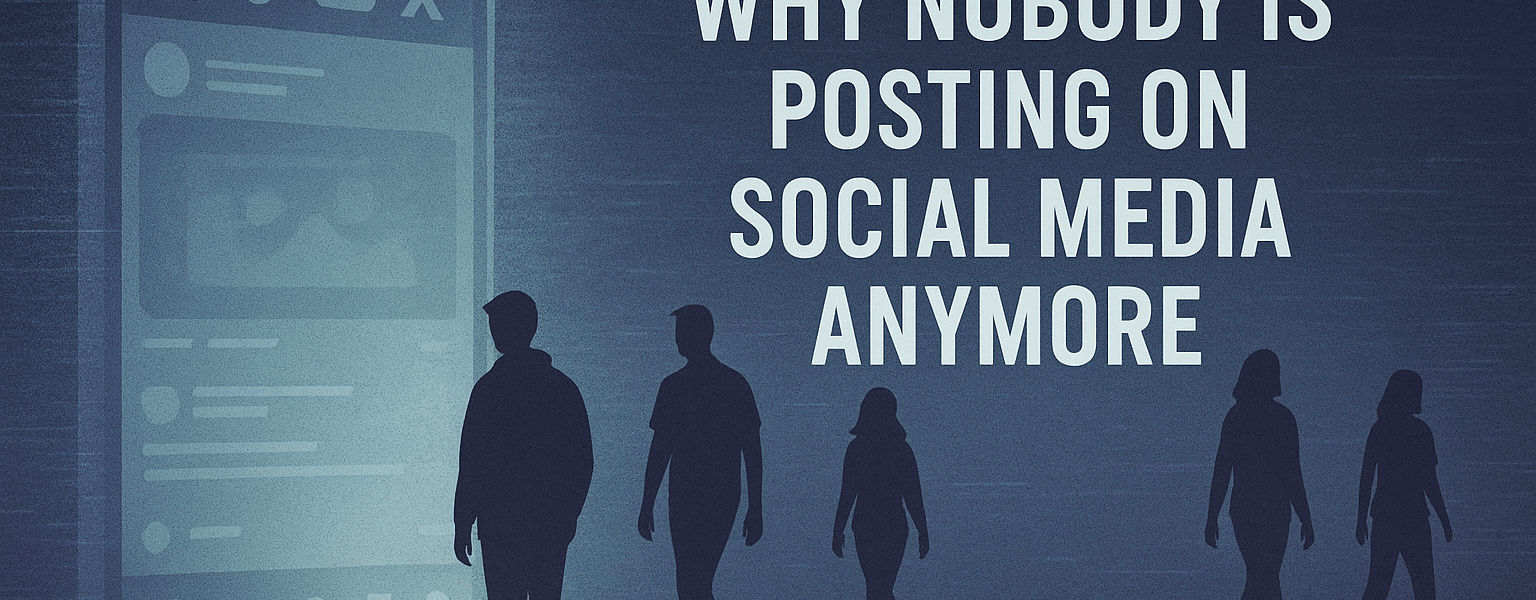
Why Nobody Is Posting on Social Media Anymore: The Real Reasons Behind the Silent Feed Crisis


Why Nobody Is Posting on Social Media Anymore
For more than a decade, posting on social media has defined modern life. From Instagram stories to Facebook updates and TikTok trends, the culture of sharing was constant, public and — for many — addictive. But as 2025 unfolds, platforms are witnessing a noticeable shift: people are posting far less, scrolling more passively, or quietly quitting social media altogether.
This isn’t a vague impression. Multiple surveys — including Dealing with social media fatigue: A focused study on Gen Z research paper, Social media burnout and social anxiety Report, and New research from creator-first social agency Billion Dollar Boy — show a 10% to 15% decline in active posting and content creation across major platforms in the last few years. Instagram itself admitted in earnings calls that users are “shifting toward messaging and private sharing.” TikTok creators, too, report a drop in consistent posting due to burnout and algorithmic unpredictability.
The era of oversharing is fading — and it’s not hard to see why.
1. Mental Health Concerns: Anxiety, Depression & Digital Exhaustion
Psychologists say that the very platforms built to connect people may now be overwhelming them.
A 2024 American Psychological Association (APA) review found that heavy social media use is strongly associated with anxiety, depression, low self-esteem and compulsive comparison, especially among younger users.
Many Gen Z users describe social media as a “constant performance.”
“It feels like every post is judged. I’d rather disappear than deal with the pressure,” says Insta User, 19, who recently deleted her Instagram.
Doomscrolling — endlessly consuming negative or distressing content — has become so widespread that mental health experts now classify it as a form of digital self-harm.
The result? Social media detoxes are rising, with Google Trends showing a steady climb in searches for “social media break,” “Instagram detox,” and “quit Facebook” since 2022.
2. Creator Burnout: The Collapse of the ‘Always-On’ Hustle
For social media creators, the pressure is even more intense.
A 2023 study by the Creator Burnout Index found that nearly 60% of creators feel “severely burnt out,” and almost half have reduced their posting frequency. The reasons are familiar: algorithm pressure, fluctuating views, brand deadlines, and the mental load of being both a public figure and a business.
“You have to edit, negotiate, track analytics, reply to comments and be creatively fresh every single day,” says Delhi-based creator, who scaled back after six years online.
“It’s not sustainable anymore.”
Many creators now post only occasionally, or have shifted to long-form, slower content like newsletters or podcasts.
3. Opaque Algorithms & Declining Organic Reach
One of the most cited frustrations among both creators and casual users is the feeling of shouting into the void.
Meta, TikTok, X and YouTube now heavily prioritise algorithmic feeds, pushing paid promotions and trending content over personal posts. A 2024 Social report found that organic reach on Instagram fell by over 12% year-on-year.
Creators say the system feels rigged.
“You can put hours into a video and get 2% of your followers seeing it,” says a tech creator in Bangalore.
“It’s demoralising.”
Users, meanwhile, feel disconnected from their own friends because personal posts are drowned out by viral clips, politics and ads.
4. Privacy Fears & Surveillance Fatigue
People are increasingly uncomfortable with the amount of data collected through their digital lives.
Ever since major scandals like Cambridge Analytica, the rise of AI facial recognition, and intrusive location-tracking controversies across apps, online privacy has become a mainstream concern.
Gen Z, once assumed to be “privacy indifferent,” is now more cautious than any previous generation.
5. Content Fatigue: Too Much Negativity, Too Little Joy
Social platforms increasingly reward outrage, extremism and polarisation because these drive engagement. Users, however, find these feeds mentally draining.
A 2024 research study revealed that anger and controversy spread 20% faster than neutral content — and social media algorithms amplify them.
The result:
- More trolling
- More political fights
- More misinformation
- Less joy, humour and creativity
Many describe their feeds as “noisy,” “toxic,” or “the same recycled content.”
6. Productivity Priorities: People Want Their Time Back
Gen Z is the first generation to openly say, “I don’t want to waste my life online.”
Students preparing for competitive exams, young professionals, and even parents are reducing screen time consciously. Apps like Forest, Opal and ScreenZen — designed to limit social media use — have seen surges in downloads since 2023.
A 2023 productivity study found that workers who reduce social media use gain an average of 11 productive hours per week.
As people focus on careers, fitness, relationships and offline hobbies, posting becomes less of a priority — or even an obstacle.
7. Rise of Smaller, Safer & More Authentic Spaces
While big public platforms decline, private digital communities are booming.
People increasingly prefer:
- Close friend groups
- WhatsApp and Telegram channels
- Discord servers
- Subreddits
- Slack-style communities
- Newsletters (Substack growth continues)
- In-person meetups and hobby groups
These spaces feel safer, less performative and more genuine.
“I share more in my 12-person Discord community than I ever did on Instagram,” says a 22-year-old design student in Mumbai.
Big public posting is out. Small, intimate circles are in.
What Experts Say: The Social Media Slowdown Is Real — and Growing
Digital culture researchers argue that this shift marks the end of the “public posting era.”
A psychologist specialising in online behaviour notes:
“The constant visibility and performative nature of social media has pushed people towards quieter, more private digital experiences.”
Tech analyst has predicted a future where social media becomes less about broadcasting and more about messaging, micro-communities and creator niches.
Even companies like Meta are investing more in private messaging features, indicating they see the writing on the wall.
What This Means for the Future
The decline in public posting doesn’t mean social media is dying — but it is evolving dramatically.
For Platforms:
They may need to reinvent themselves around privacy, authenticity and healthier engagement models.
For Creators:
The era of daily posting might fade, replaced by slower, high-quality, long-form or community-based content.
For Users:
A healthier relationship with the digital world could emerge — with more boundaries, more balance and more intentional sharing.
For Society:
The decline of public posting could calm the culture of comparison and reduce online toxicity, shifting the internet toward smaller, human-centric spaces.
Conclusion
People aren’t posting because they’re exhausted — emotionally, mentally and digitally.
The shine of constant sharing has worn off. What was once thrilling now often feels stressful, invasive, or simply pointless.
As younger generations reclaim their time, energy and privacy, the future of social media may be quieter, more private, and more human — a dramatic shift from the algorithm-driven frenzy of the last decade.
The question is not “Why is nobody posting anymore?”
The real question is what comes next — and whether platforms are ready for it.
Why nobody is posting on social media anymore, Social media posting decline, Gen Z quitting social media, Creator burnout 2025, Social media detox trend, Declining Instagram activity, Algorithm fatigue, Mental health and social media, Social media privacy fears, Content fatigue, Why people are leaving social media, Digital culture trends 2025
#SocialMediaTrends #GenZ #CreatorBurnout #DigitalDetox #MentalHealth #AlgorithmFatigue #OnlinePrivacy #ContentFatigue #SocialMediaDecline #DigitalCulture #TechNews
Discover more from
Subscribe to get the latest posts sent to your email.



1 COMMENTS