
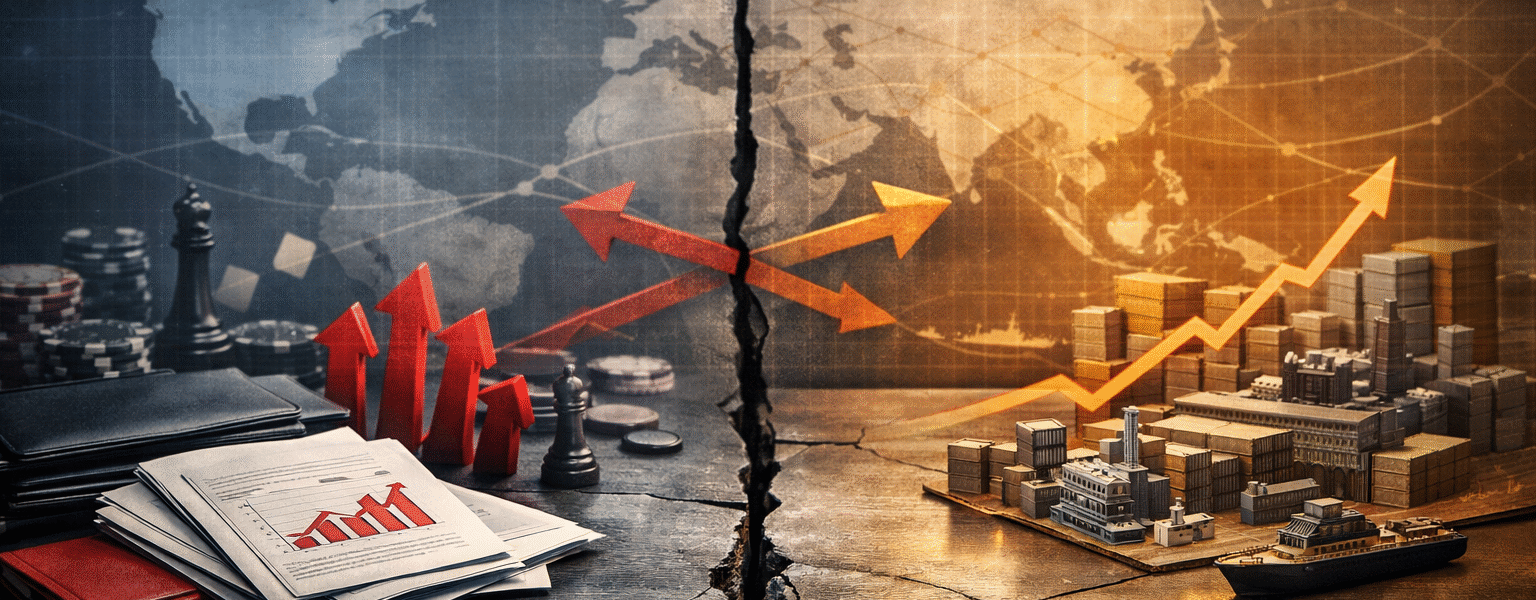


Introduction to Trump Tariff
In late 2025, a dramatic episode unfolded in global trade politics: U.S. President Donald Trump publicly boasted about an imminent US-India trade deal, only to sulk weeks later when he claimed that Indian Prime Minister Narendra Modi hadn’t returned his call, stalling the agreement. The story ricocheted across global newswires, from Reuters to The Washington Post, triggering a flurry of interpretations about pride, protocol, and power.
Imagine a leader who publicly lavishes praise on India’s growth one day and threatens 50% tariffs on its exports the next. That was the paradox defining Washington-New Delhi economic diplomacy in 2025 — a swing from “best buds” to Trump Tariff threats within months. Now, with Trump warning of even higher duties unless India curbs Russian oil imports, and India brushing off the narrative that a missed call scuttled negotiations, the drama feels like a geopolitical soap opera with real economic stakes.
Is India simply another negotiating partner in Trump’s unpredictable trade playbook — or has one of the world’s fastest-growing major economies begun to outmanoeuvre Washington itself? Put bluntly: Is India the new China in Trump’s crosshairs, forcing the U.S. to rethink its claims of trade leadership? The stakes could reshape global commerce in 2026 and beyond.
Background Context
The current impasse in US-India trade negotiations didn’t happen overnight. After Trump’s 2024 election victory, Washington set out to renegotiate bilateral terms with India, aiming to reduce America’s large trade deficit and secure deeper market access for U.S. firms. India, for its part, entered talks with ambitions to expand exports while protecting sensitive domestic sectors.
According to U.S. Trade Representative (USTR) data, bilateral trade in goods and services reached an estimated $212 billion in 2024, with the U.S. running a significant goods deficit of approximately $45.8 billion, largely due to robust Indian exports of textiles, machinery, and pharmaceuticals. Indian sources also highlight that India maintained a trade surplus with the United States, reflecting its export strength and economic momentum.
Yet beneath the impressive figures were deep disagreements. Washington pushed for increased access for American agricultural and high-tech exports, tighter data localisation rules that would benefit U.S. tech companies, and a rollback of India’s Production-Linked Incentive (PLI) schemes that bolster domestic champions. New Delhi, conscious of its own socio-economic priorities, resisted opening its market too quickly, especially in farming and dairy, where millions of livelihoods depend on tariff protections.
Earlier efforts under President Biden had flirted with smaller deals, but structural differences remained. Trump’s return in 2025 added a sense of urgency wrapped in uncertainty — from promises of a mega-deal to sharp Trump Tariff hikes that rattled Indian exporters.
Trump’s Tactics Analysed
Understanding the trade tussle demands a close look at Trump’s negotiation style — a blend of theatrics and pressure tactics. The man who once coined “America First” as a global trade mantra is no stranger to erosive tariff rhetoric and unpredictable deadlines. His strategy echoes the “art of the deal,” where bold public posturing is meant to unsettle the opponent and extract concessions.
Consider the Trump Tariff roller-coaster: in August 2025, Trump doubled U.S. tariffs on Indian goods to roughly 50%, one of the steepest punitive trade actions against any large economy in decades. Initially, the U.S. slapped a 25% “reciprocal tariff” on imports, followed by an additional 25% penalty linked to India’s continued Russian oil purchases. That wasn’t merely economic policy — it was strategic signalling.
Then came the rhetorical pressure. Trump publicly warned New Delhi that tariffs could rise further if India didn’t bow to U.S. demands on energy sourcing. Republican lawmakers even floated legislation for Trump Tariffs as high as 500% on countries still importing Russian oil — a direct threat with seismic potential for Indian exporters.
Trump also used social media — especially Truthsocial — to broadcast his negotiating gambits, from lauding Modi one day to castigating Indian policies the next. This served to keep audiences (and markets) guessing. But such ego-driven pressure can backfire against a partner with firm policy frameworks and high domestic accountability — as New Delhi has demonstrated.
India’s response hasn’t been bluster but businesslike resilience — sticking to “kaam ki baat” (work-oriented talk) rather than rhetorical warfare. Even the U.S. claim about a missed Modi phone call was swiftly rebutted by India’s Ministry of External Affairs, noting multiple conversations between the leaders in 2025.
In other words, Trump’s high-stakes poker game met a player willing to call the bluff.
India’s Strategic Stand
While Trump’s approach leaned on pressure, India’s negotiating playbook emphasised economic diversification and strategic autonomy. With its economy projected to grow above 7% in 2026, India isn’t merely a developing manufacturer — it’s an emerging powerhouse reshaping global value chains.
India’s resilience stems from several vectors:
- Diversification of trade partners: New Delhi has deepened ties with the EU, ASEAN, and Middle East markets, reducing overdependence on any single country for exports.
- Atmanirbhar (self-reliant) policies: Domestic manufacturing incentives such as the PLI schemes have fortified local industries, giving India leverage in trade talks.
- Strategic energy choices: India’s continued purchases of Russian oil reflect pragmatic energy security choices, which Trump has tried to weaponise into tariff leverage — to limited diplomatic effect.
This isn’t the economy of 1990 anymore. Back then, a Trump Tariff skirmish might have forced New Delhi to capitulate; today, India treats trade negotiations as strategic chess, not tariff-laden checkers. When Washington threatened punitive measures, Indian exporters began pre-emptively diversifying to markets across the Middle East, Europe, and Latin America.
The metaphor is apt: Trump may enjoy the swagger of a high-stakes poker player, but India plays a patient game of global trade chess, methodically positioning pieces across the board, anticipating moves several turns ahead.
Global Implications & Future Outlook
This standoff ripples beyond Washington and New Delhi. In a post-China decoupling era, the U.S. seeks new partners to anchor supply chains — yet its heavy-handed tactics risk alienating potential allies. If Washington expects compliant trade partners like it once did smaller economies, India’s example shows that big players won’t be bullied into submission.
For markets, the clock is ticking. Analysts see potential phased Trump tariff reductions, linked to concrete concessions on energy and market access. There’s also a growing conversation in Geneva: if the U.S. persists with punitive tariffs, India could revisit WTO dispute mechanisms — a technical and long-term challenge to Washington’s approach.
Yet there’s optimism. Both economies have incentives to bridge differences — from defence production to semiconductors and clean energy. If negotiations shift from headline-grabbing ultimatums to structured, phased agreements, a framework could emerge that respects India’s growth imperatives while addressing U.S. export concerns.
Conclusion
India’s unwavering stance in the face of Trump tariff theatrics underscores a broader shift in global trade dynamics. As New Delhi prioritises strategic autonomy and diversified economic partnerships, the era of unilateral trade dominance is waning. Time will tell when and how a deal materialises — but for now, Bharat stands tall, not as a supplicant in Trump’s tariff tango but as an equal partner demanding respect.
US India trade dispute, Trump tariffs India, US India trade deal 2026, Trump trade strategy India, India trade resilience, US trade dominance decline, India US tariff war, Trump negotiation tactics, Atmanirbhar Bharat trade policy, India global supply chain shift, WTO trade dispute India US, Trump Modi trade tensions, Post-China trade realignment
Discover more from
Subscribe to get the latest posts sent to your email.







1 COMMENTS