Trump’s ‘Board of Peace’ at Davos Is Reshaping Global Power — And Challenging the UN Itself


Trump’s “Board of Peace” and the Unravelling of Global Governance
Why a Davos announcement in 2026 is being seen as the boldest challenge yet to the United Nations
When Donald Trump took the stage at the World Economic Forum in Davos, seasoned diplomats expected provocation. What they did not expect was a new global institution—the so-called “Board of Peace”—whose structure, language, and ambitions appear designed to sidestep the United Nations rather than reform it.
Presented as a pragmatic solution to diplomatic gridlock, the Board of Peace has quickly ignited a geopolitical firestorm. Critics call it an “Alternative UN Security Council.” Supporters call it a long-overdue fix to a broken system. The truth lies somewhere more unsettling: this may be the clearest sign yet that the post-1945 international order is entering its most fragile phase.
An “Alternative Security Council” in All but Name
Formally, the Board of Peace is not a replacement for the United Nations or its most powerful body, the UN Security Council. Substantively, however, its charter tells another story.
From Gaza Taskforce to Global Mandate
- Initial pitch (late 2025): A narrowly defined mechanism to oversee post-war reconstruction in Gaza and shepherd the Israeli-Palestinian peace process.
- Davos reveal (2026): A body empowered to “promote stability” and “secure enduring peace” anywhere in the world.
This expansion—what analysts call scope creep—is critical. Peace, stability, reconstruction, enforcement: these are the very domains the UN Security Council was created to manage.
Diplomatic Code, Decoded
The charter’s most quoted line promises the “courage to depart from approaches and institutions that have too often failed.”
In diplomatic language, this is not a subtle point. It is a direct critique of UN multilateralism, veto politics, and procedural inertia—long-standing Trump grievances dating back to his first term in office.
Unlike the UN, where rival powers can block resolutions, the Board of peace is explicitly US-led, centralised, and unilateral.
Trump Tariff Tango: Why India Is No Longer Afraid of U.S. Trade Pressure
The Billion-Dollar Question: Membership for Sale?
Nothing has fueled controversy more than the Board’s financing model.
The Structure
- Three-year renewable memberships for participating states
- A path to a “Permanent Seat” via a $1 billion cash contribution
The Official Line
The administration insists this is not a fee, but a reconstruction contribution, initially tied to Gaza and potentially to other conflict zones.
The Political Reality
To critics, this is transactional diplomacy institutionalised. Influence is no longer rooted in sovereign equality or historical legitimacy, but in financial capacity and alignment with US priorities.
Where the UN Security Council reflects the power realities of 1945, the Board reflects the capital flows and political loyalties of 2026.
Theatre or Strategy? The Trumpian Blend of Both
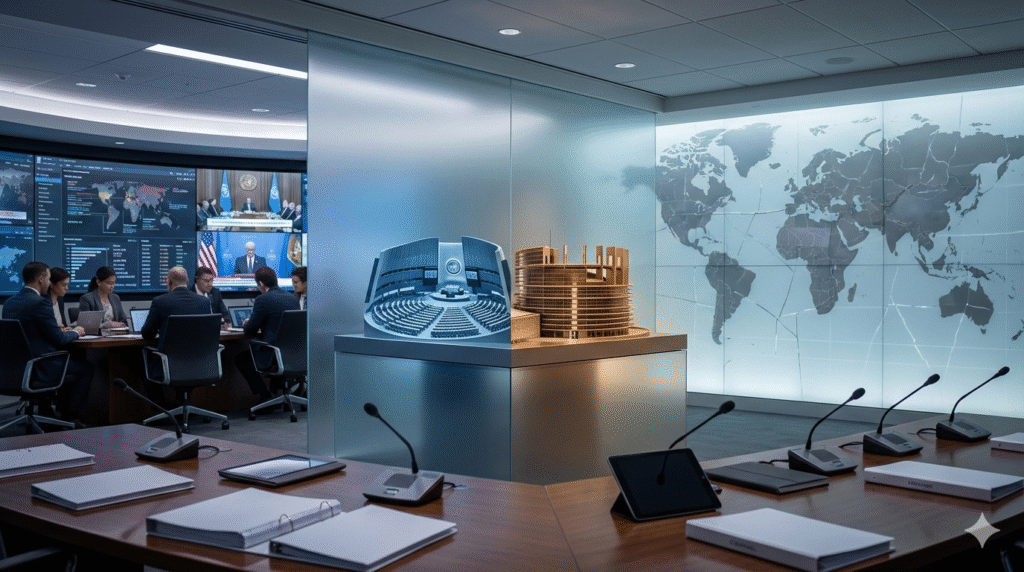
The Board’s debut combined high-stakes geopolitics with unmistakable Trump-era theatrics.
The Optics
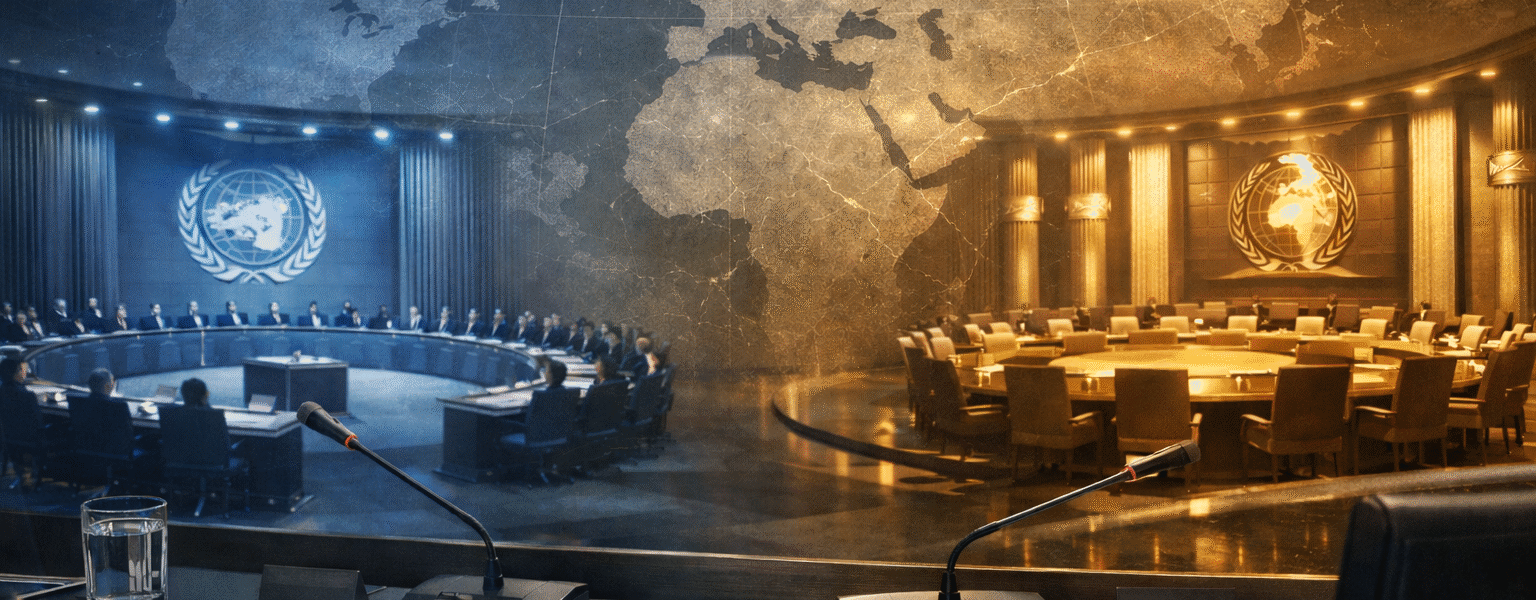
- Logo controversy: Observers noted its striking resemblance to the UN emblem—except rendered in gold and centred on the Americas, subtly repositioning global authority toward Washington.
- The Canada episode: Trump publicly invited Canadian Prime Minister Mark Carney, only to revoke the invitation hours later on social media after critical remarks, replacing diplomacy with tariff threats.
To many diplomats, these moments confirmed fears that the Board operates less like an institution and more like a court of presidential favour.
The Strategic Core
Yet beneath the drama lies a serious geopolitical calculation. By creating a parallel venue for peace negotiations, the US can:
- Bypass Security Council vetoes
- Channel reconstruction funds outside UN agencies
- Shift legitimacy away from New York toward US-controlled forums
If major conflicts are resolved through the Board of Peace, the UN’s relevance erodes without any formal withdrawal.
Power, Control, and Legacy: The Real Motives
Analysts identify three overlapping drivers behind the initiative:
1. Escaping the Veto Trap
In the UN system, Russia and China retain the power. On the Board of peace, the Chairman—named in the charter as Trump himself—controls:
- Membership
- Agenda
- Final authority over decisions
2. Codifying Transactional Alliances
This formalises a worldview Trump has articulated for years: alliances must pay, contribute, and demonstrate loyalty—or lose access.
3. Building a Personal International Order
More than policy, the Board of Peace is about legacy. It seeks to replace the liberal, rules-based order of 1945 with a personalised, executive-driven system centred on US leadership and Trump’s authority.
Who’s In—and Who’s Out
The composition of the Board reinforces its hybrid nature: part diplomacy, part finance, part personal network.
Leadership & Key Figures
- Chairman: Donald Trump
- Jared Kushner: Architect of the Abraham Accords
- Tony Blair
- Ajay Banga
- Steve Witkoff, Marco Rubio
State Participants
- Committed allies: Israel, Hungary, Argentina
- Pragmatic participants: UAE, Egypt, other Arab states tied to Gaza reconstruction
- Notable absentees: France, Germany, and key EU powers—many viewing the Board as a direct threat to multilateralism
Why This Actually Matters
For all its personality-driven volatility, the Board of Peace is geopolitically serious for one reason: power follows money and enforcement capacity.
A Fragmenting World Order
If US diplomacy and funding flow through the Board rather than UN channels:
- The UN weakens operationally
- Global governance bifurcates into competing blocs
- Conflict resolution becomes forum-shopping rather than rule-based
A Crisis of Legitimacy
The danger is not total replacement, but competition. If wars in Ukraine, Gaza, or future flashpoints are settled outside UN frameworks, the UN risks becoming ceremonial.
An Inherently Fragile System
Unlike the UN, which survives leadership change, the Board is built around one individual. Its authority could evaporate with a single electoral shift, making it a volatile foundation for global peace.
The Bigger Picture
The Board of Peace is not just another Trump headline. It is an experiment in privatised, personalised global governance—a model where diplomacy is transactional, institutions are optional, and legitimacy flows from money and proximity to power.
Whether it reshapes the world or collapses under its own weight, one reality is already clear:
The era of uncontested UN centrality is ending—and the struggle over what replaces it has begun.
Trump Board of Peace, aternative UN Security Council, Trump Davos 2026, challenge to United Nations, global governance crisis, US-led peace framework, UN Security Council bypass, geopolitical world order shift,
Discover more from
Subscribe to get the latest posts sent to your email.