
Rising Stress, Anxiety and Depression: Causes, Symptoms, Brain Science & Proven Ways to Heal in a Fast-Paced Modern World”


Rising Stress, Anxiety and Depression in Modern Society: Understanding the Crisis and the New Wellness Economy Built Around It
In today’s fast-paced, hyperconnected world, mental health challenges such as stress, tension, anxiety, and depression have become increasingly common. What were once occasional emotional states have now evolved into chronic concerns for millions—driven by long working hours, digital overload, social comparison, economic uncertainty, and a lifestyle constantly racing against time.
Alongside this rise, an entire wellness economy—from therapy and counselling to self-help books, online motivation courses, mindfulness apps, and happiness coaching—has emerged to meet the growing need for emotional stability. According to global mental-health surveys, more people today seek mental-health support than at any other point in recorded history.
This article dives deep into what these conditions truly are, why they happen, and how modern science and ancient practices like yoga can help restore balance.
1. Stress, Anxiety and Depression: Not the Same Thing
Although people often use these terms interchangeably, psychology makes important distinctions.
Stress — Pressure From the Present
Root cause: Current challenges or demands
Examples: Work deadlines, financial pressure, relationship problems
Scientific basis:
Stress triggers the body’s fight-or-flight response, releasing cortisol and adrenaline. Short-term stress increases focus, but chronic stress disturbs metabolism, immunity, and sleep.
Symptoms:
- Irritability and restlessness
- Headaches, muscle tightness
- Poor concentration
- Sleep disturbances
- Elevated heart rate
Neuroscience insight:
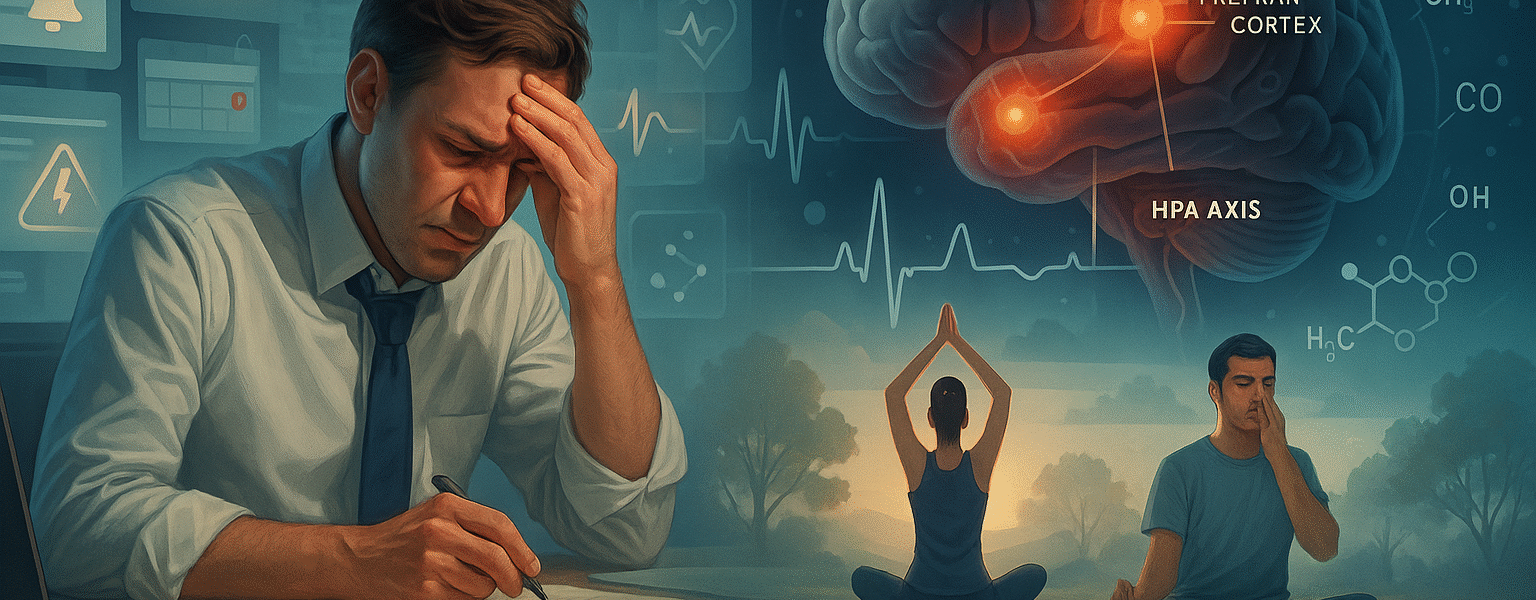
Chronic stress disrupts the HPA axis (Hypothalamic–Pituitary–Adrenal system), leading to hormonal imbalance and impaired cognitive functions such as memory and decision-making.
Tension — A Physical Manifestation of Mental Strain
Root cause: Persistent stress or worry that accumulates in the body.
Symptoms:
- Tight shoulders, jaw clenching
- Tension headaches
- Digestive discomfort
- Difficulty relaxing
Tension acts as the physical residue of unresolved stress and mild anxiety.
Anxiety — Fear of the Future
Root cause: Anticipatory fear, uncertainty, or apprehension about future events
Typical thought patterns: “What if something goes wrong?”
Psychology notes: Anxiety disorders occur when these fears become chronic and disproportionate.
Symptoms:
- Rapid heartbeat
- Sweaty palms
- Excessive worry
- Feeling ‘on edge’
- Trouble concentrating
- Sleep problems (especially difficulty staying asleep)
Neuroscience insight:
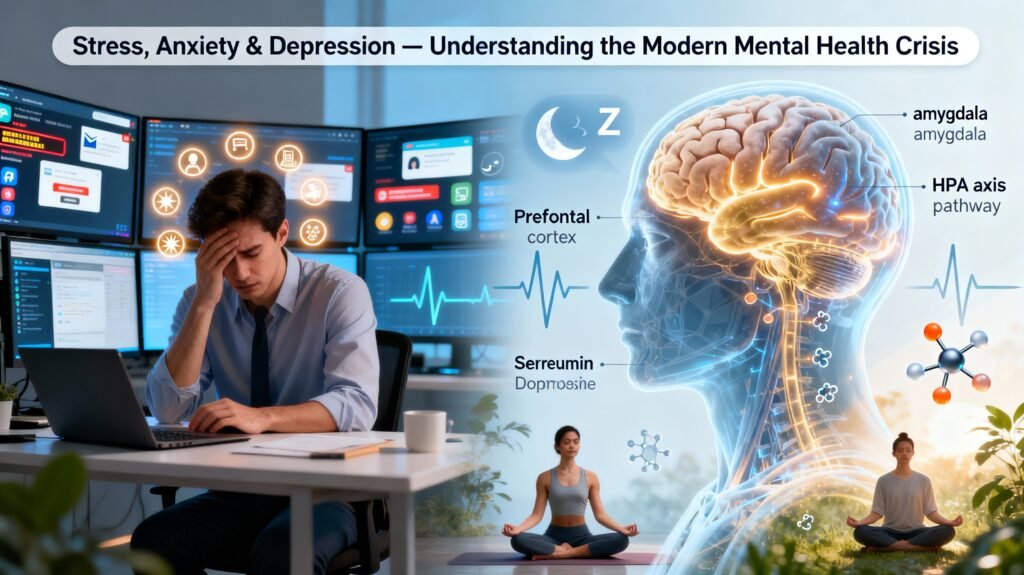
Anxiety involves hyperactivation of the amygdala, the brain’s fear centre, and reduced regulation from the prefrontal cortex, which normally helps manage emotional responses.
Depression — Weight of the Past
Root cause: Loss, trauma, biochemical imbalance, chronic stress, or prolonged emotional pain
Symptoms:
- Persistent sadness or emptiness
- Loss of interest in daily activities
- Fatigue and low motivation
- Changes in appetite or sleep
- Feelings of hopelessness
- Difficulty making decisions
Scientific insight:
Depression is associated with reduced levels of serotonin, dopamine, and norepinephrine, along with changes in the hippocampus—the brain region involved in memory and mood regulation. According to clinical studies, long-term depression can reduce hippocampal volume, although this can be reversed through therapy, medication, and mindfulness practices.
2. How Modern Life Fuels Mental Health Challenges
Digital Overload
Constant notifications, overstimulation, and social media comparison increase anxiety and reduce attention span. Studies show excessive screen time reduces sleep quality and increases cortisol levels.
Work Stress & Hustle Culture
Remote work blurs boundaries, while 24/7 productivity expectations create chronic pressure.
Information Explosion
Humans are not biologically designed to process thousands of inputs per day. Decision fatigue and cognitive overload contribute to stress and irritability.
Loneliness in a Connected World
Despite online networks, real-life social connections have declined—leading to emotional isolation, a major predictor of depression.
Decline in Movement & Nature Exposure
Reduced physical activity and minimal time outdoors disturb circadian rhythm and lower mood-regulating neurotransmitters.
3. Impact on Body Systems: What Science Shows
Brain Chemistry
Chronic stress and anxiety disrupt neurotransmitters like serotonin, GABA, dopamine, and cortisol cycles.
Sleep Disturbance
Stress hormones interfere with melatonin, leading to insomnia—one of the earliest signs of emotional imbalance.
Immunity Weakening
Studies confirm that chronic stress suppresses immunity, making people more prone to infections.
Metabolism & Hormonal Imbalance
High cortisol increases sugar cravings, weight gain (especially abdominal), and irritability.
Behavioral Consequences
- Avoidance
- Reduced productivity
- Emotional outbursts
- Substance use
- Withdrawal from relationships
4. Effective Strategies to Manage Each Condition
Below is a balanced blend of modern science and ancient wellness systems.
A. Managing Stress
Modern Approaches
- Cognitive Behavioural Therapy (CBT) techniques to reframe pressures
- Structured problem-solving
- Prioritisation & time management
- Professional counselling for chronic stress
Yoga & Traditional Practices
- Pranayama: Deep belly breathing, Anulom-Vilom to calm the nervous system
- Yoga poses: Child’s pose, forward bends, cat-cow
- Mindfulness meditation: Reduces HPA axis activity
Everyday Tips
- Take micro-breaks
- Disconnect from screens
- Listen to calming music
- Maintain a consistent sleep schedule
B. Reducing Anxiety
Modern Approaches
- Therapy (CBT, ACT) to reduce catastrophic thinking
- Grounding techniques (5-4-3-2-1 sensory pattern)
- Medication, if prescribed by a psychiatrist
Yoga
- Bhramari Pranayama (Humming Bee Breath): Proven to reduce amygdala hyperactivity
- Restorative yoga poses (legs-up-the-wall)
- Meditation on breath to reduce anticipatory fear
Daily Practices
- Limit caffeine
- Reduce news/social media consumption
- Journaling to release future fears
C. Managing Tension
Modern Approaches
- Physical therapy & stretching
- Workplace ergonomic correction
- Hot showers and muscle relaxation
Yoga
- Neck & shoulder rotations
- Shavasana with guided relaxation
- Progressive muscle relaxation
D. Battling Depression
Modern Approaches
- Psychological therapy (CBT, Interpersonal Therapy)
- Antidepressants, when clinically recommended
- Building daily routines and social engagement
- Light therapy for circadian rhythm correction
Yoga & Meditation
Scientific studies (including randomised controlled trials published in The Journal of Clinical Psychiatry) confirm that yoga improves mood by increasing GABA.
Recommended:
- Surya Namaskar for energy activation
- Pranayama: Kapalbhati (under expert supervision), rhythmic breathing
- Loving-Kindness Meditation (Metta) to rebuild emotional warmth
Everyday Practices
- Walk in sunlight
- Maintain small achievable goals
- Stay connected with family/friends
- Engage in creative hobbies
5. The Rise of the Wellness Economy
The increasing prevalence of mental health challenges has given rise to a multi-billion-dollar global wellness ecosystem that includes:
- Therapy & counselling centres
- Psychiatric care and medication
- Self-help and motivational books
- Online mindfulness courses
- Yoga studios and meditation apps
- Corporate wellness programs
- Happiness and life-coaching workshops
This economy reflects society’s growing awareness that mental health is not optional—it is foundational to productivity, relationships, and overall quality of life.
However, while these tools are helpful, professional diagnosis and treatment remain crucial for anyone experiencing severe or persistent symptoms.
6. Why Yoga and Meditation Complement Modern Science
Yoga and meditation offer:
Neurochemical Benefits
- Increase serotonin & dopamine
- Reduce cortisol
- Improve GABA (natural anti-anxiety neurotransmitter)
Physiological Benefits
- Better lung function, oxygenation
- Improved vagus nerve tone
- Enhanced heart rate variability (an indicator of stress resilience)
Psychological Benefits
- Greater mindfulness
- Improved emotional regulation
- Enhanced self-awareness
When combined with therapy, medical care, and lifestyle changes, yoga becomes a powerful tool for long-term mental well-being.
7. When to Seek Professional Help
Self-care is essential, but it has limits.
Seek help from a psychologist or psychiatrist if you experience:
- Persistent sadness or anxiety lasting more than two weeks
- Suicidal thoughts
- Loss of interest in life activities
- Panic attacks
- Inability to function normally at work or home
Mental health issues are medical conditions—not personal failures.
8. Conclusion: A Message of Hope
Despite rising Stress Anxiety and Depression, the modern era also offers unprecedented awareness, resources, and scientific tools to support mental well-being. When combined with ancient wisdom—like yoga, mindfulness, and breathwork—individuals can build emotional resilience, inner stability, and a deeper sense of happiness.
Mental health recovery is not a straight line, but it is always possible. With the right support, consistent practice, and self-compassion, every person can restore balance and lead a fulfilling, peaceful life.
stress anxiety and depression modern lifestyle, causes of stress and anxiety, difference between stress and anxiety, mental health issues in modern society, tension vs anxiety symptoms, depression causes and treatment, brain chemistry stress anxiety, yoga for stress and anxiety, pranayama for mental health, how to reduce stress naturally, meditation for emotional well-being, neuroscience of mental health, mental wellness strategies, holistic mental health approach, modern lifestyle mental health crisis
Discover more from
Subscribe to get the latest posts sent to your email.
3 COMMENTS
Leave a Reply








I’m curious about the brain science behind stress and anxiety – do you think our modern lifestyle is the main cause of the increase in mental health issues? 🤔