
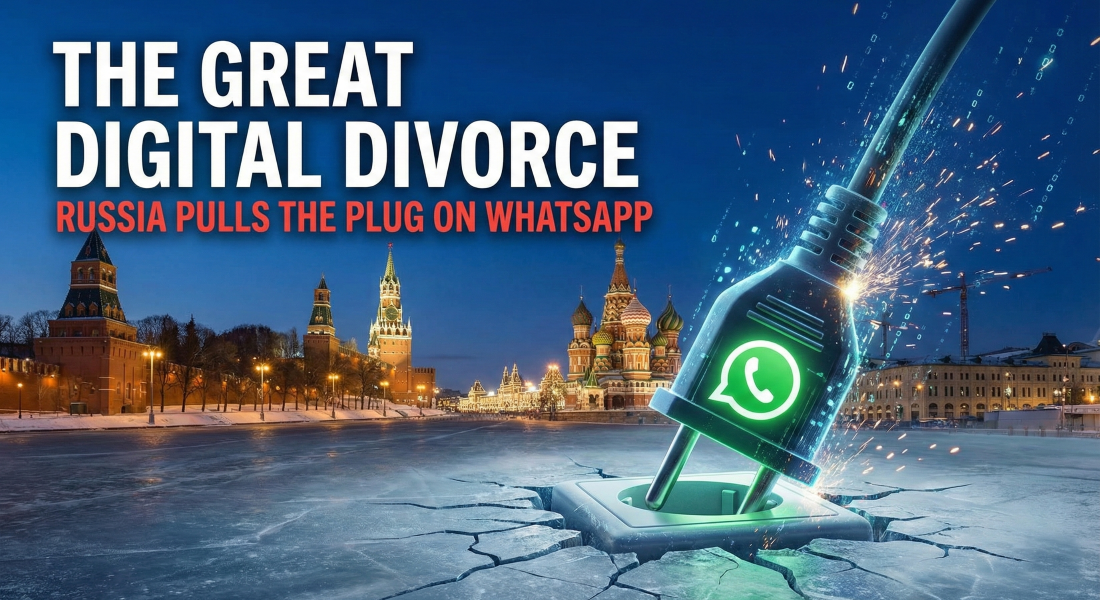
The Russia WhatsApp Ban is Final: Why Millions are Switching to the “Max” Super-App


The Great Digital Divorce: Russia WhatsApp Ban
In a move that finalises the Kremlin’s “digital sovereignty” project, Russia has officially blocked WhatsApp nationwide. The decision, confirmed by Kremlin spokesman Dmitry Peskov on Thursday, severs the last major link between over 100 million Russian users and Meta, the US tech giant already branded an “extremist organisation” by Moscow.
While the move marks the end of an era for private communication in Russia, it signals the aggressive dawn of a new one: the era of Max, a state-backed “super-app” designed to govern every aspect of a citizen’s life.
Why the Blockade? The Official vs. Unofficial Narrative
The Kremlin insists the Russia WhatsApp Ban is a legal necessity. “Due to Meta’s unwillingness to comply with Russian law, a decision was indeed made and implemented,” Peskov told reporters. The core issues cited are:
- Data Localisation: Meta refused to store Russian user data on physical servers within the country.
- Security Cooperation: Authorities allege WhatsApp has become a hub for fraud and “terrorist recruitment,” claiming the platform refuses to share information with the FSB.
However, Meta hit back with a stinging statement, calling the move a “backwards step” intended to drive users toward a “state-owned surveillance app.”
Meet “Max”: Russia’s Answer to WeChat
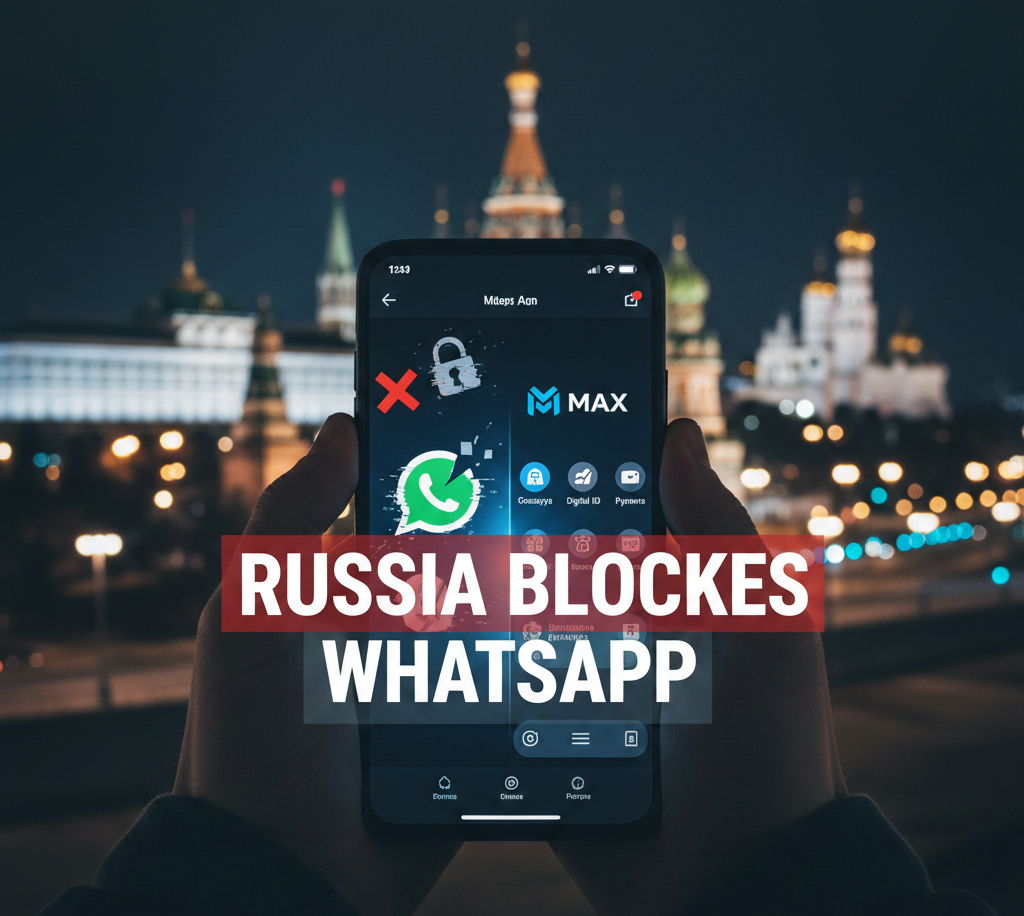
The government is no longer just suggesting alternatives; it is mandating them. Max (stylised as MAX), developed by the tech giant VK, is being marketed as a “national messenger.” Since September 2025, it has been legally required to be pre-installed on every smartphone sold in Russia.
What makes Max different?
- The Gosuslugi Link: Max is hard-wired into the Gosuslugi state services portal. Users can pay taxes, book doctor appointments, and even sign legal documents using an integrated electronic signature (GosKlyuch).
- Digital Identity: The app features a “Digital ID” that uses a dynamic QR code for identity verification in physical stores and government offices.
- The Privacy Trade-off: Unlike WhatsApp, Max lacks default end-to-end encryption. Its privacy policy explicitly allows for data sharing with authorities after a “legal assessment”—a feature critics call a backdoor for the FSB.
“It is a platform designed to insert surveillance into the core of Russian civic life, but it does so in a society without the implicit bargain of prosperity that underpins China’s acceptance of similar tools.” says a Enrique Dans, Senior Fellow at the Center for European Policy Analysis (CEPA).
The VPN “Cat-and-Mouse” Game
As the Russia WhatsApp Ban went live, demand for Virtual Private Networks (VPNs) surged. However, the “Great Firewall of Russia” is proving more sophisticated than ever. Roskomnadzor has already blocked over 440 VPN services and is now using AI-powered Deep Packet Inspection (DPI) to identify and throttle VPN protocols like WireGuard and OpenVPN.
Tech-savvy Russians are turning to “obfuscation” tools like Amnezia VPN and the XRay/VLESS protocols—methods widely used in China to stay one step ahead of censors.
Institutional Pressure: “Switch or Face the Consequences”
The migration to Max isn’t entirely voluntary. Reports have surfaced from Moscow universities and state-owned enterprises where students and employees were told that academic materials and payroll notifications would migrate exclusively to Max.
In some Moscow colleges, students reportedly faced low grades or restricted access to campus facilities if they refused to download the app.
What’s Next?
The blockade of WhatsApp follows similar “phased restrictions” on Telegram, suggesting that Moscow is no longer satisfied with platforms that are merely “mostly compliant.” By forcing the population onto Max, the Kremlin is successfully creating a closed-loop digital ecosystem where convenience and state oversight are two sides of the same coin.
Why Arattai Messenger Could Be the Biggest Threat to Foreign Messaging Apps in India
Russia WhatsApp Ban
Discover more from
Subscribe to get the latest posts sent to your email.







1 COMMENTS