
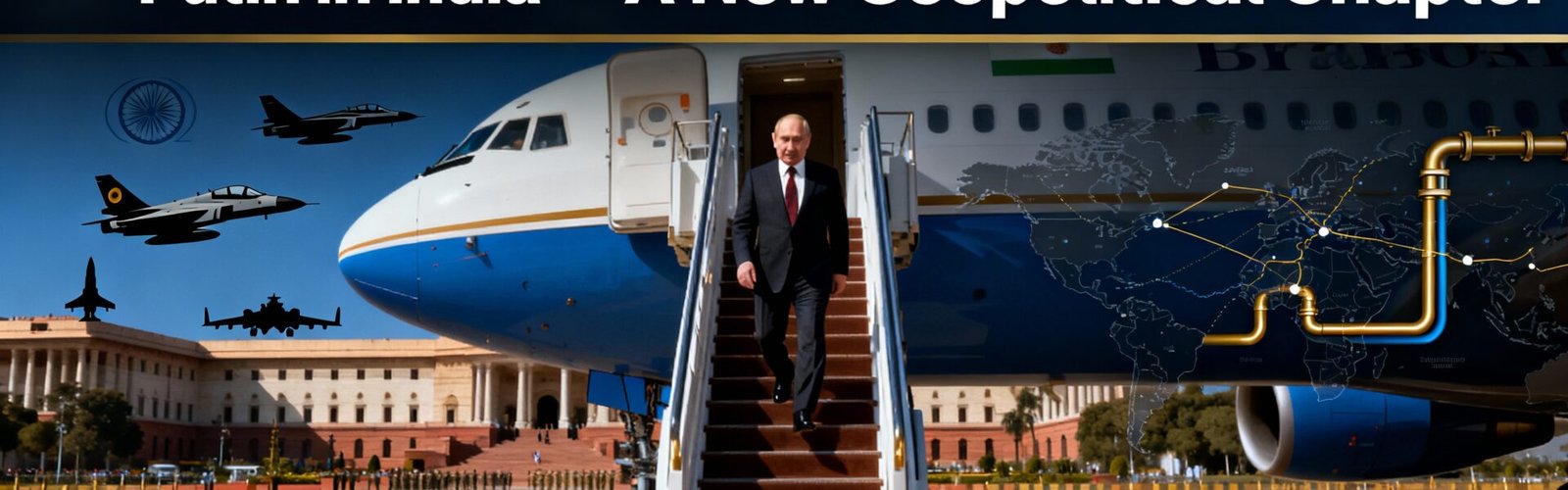
Putin India Visit 2025 Sparks a Power Shift: Modi’s Strategic Autonomy Challenges Old Global Alignments


Putin India visit 2025: A High-Stakes Visit That Signals a New Phase in Eurasian Power Politics
Russian President Vladimir Putin’s arrival in India marks more than a ceremonial diplomatic stop; it is a deliberate geopolitical message delivered at a moment when global alignments are in flux. As New Delhi and Moscow revive strategic momentum across defence, energy, space, and technology, this visit underscores how the world’s power centres are shifting — and how India is fortifying its position as an assertive, independent pole in a multipolar order.
Prime Minister Narendra Modi’s foreign policy doctrine, increasingly defined by strategic autonomy and calibrated toughness, frames this engagement as part of a broader Indian effort: engage all, align with none, and safeguard national interest with decisive clarity.
A Visit Loaded With Strategic Subtext — Not Symbolism
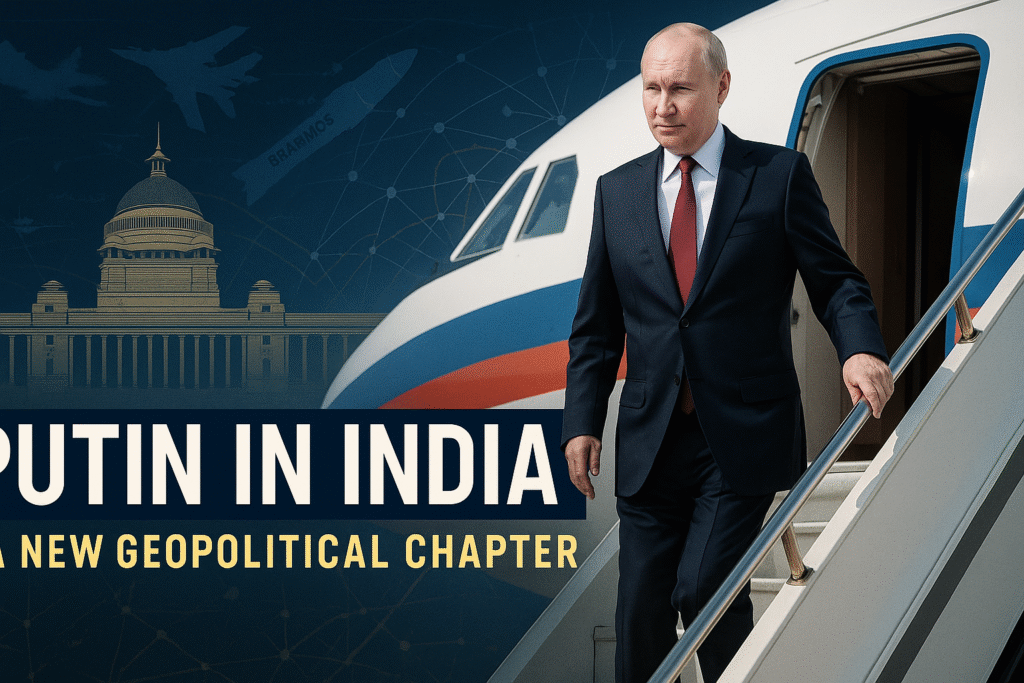
Putin India visit comes at a time when:
- Russia is deepening its pivot toward Asia amid prolonged tensions with the West.
- India is recalibrating its geopolitical toolkit to balance between Western partnerships and Eurasian connectivity.
- Global supply chains, energy flows, and defence ecosystems are being reshaped by war, sanctions, and emerging alliances.
For New Delhi, receiving the Russian leader is a clear assertion that India will not allow external pressures to dictate its diplomatic calculus, especially when strategic cooperation delivers tangible benefits.
Defence Ties: From Legacy Backbone to Future Warfare Ecosystems
India–Russia defence ties have historically been foundational — from MiG and Sukhoi platforms to the BrahMos missile program. But this visit pushes the relationship beyond legacy systems into co-production, technological transfer, and next-gen defence ecosystems.
Key Strategic Areas Under Discussion
- Expansion of BrahMos variants, including longer-range and potentially hypersonic configurations.
- S-400 system deployment updates and further air-defence collaboration.
- Renewed discussion on joint fighter development, unmanned platforms, and counter-drone technologies.
- Maintenance and spare-part supply assurances, critical as India diversifies defence procurement.
Experts note that despite India’s increasing purchases from the U.S. and France, Russia remains indispensable for servicing nearly 60–70% of India’s existing military hardware. Putin India visit reinforces Moscow’s commitment to keeping this backbone functional — and evolving.
Energy, Trade, and Tech: A Quiet Realignment in Hard Numbers
1. Energy Security
Russia has emerged as one of India’s top crude oil suppliers, offering substantial discounts after Western sanctions. The visit is expected to deepen:
- Long-term oil supply agreements
- Investment in Arctic LNG projects
- Expansion of the Vostok Oil project partnership
- Greater rupee–ruble settlement mechanisms
These moves strengthen India’s energy resilience while giving Russia a stable, large-scale market.
2. Trade and Connectivity
Bilateral trade has surged past $50 billion, largely driven by energy imports. Upcoming agreements emphasise:
- Modernising INSTC (International North–South Transport Corridor)
- Enhanced port connectivity via Chabahar
- Digital trade, fintech integration, and customs cooperation
3. Space & High Technology
Russia remains a key partner in areas like Gaganyaan (India’s human spaceflight mission), nuclear power generation via Kudankulam, and potential cooperation in quantum technologies and cybersecurity.
India’s Assertive Diplomacy: The Modi Doctrine in Action
Putin India visit directly reflects India’s evolving diplomatic posture—firm, pragmatic, and future-focused.
Under PM Modi, India has shown:
- Strategic independence despite intensifying U.S.–China tensions
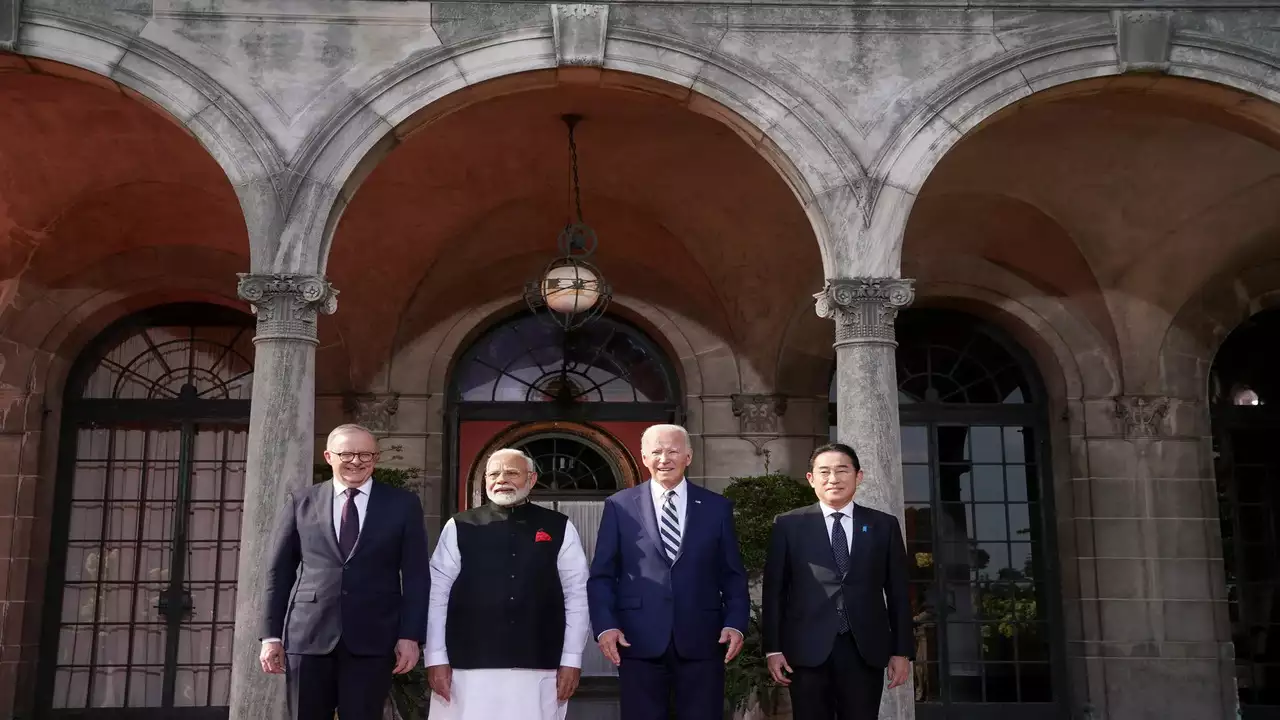
- Willingness to expand ties with Russia even while deepening relations with the Quad
- Flexibility to navigate sanctions landscapes without compromising national interests
- Assertiveness in global forums, from BRICS to the G20
This meeting reinforces that New Delhi is positioning itself not as a junior partner to any bloc but as a sovereign power centre shaping outcomes across Eurasia and the Indo-Pacific.
Geopolitical Implications: A Message to Both the West and Asia
The timing of the visit sends layered signals:
1. To the West
India is unwilling to let geopolitical pressure undermine long-standing strategic relationships. Even as New Delhi builds strong partnerships with the U.S., Europe, and Japan, Russia remains a core pillar in defence, energy, and regional stability.
2. To China
India–Russia engagement introduces strategic nuance. While Moscow and Beijing have deepened ties, Russia’s partnership with India provides New Delhi with greater leverage in the Asian security landscape, particularly amid ongoing border tensions.
3. To the Global South
India and Russia reposition themselves as advocates of a more equitable world order — where multipolarity, sovereignty, and non-alignment remain guiding principles.
Expert Viewpoints
Strategic analysts note that this visit signals the reemergence of a Russia–India axis centred on shared interests rather than nostalgia.
- Energy experts emphasise that Russia provides India long-term stability in oil flows at a time when global supply chains are unpredictable.
- Defence analysts point out that India’s military readiness still relies heavily on Russian systems — making collaboration essential for short-term operational continuity and long-term innovation.
- Geopolitical scholars stress that India’s balanced diplomacy is carving out space for a uniquely Indian role in the emerging Eurasian architecture.
What Lies Ahead: A Partnership Rewriting the Playbook
Putin India visit, at this juncture of global turbulence, represents a forward-leaning partnership built on strategic necessity and geopolitical foresight.
In the near future, expect:
- Deepening defence co-production and technological integration
- Greater collaboration in nuclear energy, space missions, and scientific R&D
- More sophisticated financial mechanisms to bypass currency bottlenecks
- Stronger coordination in BRICS+, SCO, and Eurasian connectivity networks
Ultimately, this Putin India visit sends a clear message: India and Russia are not merely preserving an old friendship — they are redesigning it for a new world order.
In an era defined by competing blocs, supply disruptions, and a global contest for influence, New Delhi and Moscow are signalling that strategic autonomy and multipolar cooperation remain not only viable but increasingly powerful pathways.
Putin India visit 2025, India Russia relations, Modi Putin meeting, India Russia defence cooperation, Eurasian geopolitics India, India’s strategic autonomy, Modi foreign policy analysis, Russia Asia pivot, India Russia energy partnership, India defence modernisation Russia, Indo-Russian trade 2025, What Putin’s visit means for India’s geopolitical strategy, How India balances Western alliances with Russia ties, India Russia multipolar world order cooperation, Impact of Russia India defence agreements
Discover more from
Subscribe to get the latest posts sent to your email.





1 COMMENTS