Kaliachowk Malda: What the Judicial Siege Tells India | News24Media


When the Judiciary Is Held Hostage:
What Kaliachowk Malda Tells Us About
India’s Real Security Crisis
The nine-hour siege of judicial officers in Malda was not spontaneous outrage. It was a rehearsal — orchestrated, enabled, and symptomatic of a threat India can no longer afford to misread.
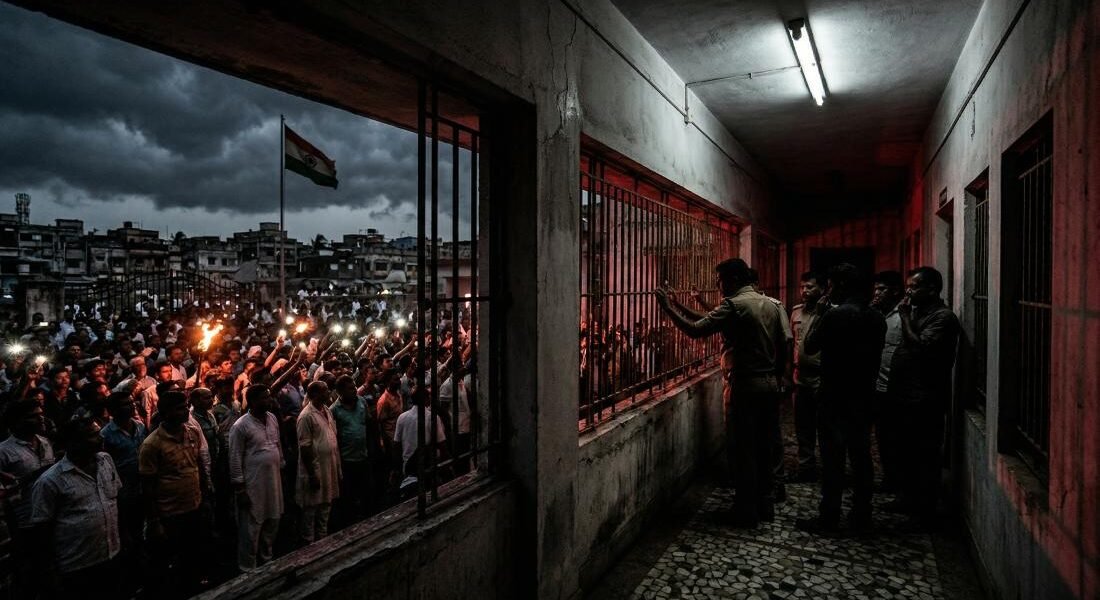
On the night of April 1, 2026, seven judicial officers — including three women and a five-year-old child — were surrounded by a mob inside the Kaliachowk-2 Block Development Office in Kaliachowk Malda, West Bengal, and held there for more than nine hours. They had been deployed as part of the Special Intensive Revision (SIR) of electoral rolls — a constitutional exercise. For nine hours, they were denied food and water. Local police were absent. The rescue came only after midnight, when a large contingent of district officials finally intervened. Even then, reports indicate, an attempt was made to attack the convoy escorting the officers to safety.
The Supreme Court of India, taking suo motu cognisance of the incident, described it as a “brazen and deliberate attempt to obstruct the administration of justice” and a direct challenge to judicial authority. It issued show-cause notices to West Bengal’s Chief Secretary, Home Secretary, and Director-General of Police, citing “complete failure” and “inaction.” The Election Commission of India, acting on Supreme Court directions, formally referred the matter to the National Investigation Agency, which has since registered a preliminary enquiry. Thirty-five individuals have been arrested.
The alleged mastermind was not an unknown radical hiding in the shadows. He was Mofakkarul Islam — a practising advocate at the Calcutta High Court, a former AIMIM election candidate from Itahar, and a figure with nearly three million social media followers. He was arrested at Bagdogra Airport attempting to board a flight. His co-conspirator ran a YouTube channel with 6.7 lakh subscribers producing systematic political content since 2014. Both had made repeated visits to Kaliachowk Malda and Murshidabad. Their movements have now been traced to Kerala, where investigators are examining links to the banned Popular Front of India. A sitting ISF election candidate, Maulana Shahjahan Ali, is also among those in custody.
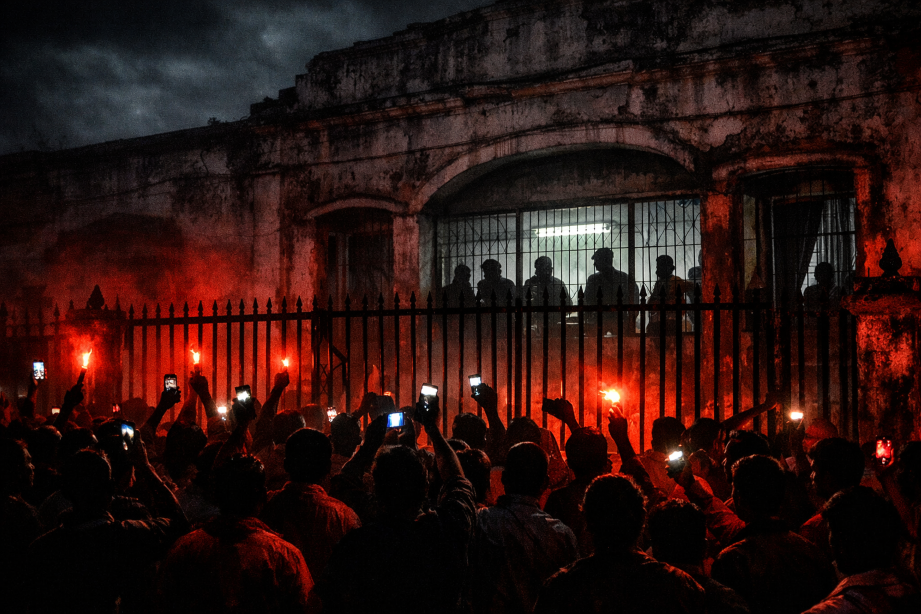
““The incident in Kaliachowk Malda is not a spontaneous public reaction by ordinary people; it is a planned event.”.”
— Samik Bhattacharya, BJP State President, West Bengal, April 2026To treat this as a local law-and-order breakdown is to wilfully misread the strategic map. Kaliachowk is the latest in a compounding sequence. In April 2025, the Murshidabad district witnessed coordinated violence following protests against the Waqf Amendment Act — over 400 Hindu families were displaced, three people were killed, National Highway 12 was blockaded, police vehicles were set ablaze, and a sitting Member of Parliament’s office was attacked. In February 2026, the Delhi Police Special Cell dismantled a Lashkar-e-Taiba module that included a resident of Kaliachowk Malda district. Intelligence assessments from 2025 warned that JMB, ABT (Ansarullah Bangla Team), and Islamic State were operating under shared command structures with the explicit objective of turning West Bengal into a hub for transnational attacks. All of this in the same geography. All within eighteen months.
The security architecture of this threat is layered and deliberate. Transnational terror organisations — JMB, ABT, LeT, AQIS, Hizb-ut-Tahrir — provide ideology, financing, and operational doctrine. Domestic radical networks, including PFI successor bodies, provide local infrastructure and recruitment. Unregistered madrasas in border districts serve as communication nodes and radicalisation channels. And over all of it operates a category of actor that India’s current legal framework cannot adequately address: the individual who holds a lawyer’s licence or an election candidacy, commands mass social media audiences, and directs political mob violence in furtherance of objectives that are fundamentally anti-constitutional. This actor is not on a terrorist watch list. He is on a court’s roll of practising advocates.
What makes this existential rather than merely serious is the political economy that sustains it. Decades of competitive minority appeasement — a pattern so entrenched it now finds formal acknowledgement in the revised NCERT Class 11 political science textbook as associated with “disregarding the principles of equality of all citizens” — have created a protected space within which radical actors operate with relative impunity. When state police stand down for nine hours while judicial officers are held hostage, the inaction is not administrative failure. It is a policy outcome of political calculation. When a Chief Minister claims she learned of the incident from a journalist and then attributes the violence to the BJP, the message sent to every radical actor in the state is unambiguous.
“The Calcutta High Court held that ‘national security obligations cannot be delayed due to administrative or electoral considerations”
— Calcutta High Court, directing West Bengal government to expedite BSF border fencing land transfer, January 2026India’s 2,200-kilometre border with Bangladesh — one of the most porous frontiers in South Asia — has become the physical conduit for this threat. Since the ouster of Sheikh Hasina in August 2024, Bangladesh has seen Hizb-ut-Tahrir organise ‘March for Khilafat’ rallies in Dhaka, Pakistani ISI delegations visit areas near the Indian border, and Pakistan–Bangladesh direct trade resume for the first time since 1971. The external pressure and the internal radical ecosystem are converging, and the fuse runs directly through Malda and Murshidabad.
India needs more than arrests and NIA inquiries. It needs a new doctrine — one that formally identifies and institutionally addresses what lies between a designated terrorist and a peaceful citizen: the politically embedded, constitutionally camouflaged, mob-capable radical actor. A dedicated monitoring architecture under the Ministry of Home Affairs, strengthened legal provisions for this category of actor, mandatory audit of unregistered madrasas in border districts, and the political will to apply constitutional law equally — regardless of community, electoral calculation, or coalition arithmetic.
The judges trapped in Kaliachowk were doing their constitutional duty. The mob that surrounded them, and the operators who directed that mob, were testing how far India’s institutions could be pushed before they pushed back. The answer India gives now — through its courts, its investigators, its legislators, and above all its political class — will determine whether Kaliachowk remains a warning or becomes a precedent.
This editorial is based on verified public data including Supreme Court orders, NIA press releases, Election Commission communications, Calcutta High Court directions, and documented intelligence assessments published by South Asia Terrorism Portal, IMPRI, India Foundation, and Observer Research Foundation.
Kaliachowk Malda, NIA Probe Bengal Radical Islam India, PFI Network, JMB Sleeper Cells, Bengal Internal Security, Minority Vote Bank, India Sovereignty, Judicial Officers Hostage, West Bengal Elections 2026, Border Security Bengal, AIMIM Grey Zone, Kaliachowk Malda judicial officers hostage
Discover more from
Subscribe to get the latest posts sent to your email.