
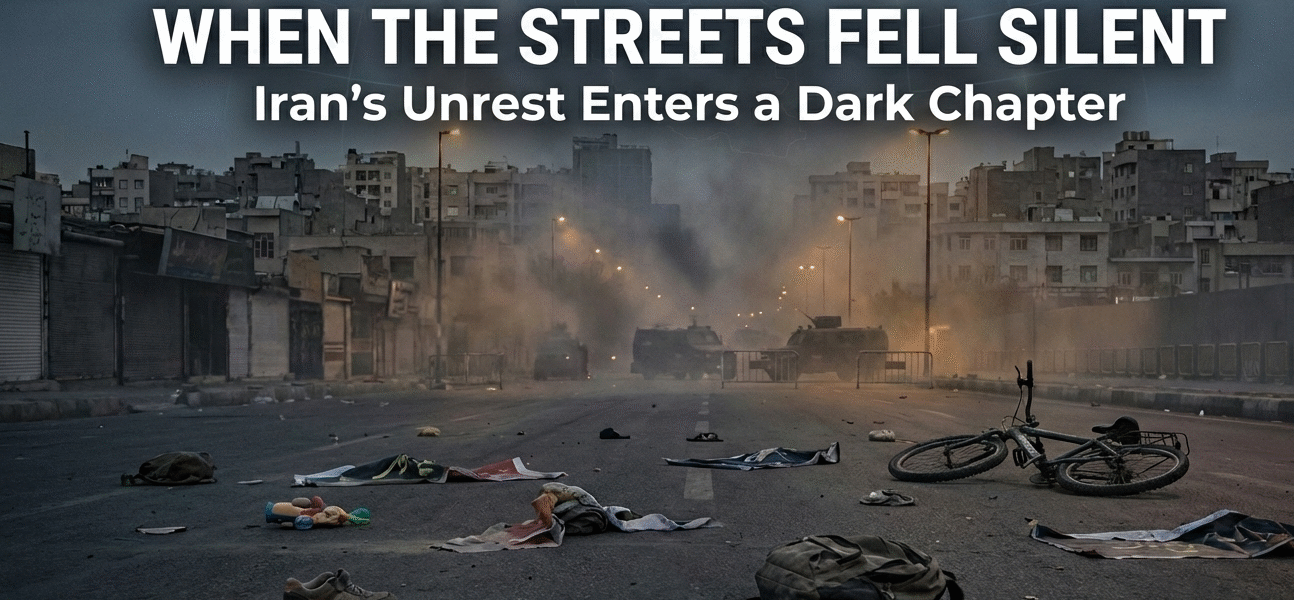
Iran protest 2026: Thousands Feared Dead as Protests Turn Into a National Bloodbath


Iran protests 2026 · Khamenei crackdown · Iranian genocide · US support for the Iranian revolution
In the heart of the Middle East, a terrible crisis is unfolding—one that may soon be judged among the darkest episodes of this century. From Tehran’s grand boulevards to the ancient streets of Isfahan and Shiraz, blood-soaked cries for freedom have been met with bullets and brutality. What began as an economic protest has turned into one of the most severe crackdowns in modern Iranian history—with verified reports and eyewitness accounts pointing to a massacre on an unprecedented scale. Combined with internet blackouts and state suppression of information, what’s transpired inside Iran since late December 2025 has challenged the very concept of human rights in the 21st century.
How It All Began: From Economic Grievances to Nationwide Reckoning
On 28 December 2025, Iran’s simmering economic frustrations—soaring inflation, record-high food prices, currency collapse, falling living standards, and removal of subsidised exchange rates—erupted into mass Iran protests in Tehran’s historic Grand Bazaar. Within days, Iran protests/demonstrations had engulfed all 31 provinces, with merchants, students, and ordinary citizens chanting for justice, freedom, and political change.
Unlike earlier waves of dissent—such as the 2022 Mahsa Amini uprising, which began over women’s rights and mandatory hijab rules and drew global attention—this new unrest was rooted first in economic despair, only later morphing into outright anti-regime sentiment and calls for the end of Supreme Leader Ayatollah Ali Khamenei’s rule.
Protesters shared chants such as “Death to the dictator!” and even pro-monarchist slogans, reflecting a profound disillusionment not just with specific policies, but with four decades of clerical rule. As crowds grew, so did state fears of losing control.
Timeline: Dec. 28 to Jan. 2026
- Dec. 28, 2025: Initial protests start in Tehran and spread nationwide.
- Jan. 1–3, 2026: Protests escalate, with growing anti-government rhetoric.
- Jan. 8: The government imposes a nationwide internet and telephone blackout—a tactic widely used to suppress reporting and coordination among protesters.
- Jan. 8–9: Security forces unleash lethal force in multiple cities; reports of massacres in places like Fardis emerge.
- Jan. 10–13: Casualty tallies rapidly climb as hospitals overflow and global media air leaked footage.
The Internet blackout—confirmed by NetBlocks and cybersecurity monitors—effectively severed outside access and slowed independent verification for nearly a week, heightening international concern about what the regime wanted to hide.
The Human Cost: Streets Run Red
Despite state efforts to censor information, leaked videos and smuggled footage have broadcast scenes of carnage on global media. From BBC and CNN broadcasts to posts circulating on X/Twitter and Instagram, the world has glimpsed protesters engulfed by gunfire, bodies strewn on boulevards, and makeshift morgues overflowing with the dead.
One Tehran hospital alone reported hundreds of gunshot-related eye injuries, many inflicted by live ammunition and metal pellets—indicating deliberate targeting of protesters’ faces and heads.
According to the Human Rights Activists News Agency (HRANA), as of mid-January:
- At least 2,559 people have been confirmed dead, including 2,403 protesters and 12 children.
- Over 16,700 have been detained nationwide.
Iranian officials have acknowledged even higher totals—with figures up to 3,000 deaths reported in some government briefings and international monitoring.
Yet some human rights observers estimate a much higher toll—possibly tens of thousands—based on indirect reports and hospital admissions during blackout periods.
One teenager, Mohammad Nouri, age 17, was shot dead in Qom, according to family and independent sources—one of many young lives snuffed out in the unrest.
Systematic Suppression: Internet Blackouts and State Narratives
Iran’s blackout of internet and telephone services—confirmed to have started on Jan. 8—is not unprecedented, but its scale and duration are exceptional. These communications blackouts allowed security forces to unleash lethal force while limiting outside knowledge of what was unfolding.
State media and official spokespeople have portrayed demonstrators as “terrorists” and foreign agents, echoing familiar tactics designed to justify repression and discredit dissent domestically.
Under Islamic law, authorities have branded protesters as “enemies of God”—a charge carrying the death penalty—opening the door for legal executions of detainees.
The Silence of the Muslim World: A Troubling Absence
One of the most striking aspects of this crisis has been the muted response from major Muslim-majority nations and institutions.
- Saudi Arabia, once Iran’s chief regional rival, has avoided direct condemnation—likely wary of further instability that could spill across the Gulf.
- Turkey and Pakistan, reliant on cooperation with Tehran on trade and security, have remained cautious, issuing vague calls for restraint rather than clear denunciations.
- The Organisation of Islamic Cooperation (OIC) has so far remained silent, issuing no unified statement decrying the violence against civilians.
This silence contrasts sharply with global outrage expressed in Western capitals and human rights corridors, raising questions about geopolitical priorities in the Muslim world—even as blood runs in Iranian streets.
Global Reactions: Condemnation, Support, and Threats
United States
President Donald Trump has publicly backed Iranian protesters, urging them to “keep protesting” and claiming “help is on its way”—though what that help entails remains unclear.
Trump has also threatened extreme action against Tehran should executions proceed and has suspended diplomatic contacts until killings stop.
American officials have urged U.S. citizens to leave Iran, including via bordering countries—a stark acknowledgement of deteriorating conditions.
United Nations
The UN High Commissioner for Human Rights, Volker Türk, expressed horror at the scale of violence and called for respect for peaceful dissent and human dignity.
European Union & Others
European capitals have condemned the mass killings and reiterated calls for restraint and accountability—though concrete punitive measures remain limited.
Israel
Tehran has accused Israel of fomenting unrest, though evidence for direct intervention in the protests has not been substantiated by independent sources.
Human Rights and Legal Concerns: Is This Genocide?
The scale and systematic nature of this crackdown have prompted legal scholars and human rights experts to ask a painful question: Does this constitute a genocide or crimes against humanity?
Under international law, genocide is defined not just by mass killings, but by a specific intent to destroy, in whole or in part, a group. While Iranians are not defined as a protected class under the strict legal framing of the 1948 Genocide Convention, the sheer scale of targeted killings—including children, deliberate use of lethal force, and state criminalisation of dissent—raises serious concerns aligning with crimes against humanity definitions.
Groups like Amnesty International and Human Rights Watch have previously documented systematic orders to use lethal force against protesters, pointing to deep-rooted patterns of repression.
Witness Voices: Echoes from the Streets
“I saw bodies laid out on the ground like logs,” one anonymous hospital worker told reporters after regaining partial internet access. “We had no choice but to treat hundreds with gunshot wounds. It was chaos.”
Families buried loved ones in night funerals, only to be dispersed by state forces firing tear gas and live rounds—turning mourning into yet another act of courage.
What Comes Next? The Future of Iran’s Unrest
This crisis has shaken the foundations of the Islamic Republic. The protests mark the largest challenge to state authority since the 1979 revolution—and possibly a turning point in Iranian history.
Yet the path forward remains fraught:
- Will systemic repression succeed in crushing dissent?
- Or will the world finally step in with meaningful pressure and protection for civilians?
- Can Iran’s fractured society find a peaceful path to governance that respects human rights?
None of these answers is simple—but one truth stands clear: the world cannot afford to look away.
Hashtags
#IranProtests2026 #KhameneiCrackdown #IranianGenocide #USSupportIranRevolution #IranHumanRights #TehranUnrest #IsfahanProtests #ShirazResistance #StopTheMassacre #GlobalSolidarity #IranBlackout #RevolutionInIran
Iran protests 2026, Iran crackdown protesters, Khamenei crackdown, Iran bloodbath, Iranian human rights crisis, Iran internet blackout protests, Iran mass killings January 2026, Basij IRGC protest crackdown, Iran revolution protests, US support Iranian protesters, Iran crimes against humanity, Iran state violence civilians
Discover more from
Subscribe to get the latest posts sent to your email.









3 COMMENTS