Iran Israel Ceasefire 2026: Survival Is Not Victory


Iran · Israel · United States · Ceasefire · April 2026
Survival Is Not Victory:
The Truth Behind Iran Israel Ceasefire 2026 Celebration
A fragile two-week pause in the Iran Israel war has triggered jubilation in Tehran’s streets. But behind the flag-burning and the slogans, a nation lies shattered — its Supreme Leader assassinated, its nuclear programme in rubble, and its economy haemorrhaging. This is not a victory lap. It is a narrative war.
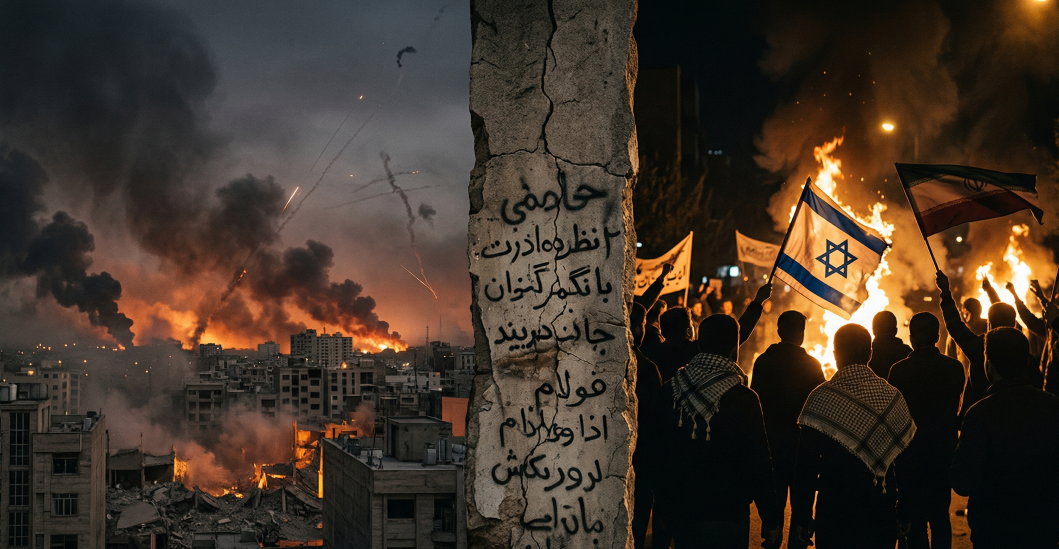
When US President announced on April 7 that the United States, Iran, and their allies had agreed to an “immediate ceasefire everywhere,” the news detonated across the Middle East like a second shockwave. Within hours, crowds flooded central Tehran. Flags blazed. Slogans ricocheted off the walls of a city already scarred by 39 days of Israeli and American bombardment. To the untrained eye, it looked like triumph. To anyone studying the balance sheet of Iran Israel Ceasefire 2026 with clear eyes, it looked like something else entirely — the desperate theatre of a regime manufacturing survival as victory.
What Was Actually Agreed
The Iran Israel Ceasefire 2026, brokered through the diplomatic intervention is a 14-day pause — nothing more. President Trump announced the deal on Truth Social barely two hours before his own self-imposed deadline expired, agreeing to suspend US bombing of Iran on one explicit condition: that Tehran immediately and fully reopen the Strait of Hormuz, the narrow maritime chokepoint through which nearly one-fifth of the world’s oil flows. Iran’s Supreme National Security Council confirmed acceptance, and Foreign Minister Abbas Araghchi stated that safe passage through the strait would be permitted under the coordination of Iran’s armed forces.
Negotiations between the two sides are now scheduled to begin on Friday, April 10. Iran’s 10-point peace framework — demanding full sanctions relief, regulated control of the Strait, and a new regional order — was acknowledged by Trump as a “workable basis to negotiate.” Crucially, however, Israeli Prime Minister Benjamin Netanyahu was quick to clarify that while Israel supports the US-led pause, the ceasefire explicitly does not apply to Lebanon, where Israeli operations against Hezbollah continue unabated.
Iran’s statement on the Iran Israel Ceasefire 2026 did not read like a nation that has been defeated. It read like a regime that has survived long enough to rewrite the story.
— News24Media Editorial AnalysisThe Ground Reality: Is the Shooting Actually Over?
In a word: no — not yet. Even as the Iran Israel Ceasefire 2026 ink dried, missile alerts sounded in Israel and the United Arab Emirates. Iran’s Revolutionary Guard (IRGC), which has functioned as an autonomous war-fighting unit largely independent of Iran’s political leadership throughout this conflict, launched ballistic missiles toward Israel almost immediately after the announcement. Bahrain, Kuwait, and the UAE all activated air defence systems in the hours following the declaration. The ceasefire is declared. It is not yet observed. This is consistent with the IRGC’s operational pattern — launching a final salvo to claim battlefield dominance before any truce consolidates.
Why Iranians Are Celebrating — The Double Truth
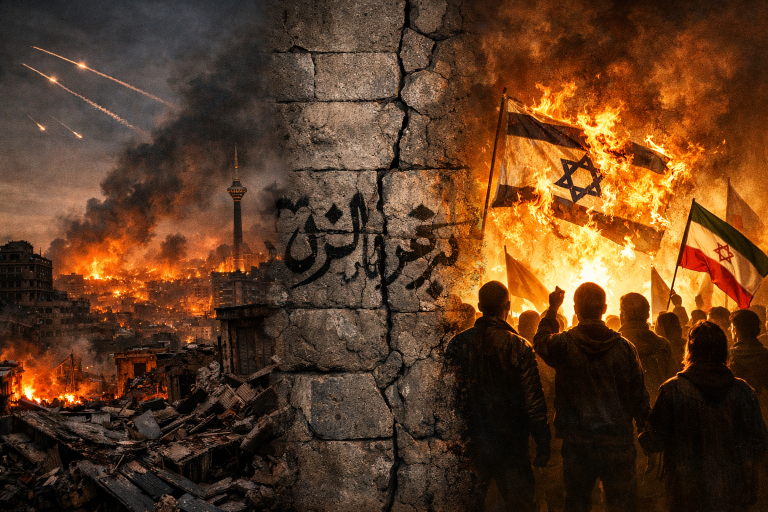
The celebration footage emerging from Tehran requires careful contextual reading. Two entirely different populations are visible on the same streets, expressing two diametrically opposite emotions. Pro-regime supporters are celebrating what their state media tells them: that Iran absorbed a superpower assault and forced a negotiated pause, that the IRGC’s “22nd wave of Operation True Promise III” pressured the enemy into a ceasefire. This is the narrative the Islamic Republic needs for domestic survival.
But a second, far larger group of Iranians has been expressing something else entirely — relief. These are ordinary citizens who have endured 39 days of bombing layered on top of months of internal massacre. In January 2026, between 30,000 and 36,500 protesters were killed by their own government’s security forces during nationwide uprisings. Many of those now in the streets are simply grateful that bombs are no longer falling on their children’s schools. Their celebration is not a victory salute to the mullahs. It is a survivor’s exhale.
- Supreme Leader Ali Khamenei assassinated (Feb. 28, 2026) in Israeli airstrike
- IRGC Commander, Defence Minister, Intelligence Chief — all killed
- Three nuclear facilities destroyed by US strikes (June 2025 + 2026)
- South Pars gasfield — world’s largest — struck; power units destroyed
- Largest petrochemical complex and Mahshahr/Assaluyeh hubs targeted
- Three Tehran airports struck; rail network disrupted
- B1 bridge — highest in the Middle East — collapsed in US strike
- Pasteur Institute (century-old medical centre) severely damaged
- 30,000–36,500 protesters killed by own regime in January 2026 /
- Global oil market shock: world’s largest supply disruption since 1970s
The Victory Narrative: How Iran Wins the Story It Lost on the Battlefield
Iran’s media machinery is a masterwork of adversarial framing. The Iran Israel Ceasefire 2026 is being presented as evidence that Iran’s “Powerful Armed Forces” forced America to the negotiating table — and on Iranian terms, no less. Iranian state media notes that Trump adopted Iran’s 10-point framework as the basis for talks, not the US’s own 15-point proposal, which Tehran had flatly rejected. Foreign Minister Araghchi pointedly avoided any language of defeat, framing the halt as Iran voluntarily “ceasing defensive operations.” This is the same playbook used by Hezbollah after the 2006 Lebanon War, Hamas after every Gaza conflict, and by North Korea after every crisis: redefine survival as resistance, and resistance as victory.
The global media has, in many instances, amplified this framing uncritically — drawn in by the optics of the United States, the world’s dominant military power, agreeing to negotiate with a country it has been bombing for 39 days. This optic is real. Its strategic interpretation, however, is not: the US agreed to pause, not to concede. Trump was explicit that he remains prepared to resume strikes if Iran violates the Iran Israel Ceasefire 2026 or reneges on its Hormuz commitments.
What Comes Next: The Upcoming Crucible
The next 14 days will determine whether Iran Israel Ceasefire 2026 is a bridge to a historic settlement or a tactical breathing space that collapses into resumed warfare. The unresolved questions arriving at the table are immense: the permanent status of Iran’s nuclear programme and Non-Proliferation Treaty obligations, the lifting of decades-long US sanctions, Iranian sovereignty over the Strait of Hormuz, the future of Hezbollah and Lebanon, and whether the deeply weakened Islamic Republic can politically survive what it has endured. Netanyahu’s exclusion of Lebanon from the ceasefire’s scope signals that Israel considers its broader regional war unfinished.
The only certainty, as this edition publishes, is this: rebuilding what Iran has lost will take not months, but decades. Its nuclear infrastructure — the crown jewel of its strategic deterrence and regional prestige project — has been shattered. Its most powerful military minds are dead. Its economy was already fragile before the first bomb fell. To restore all of this will require resources, stability, and international goodwill that the Islamic Republic does not currently possess and may never again secure in its present form. That is not a Iran Israel Ceasefire 2026. That is a civilisational reckoning — regardless of who is burning which flag on which street tonight.
Iran Israel Ceasefire 2026, 2026 Iran war ceasefire terms · Iran US Strait of Hormuz deal · Iran Israel war latest news · Trump Iran ceasefire Truth Social · Iran nuclear sites destroyed 2026 · Khamenei assassination Israel · Islamabad Iran peace talks · Pakistan mediated Iran ceasefire · IRGC after ceasefire · Iran war damage assessment
Discover more from
Subscribe to get the latest posts sent to your email.