
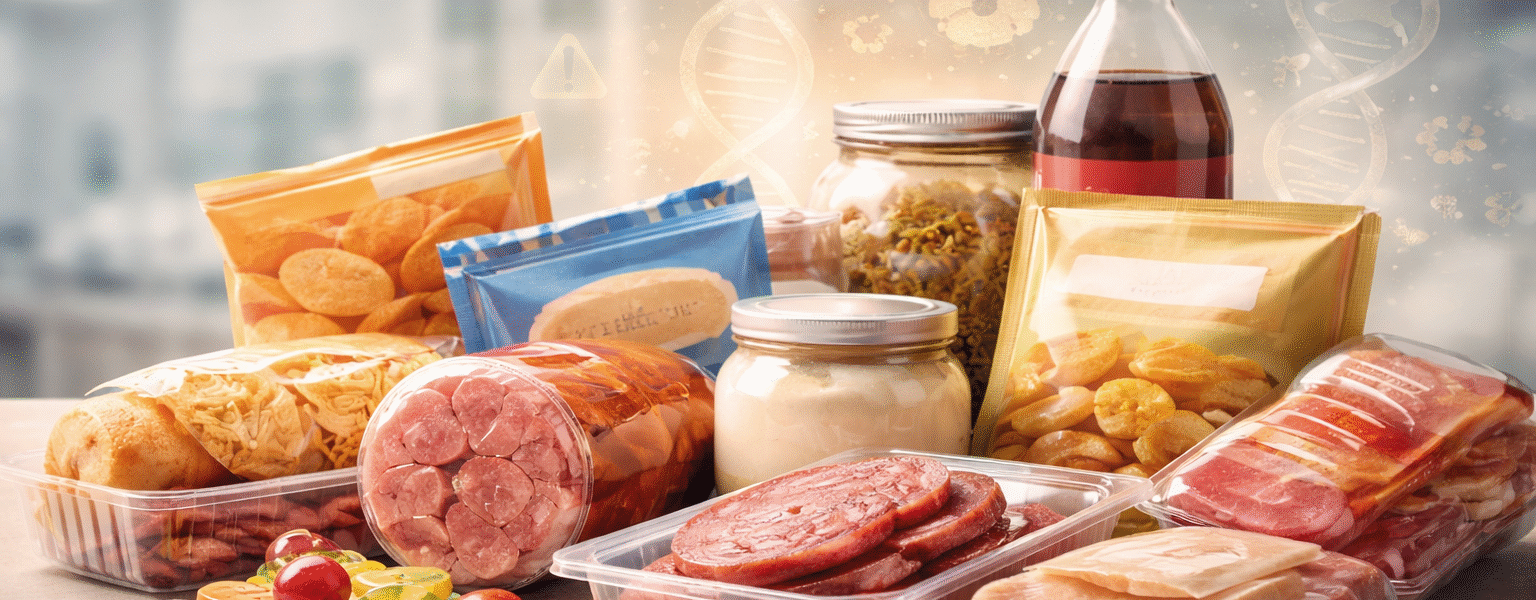
Food Preservatives in Packaged items: Are We Extending Shelf Life While Fueling Cancer, Diabetes & Gut Damage?


Food Preservatives: Extending Food Shelf Life While Shortening Human Lifespan? New Research Sounds the Alarm
Food preservatives health risks | preservatives cause cancer, diabetes | natural alternatives to chemical preservatives
The Silent Trade-Off on Your Plate
That brightly packaged snack promising “freshness for months” may be quietly undermining your health. Behind its glossy wrapper lies a chemical cocktail designed not for your body—but for shelf stability, transport resilience, and profit margins. Over the past decade, scientists worldwide have begun asking an uncomfortable question: Are we trading food longevity for human longevity?
Emerging research increasingly links long-term exposure to synthetic food preservatives—ubiquitous in modern packaged diets—to a growing list of chronic illnesses, including cancer, type 2 diabetes, cardiovascular disease, neurological disorders, allergies, asthma, and gut dysbiosis. While each additive may be “approved” in isolation, the cumulative, lifelong exposure is where concern intensifies.
The Science Behind the Danger
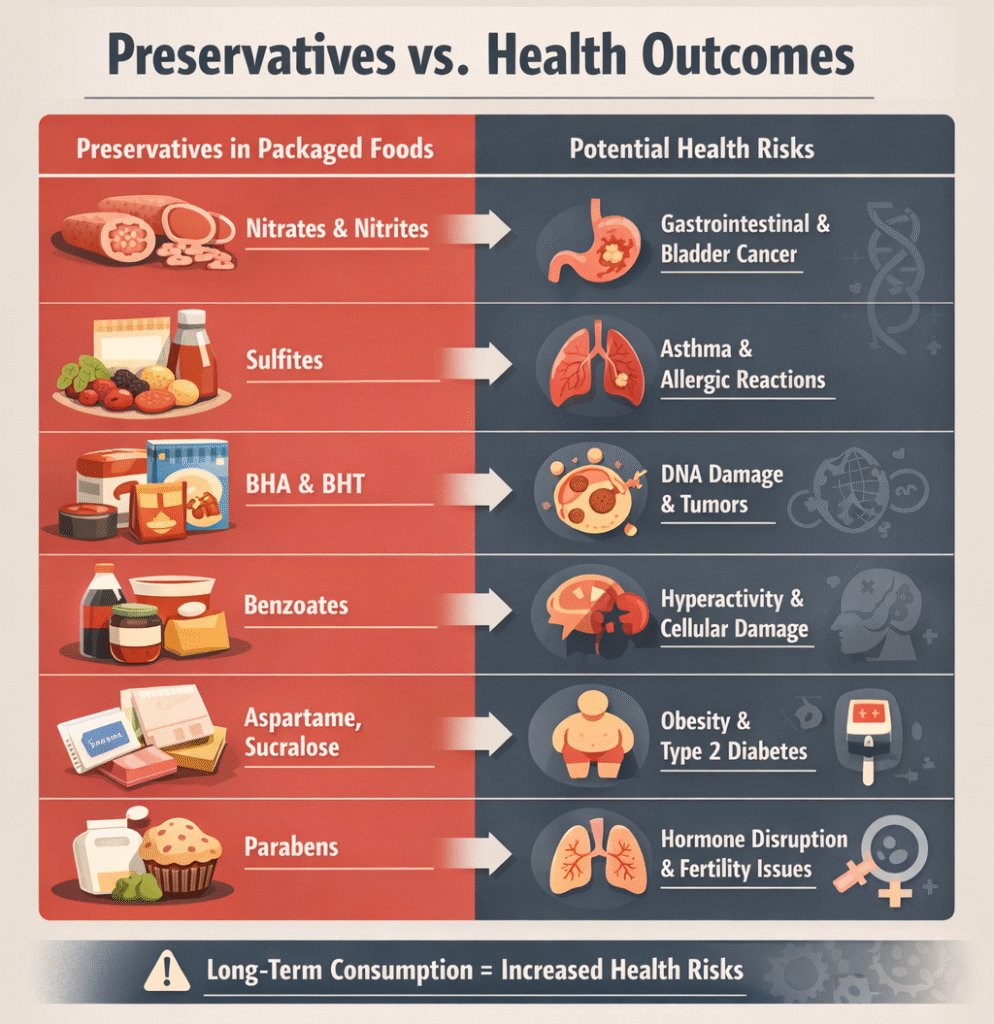
1. Nitrates & Nitrites (Processed Meats, Ready-to-Eat Foods)
Sodium nitrates and nitrites are widely used to preserve colour and prevent bacterial growth in processed meats. Inside the human body, however, they can convert into nitrosamines—potent carcinogens.
What research shows:
- Nitrosamines are strongly linked to colorectal, gastric, pancreatic, and bladder cancers.
- The World Health Organisation has classified processed meats as Group 1 carcinogens, largely due to nitrate/nitrite content.
Mechanism: Acidic stomach conditions + nitrates → nitrosamines → DNA damage.
2. Sulfites (Dried Fruits, Wines, Sauces)
Sulfites extend shelf life and enhance appearance, but can be dangerous for sensitive individuals.
Health impacts documented:
- Trigger asthma attacks, migraines, skin reactions, and anaphylaxis.
- Animal studies show liver and kidney oxidative damage with chronic exposure.
3. BHA & BHT (Breakfast Cereals, Chips, Oils)
Butylated Hydroxyanisole (BHA) and Butylated Hydroxytoluene (BHT) prevent fats from turning rancid.
Red flags from research:
- BHA is classified as a possible human carcinogen.
- Rodent studies show tumour formation, endocrine disruption, and DNA strand breaks.
4. Benzoates (Soft Drinks, Pickles, Sauces)
Sodium benzoate can react with vitamin C to form benzene, a known carcinogen.
Observed risks:
- Linked to hyperactivity in children.
- Associated with oxidative stress and mitochondrial toxicity.
5. Artificial Sweeteners (Aspartame, Sucralose)
Marketed as “diet-friendly,” non-caloric sweeteners are now under intense scrutiny.
Mounting evidence suggests:
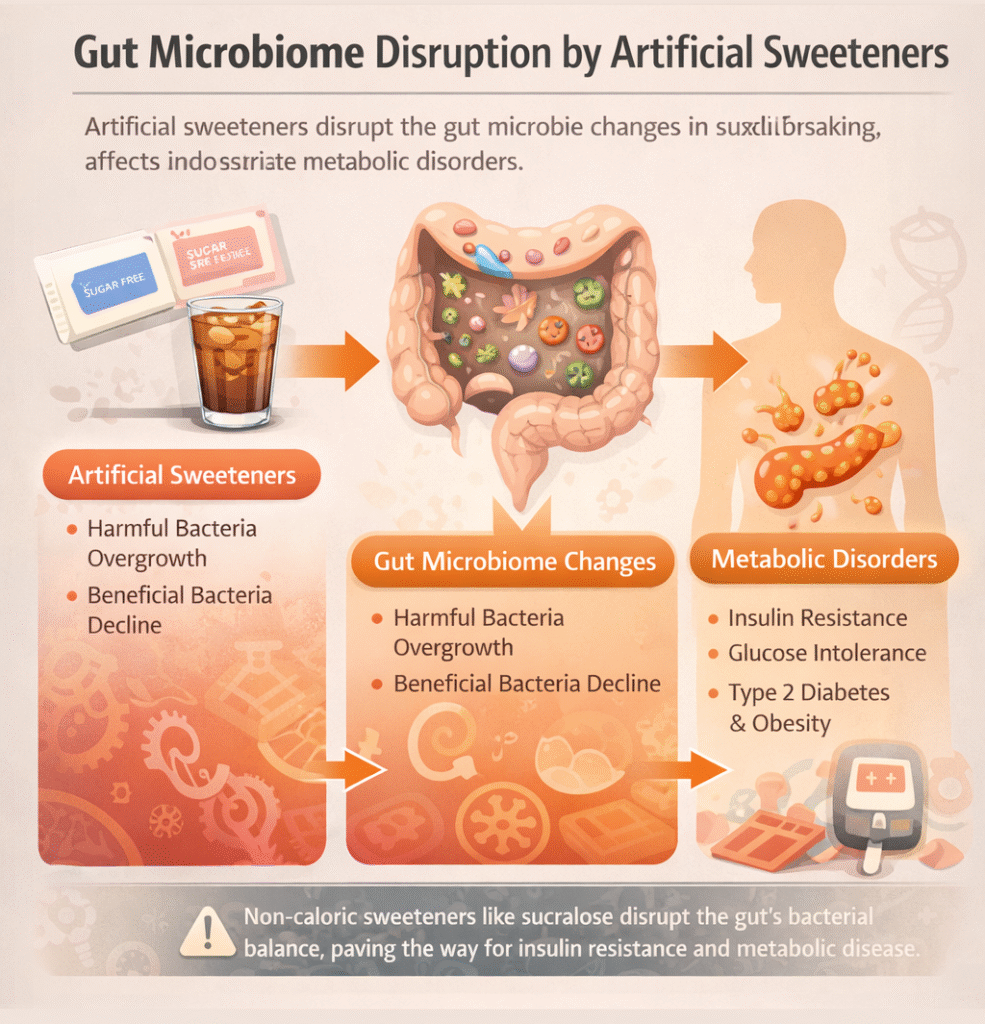
- Disruption of gut microbiota, leading to insulin resistance and type 2 diabetes.
- Associations with obesity, metabolic syndrome, and cardiovascular disease.
- Possible neurological effects include headaches, mood changes, and cognitive disturbances.
6. Parabens (Packaged Baked Goods, Sauces)
Parabens mimic estrogen and interfere with hormonal signalling.
Concerns include:
- Endocrine disruption.
- Potential links to breast cancer risk and fertility issues.
The Bigger Problem: Chronic, Daily Exposure
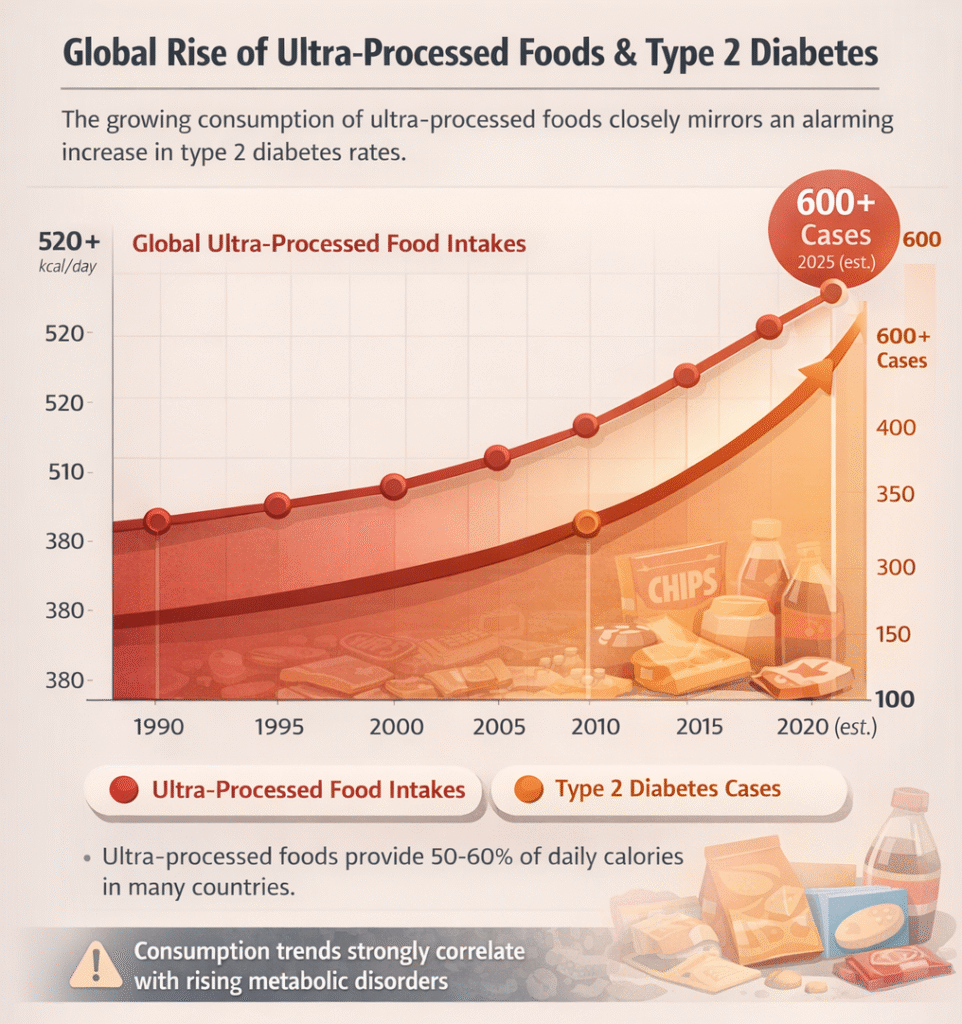
No single packet of chips causes disease. The danger lies in daily consumption over decades—breakfast cereals, packaged lunches, evening snacks, sugary drinks—each contributing micro-doses of chemical preservatives. Modern diets have shifted dramatically toward ultra-processed foods, now accounting for over 50–60% of calories in many urban populations.
The Debate: Safety vs. Survival
| Industry Argument (Pros) | Emerging Medical Concerns (Cons) |
|---|---|
| Prevents microbial contamination | Cumulative toxicity ignored |
| Extends shelf life & reduces waste | Endocrine and metabolic disruption |
| Keeps food affordable | Increased chronic disease burden |
| Regulatory approval exists | Long-term synergy effects understudied |
| Supports global supply chains | Public health costs externalized |
The uncomfortable question remains:
Are we decreasing human shelf life to extend corporate shelf life?
Real-World Evidence & Alarming Trends
- Global type 2 diabetes prevalence has quadrupled since 1980, paralleling the rise of ultra-processed food consumption.
- Studies show individuals consuming the highest levels of artificial sweeteners have 20–30% higher cardiovascular risk.
- Food additive “safe limits” are based on single-compound testing, not real-world combinations or lifelong exposure.
- Preservative-induced hypersensitivity reactions are increasingly reported in children and adults worldwide.
Offsetting the Menace: What You Can Do Today
Top 10 Additives to Watch On Labels
- Sodium nitrite/nitrate
- BHA
- BHT
- Sodium benzoate
- Potassium sorbate
- Aspartame
- Sucralose
- Acesulfame-K
- Sulfur dioxide
- Parabens
Evidence-Based Protection Strategies
✔ Choose Whole & Fresh Foods
Prioritise foods without ingredient lists—or with ingredients you recognise.
✔ Embrace Natural Preservatives
Vitamin C, vitamin E, rosemary extract, vinegar, salt (in moderation).
✔ Heal the Gut
High-fibre diets, fermented foods, and probiotics help counter preservative-induced dysbiosis¹⁰.
✔ Boost Antioxidant Defences
Berries, leafy greens, turmeric, and green tea neutralise free radicals.
✔ Cook & Freeze
Homemade meals + freezing beats chemical preservation every time.
✔ Support Smarter Policies
The EU has already restricted several additives banned elsewhere. Consumer demand drives reform.
A Human Face to the Data
Meet Sarah (Name changed), a 34-year-old professional plagued by migraines and digestive distress. After eliminating ultra-processed foods for six weeks, her headaches vanished, her blood sugar stabilised, and her energy levels returned. Her story mirrors thousands shared quietly in clinics—the body often recovers when the chemical load is reduced.
The Wake-Up Call
The preservatives debate is no longer academic. It is unfolding in oncology wards, diabetes clinics, and pediatric allergy units worldwide. While preservatives once solved food safety problems, their unchecked dominance now poses a different threat.
The real solution isn’t fear—it’s informed choice.
By demanding cleaner labels, supporting transparent science, and reclaiming control over what we eat, we protect not only ourselves but future generations.
Food should nourish life, not merely outlast it.
References
- PubMed: Nitrosamines and human cancer risk
- NCBI: Dietary nitrates, nitrites, and gastric cancer
- WHO/IARC Monographs on processed meat
- FDA: Sulfite sensitivity and asthma
- Toxicology Reports: Sulfite-induced organ damage (animal studies)
- National Toxicology Program: BHA carcinogenicity
- Environmental Health Perspectives: BHT and tumor development
- Lancet: Food additives and hyperactivity in children
- Food and Chemical Toxicology: Benzoate oxidative stress
- Nature: Artificial sweeteners alter gut microbiota
- Cell: Non-caloric sweeteners and glucose intolerance
- BMJ 2023–2024 cohort studies on sweeteners & CVD
- Neurology Reviews: Aspartame and neurological symptoms
- Endocrine Reviews: Parabens and hormone disruption
- NOVA Classification & global diet studies
- WHO Global Diabetes Report
Suggested Visual Inserts:
- Infographic: “Preservatives vs. Health Outcomes”
- Chart: Ultra-processed food intake vs. diabetes rise
- Diagram: Gut microbiome disruption by artificial sweeteners
Share this. Read labels. Ask questions. Your health depends on it.
food preservatives health risks, preservatives cause cancer diabetes, synthetic food additives dangers, ultra processed foods health impact, nitrates nitrites cancer risk, artificial sweeteners gut microbiome, BHA BHT health effects, preservatives and type 2 diabetes, natural alternatives to chemical preservatives, gut dysbiosis processed foods, food additives neurological damage
Discover more from
Subscribe to get the latest posts sent to your email.







3 COMMENTS