
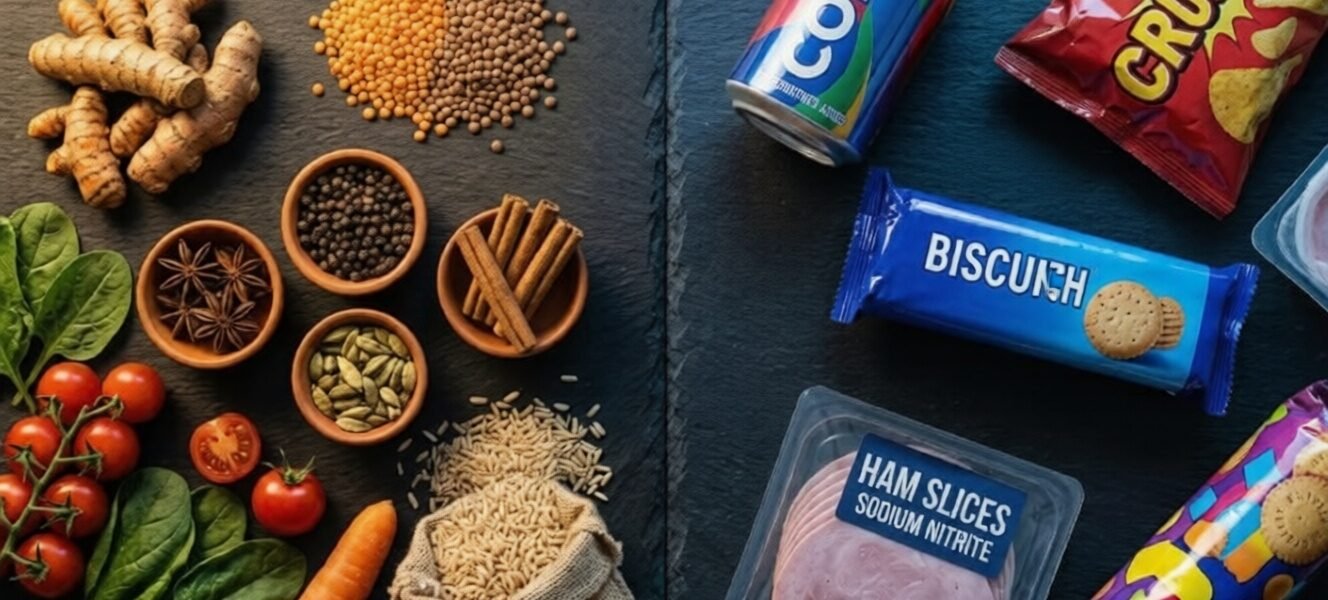


Are Food Preservatives Bad for You? The shocking truth behind every packet, bottle, and tin — from your morning cereal to the dal on your dinner plate
By Research Desk, News24Media.org | March 2026 | 12 min read
For decades, food preservatives have been sold to us as the silent guardians of our food supply, the invisible science that keeps our bread fresh for a week, our juice safe for a year, and our meat free from botulism. Regulatory agencies around the world have declared them safe. Food companies have insisted their use falls well within permitted limits. And most of us have carried on, eating the products, trusting the labels. But as you read this, a mounting body of peer-reviewed science is asking a question that is no longer comfortable to ignore:
Are food preservatives bad for you? And is the science that says they are ‘safe’ actually keeping up with the reality of how we eat today?
| “The regulatory framework evaluates preservatives one at a time. But the modern consumer does not eat one additive; they consume dozens, sometimes hundreds, in a single day.” Food additives are traditionally evaluated individually by JECFA, while scientific efforts are increasingly focusing on assessing the risks of combined exposure to multiple chemicals in the diet |
| — WHO / JECFA |
What Are Food Preservatives And Why Are They Everywhere?
Food preservatives are chemical or natural compounds added to food to extend shelf life, prevent microbial growth, and maintain appearance. They are broadly divided into antimicrobials (which kill bacteria, mold, and yeast), antioxidants (which prevent fats from going rancid), acidulants (which lower pH to hostile levels for microbes), and curing agents (primarily nitrates and nitrites used in processed meats).
If that sounds manageable, consider the scale. The global food preservatives market was valued at US$3.3 billion in 2022 and is growing. More critically, the ubiquity of preservatives extends far beyond the obvious offenders, such as chips, packaged juices, and processed meats. The modern food supply means preservatives are now embedded in your morning cup of packaged tea, the packaged spice mix in your dal, the fortified flour in your roti, and the bottled sauce on your table.
In India specifically, a 2024 BMC Public Health study identified 23 categories of ultra-processed foods, a classification that includes traditionally trusted products like packaged poha, ready-to-cook idli batter, and masala blends, all transitioning to industrial formulations with chemical additives, including preservatives. Mintel’s 2024 analysis of India’s pulse product launches found that 28% carried explicit “no preservative” claims, highlighting the growing importance of clean-label positioning in consumer food choices. The data reflects marketing trends rather than actual additive prevalence, but underscores rising consumer concern around food processing and ingredients.
| PRESERVATIVES YOU ARE LIKELY CONSUMING TODAY |
| Sodium Benzoate (E211) — in your packaged juice, carbonated drinks, syrups, condiments |
| Potassium Sorbate — in your dairy products, pickled condiments, packaged bread |
| Sulfites / Sulfur Dioxide (E220–E228) — in packaged spices, dried fruits, wine |
| Sodium Nitrite (E250) — in any processed meat: sausage, bacon, deli meats, ham |
| BHA / BHT (E320/E321) — in oily snacks, cereals, packaged oils, chewing gum |
| Carrageenan (E407) — in plant-based milks, protein shakes, packaged dairy |
| Propionates — in packaged bread, baked goods, processed cheese |
| Parabens — in trail mixes, baked goods, syrups, some ‘healthy’ snack products |
What the Science Actually Says About Long-Term Safety
The standard regulatory answer to ‘are food preservatives bad for you?’ is: not at current approved levels. Every major food additive used in commercial food production carries an Acceptable Daily Intake (ADI), a figure set by the Joint FAO/WHO Expert Committee on Food Additives (JECFA) calculated with a 100-fold safety margin below the dose shown to cause harm in animal studies.
At its 100th meeting in 2025, documented in WHO Technical Report Series No. 1058, JECFA reaffirmed its evidence-based approach to food additive safety while highlighting concerns around dietary exposure, noting that in some cases normal consumption levels may exceed established acceptable daily intakes. That is the science establishment’s carefully worded way of saying: we built a safety system for one world, and people are living in another.
The critical flaw is the cocktail problem. The ADI is calculated for a single additive, consumed in isolation. It does not model what happens when a typical urban consumer, particularly a child, ingests 15 to 20 different additives across multiple food products in a single day. This cumulative exposure gap is not a conspiracy theory. It was explicitly named as an unresolved challenge in a 2024 ScienceDirect review of global food additive risk management.
The Most Dangerous Preservatives: A Ranked Risk Assessment
1. Sodium Nitrite and Nitrates: The Carcinogen Factory
Of all the preservatives in widespread commercial use, sodium nitrite (E250) carries the most alarming evidence base. Used primarily in processed meats, such as sausages, bacon, ham, and deli meats, to prevent botulism and fix that characteristic red colour, nitrite is metabolically unstable in the body.
During cooking at high temperatures or within the acidic environment of the stomach, nitrites react with amines from meat protein to form N-nitrosamine compounds, which the International Agency for Research on Cancer (IARC) classifies as probable or confirmed carcinogens. The IARC has already classified processed meat consumption as Group 1, a confirmed human carcinogen for colorectal cancer, with nitrite-derived nitrosamines as a contributing mechanism.
A 2025 peer-reviewed study on PMC specifically investigated the link between food preservatives and the rise of early-onset colorectal cancer in people under 50, a trend that has been quietly accelerating in parallel with increased processed food consumption since the 1980s.
2. Sodium Benzoate — Benzene, Behaviour, and the Gut
Sodium benzoate (E211) is one of the most widely used preservatives on the planet, found in virtually every carbonated drink, flavoured juice, syrup, and condiment on supermarket shelves. At prescribed doses, regulators say it is safe. What they do not prominently advertise is what happens when sodium benzoate meets ascorbic acid (Vitamin C) under heat or UV light.
The reaction produces benzene, a Group 1 carcinogen with no safe exposure threshold. This reaction is not theoretical. It happens in vitamin C-fortified beverages sitting in a supply chain exposed to light and heat. It happens in your car cupholder. And it happens in millions of kitchens.
Beyond the benzene problem, the UK’s landmark McCann study and multiple confirmations since have linked sodium benzoate combined with artificial food colours to measurably increased hyperactivity in children. The UK Food Standards Agency responded by recommending voluntary withdrawal from children’s products. A 2025 FASEB Journal study added another dimension: sodium benzoate shifts gut microbiome composition, increasing inflammatory bacterial populations and decreasing anti-inflammatory ones.
3. BHA and BHT: The ‘Probably Carcinogenic’ Antioxidants
Butylated hydroxyanisole (BHA, E320) and butylated hydroxytoluene (BHT, E321) are synthetic antioxidants added to oils, chips, cereals, and packaged fried foods to prevent rancidity. The IARC classifies BHA as ‘possibly carcinogenic to humans’ (Group 2B). BHA has also been shown to act as an endocrine disruptor, interfering with estrogen metabolism and thyroid function. The EU requires a safety warning label on BHA-containing products. Natural alternatives, such as rosemary extract, vitamin E (tocopherols), exist and work. Food companies continue to use BHA and BHT for one reason: they are cheaper.
4. Sulfites: The Invisible Asthma Trigger
Sulfur dioxide (E220) and sulfite salts are added to dried fruits, wines, shrimp, packaged spices, juices, and pickled products. They are also one of the most recognised food allergens. In asthmatic individuals, estimated at up to 10% of asthmatics, sulfite exposure can trigger bronchospasm, wheezing, hives, and anaphylactic reactions. Beyond allergy, research has shown that sodium sulfite and sodium bisulfite directly inhibit the growth of Lactobacillus species, the beneficial gut bacteria foundational to immune function, digestive health, and inflammation control. And as a metabolic footnote: sulfites destroy thiamine (Vitamin B1) in the foods they preserve.
| “We now know that preservatives like sodium benzoate, sulfites, and potassium sorbate directly disrupt the gut microbiome not just in large doses, but potentially at doses calculated to be ‘safe’ by regulatory standards.” |
| — Food Preservatives Research Study, 2025–26 |
The Gut Microbiome: The Most Critical Battlefield
The most consequential scientific development of the last five years in food safety research is not a single dramatic finding but the accumulating evidence that food preservatives systematically alter the gut microbiome, with effects that extend far beyond the digestive system.
The human gut hosts trillions of microorganisms, bacteria, fungi, and viruses forming an ecosystem that governs immunity, metabolism, inflammation, mental health (via the gut-brain axis), and cancer susceptibility. A landmark 2024 review in Nature Reviews Gastroenterology and Hepatology found epidemiological evidence for increased risk of inflammatory bowel disease, colorectal cancer, and irritable bowel syndrome among high ultra-processed food consumers, with food additives, including preservatives, specifically implicated.
In practical terms, this means that sodium benzoate in your daily juice, potassium sorbate in your packaged dairy, and sodium sulfite in your spice mix are not just passing through your body inertly. They are interacting with an ecosystem that influences whether you develop metabolic syndrome, Type 2 diabetes, chronic inflammation, or potentially cancer, over years and decades of accumulated exposure.
| THE GUT MICROBIOME DAMAGE SCORECARD |
| Sodium benzoate, sodium nitrite, potassium sorbate: Increased Proteobacteria (inflammatory), decreased Clostridiales (anti-inflammatory) |
| Sodium sulfite / sodium bisulfite: Direct inhibition of Lactobacillus species |
| EDTA (chelating preservative): Exacerbates intestinal inflammation; linked to colorectal cancer risk in models |
| Dietary emulsifiers (polysorbate-80): Penetrate gut mucus layer, trigger low-grade colitis |
| Combined daily preservative load: Reduced microbiome diversity and richness — the single strongest predictor of chronic disease risk |
Children: The Highest-Risk Population We Are Not Protecting
If there is one dimension of the food preservatives question that demands immediate policy action, it is the disproportionate risk faced by children. Children consume more food relative to their body weight than adults, meaning the same quantity of a preserved product delivers a proportionally higher dose per kilogram. Their blood-brain barrier, endocrine system, immune system, and gut microbiome are still developing, and all are measurably more vulnerable to chemical disruption.
The marketing calculus makes this worse. Children are the most aggressively targeted demographic for ultra-processed, preservative-dense products, such as carbonated drinks, flavoured chips, packaged biscuits, flavoured milk, and fortified cereals. A 2024 Lancet analysis confirmed that only 1 of 9 Indian advertising policies restricts the marketing of high-fat, high-sugar, high-salt foods to children. The consequence is maximum preservative exposure in the population least equipped to handle it.
The behavioural evidence is particularly specific: the combination of sodium benzoate plus artificial food colours has been shown in multiple studies, including the McCann trial that prompted FSA action, to measurably worsen hyperactivity and attention problems in children. This is not a parental anecdote. It is a replicable experimental finding.
India’s Particular Vulnerability
India faces a dual crisis with food preservatives. On one hand, the country is in a rapid transition from traditional fresh-food diets to ultra-processed food consumption driven by urbanisation, rising incomes, changing cooking habits, and aggressive food industry marketing. On the other hand, its regulatory infrastructure has not kept pace with the scale or sophistication of this transition.
India currently has no standard NOVA classification system for ultra-processed foods, making it impossible to systematically regulate them as a category. A large proportion of Indian food consumption flows through loose, unbranded, and informal channels where preservative use is unmonitored. And fortified rice, spice mixes, and ready-to-cook products — now reaching millions of Indians through government nutrition programmes — may carry emulsifiers, stabilisers, and preservatives that are not always fully disclosed.
A 2024 IFPRI Global Food Policy Report found that 38% of Indians now consume fried snacks and processed foods regularly, while only 28% consume all five recommended food groups. Ultra-processed, preservative-laden food is actively displacing the diverse, fresh-food dietary patterns that protected previous generations from chronic disease. The public health consequences of an accelerating NCD burden already straining India’s health system are playing out in real time.
So, Are Food Preservatives Bad for You? The Honest Answer
The honest answer is: it depends, and that conditionality is precisely the problem.
At the doses prescribed by JECFA and national regulators for any single preservative in any single product, the evidence does not support the claim that you will be harmed from one exposure. The ADI model, built on decades of toxicological research with a 100-fold safety buffer, is not fiction.
But the world that model was designed for no longer exists. It was built for a food environment where the average person ate a largely fresh, home-cooked diet with occasional contact with preserved commercial products. Today’s food environment — especially for urban children and working adults — involves continuous, multi-product, multi-preservative daily exposure that the ADI system simply does not model.
The cumulative and synergistic effects of multiple preservatives consumed simultaneously, over decades, interacting with a living gut ecosystem, in a body with unique genetics and health conditions — this has not been adequately studied. And while we wait for that science to mature, millions are running an uncontrolled experiment on themselves and their children.
| “The challenge is not to eliminate preservatives — it is to demand honest science, honest regulation, and honest food.” |
| — Food Preservatives Research Study, 2025–26 |
What You Can Do: A Practical Consumer Guide
Eliminating all food preservatives from a modern diet is neither realistic nor necessary. But significantly reducing exposure — especially for children — is both achievable and scientifically advisable. Here is a clear action framework:
Read Ingredient Labels Systematically
- Any ingredient listed by E-number or chemical name is an additive. The five most concerning for daily-life exposure: Sodium Benzoate (E211), Sodium Nitrite (E250), BHA (E320), Sulfur Dioxide (E220), and Carrageenan (E407)
- If the ingredient list is longer than 10 items and many are multi-syllable chemical names, the product is almost certainly ultra-processed
- The shorter and more recognisable the ingredient list, the safer the product
Prioritise Fresh, Unpackaged Staple Foods
- Whole grain rice, raw pulses, fresh vegetables, and fruits in their unprocessed, unpackaged form are genuinely preservative-free — regardless of what packaged ‘health food’ marketing implies
- Buy loose pulses and rice from trusted sources rather than packaged ready-cook versions with additive-heavy formulations
- Cook spice mixes at home, where possible, rather than using commercial packaged blends
Be Specifically Protective of Children
- Eliminate carbonated drinks, combining sodium benzoate with artificial colours from children’s regular diet. This specific combination has the strongest behavioural evidence base
- Replace packaged biscuits, chips, and flavoured snacks with whole-food alternatives as the primary snack category
- Critically evaluate ‘healthy’ children’s products: protein bars, flavoured milk, ‘fortified’ cereals and energy drinks often contain as many additives as conventional snacks
The Single Most Powerful Action
Cook more meals at home from whole ingredients. This one intervention, requiring neither scientific literacy nor expensive speciality products, eliminates the majority of daily preservative exposure. It is the most evidence-consistent, most cost-effective, and most culturally natural protective strategy available to any Indian family.
| KEY TAKEAWAYS: ARE FOOD PRESERVATIVES BAD FOR YOU? |
| Individually, at regulated doses: technically within safety limits. But no regulatory model evaluates cumulative multi-preservative daily exposure. |
| Sodium nitrite in processed meats is the highest-risk single preservative, a proven contributor to a confirmed carcinogen formation pathway. |
| Sodium benzoate combined with Vitamin C forms benzene, a Group 1 carcinogen. This happens in vitamin-C-fortified beverages. |
| Sulfites trigger asthma attacks in sensitive individuals and kill beneficial gut bacteria at permitted doses. |
| BHA is classified as possibly carcinogenic and is a documented endocrine disruptor. Natural alternatives exist. |
| The gut microbiome, your body’s central immune and metabolic regulator, is demonstrably altered by common preservatives at commercially used levels. |
| Children face disproportionate risk from all the above and are the primary target of preservative-dense product marketing. |
| In India, the transition to ultra-processed foods is happening faster than the regulatory infrastructure can respond. |
Are Food Preservatives Bad for You?
Discover more from
Subscribe to get the latest posts sent to your email.