Students Are Studying More but Learning Less: The Silent Crisis Inside Indian Schools


Education Editorial | News24Media
The Silent Crisis in Indian Schools: Students Are Studying More but Learning Less
Behind long study hours, heavy homework, and rising academic pressure lies a deeper problem that India’s education system can no longer ignore.
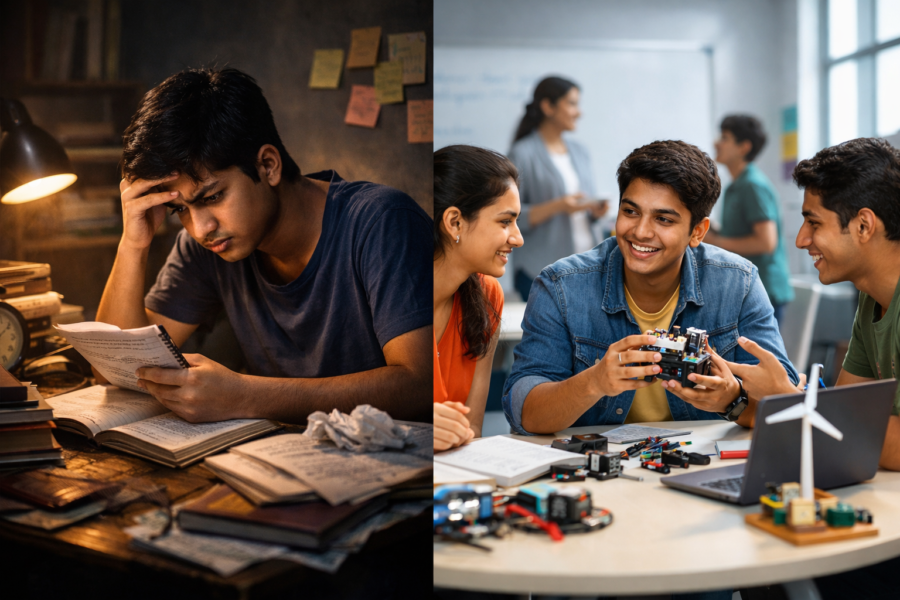
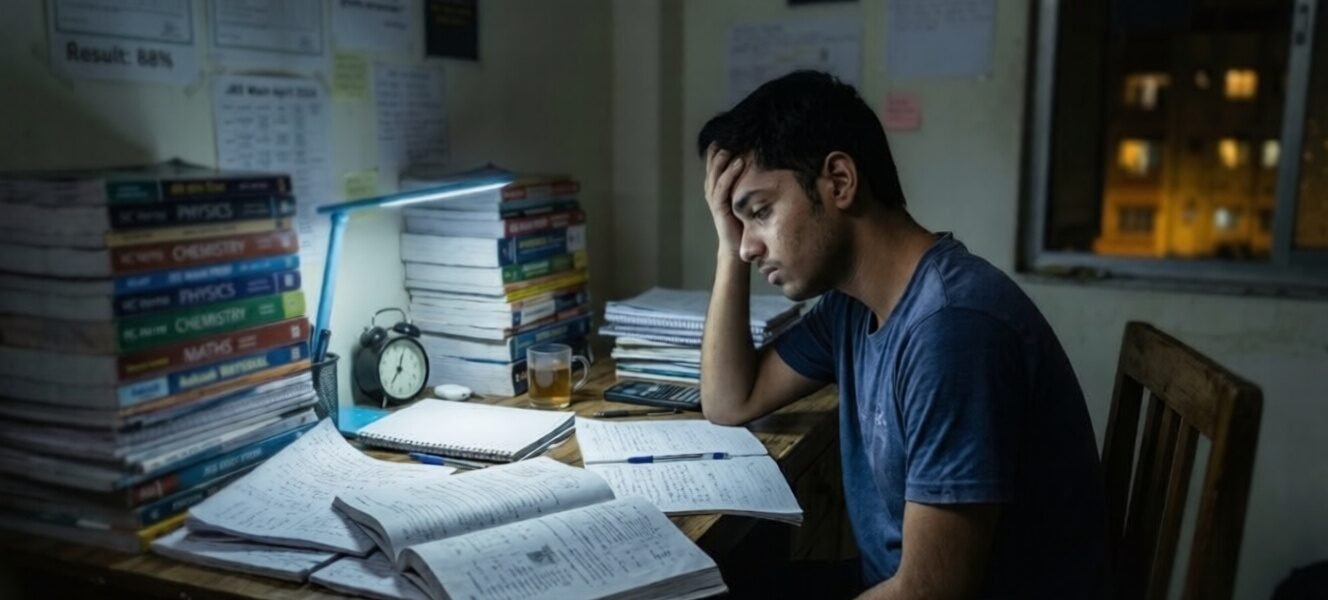
I n homes across India, a familiar scene repeats itself every evening. Students sit surrounded by textbooks, coaching notes, assignments, and school homework late into the night. Parents worry about marks, teachers rush to complete syllabus, and students move from school to tuition to self-study in a cycle that rarely stops.
Yet beneath this intense academic activity lies a troubling question: if students are studying more than ever before, why are so many struggling with conceptual understanding, communication skills, problem-solving ability, and confidence?
This is the silent crisis unfolding inside Indian classrooms. Students are investing enormous time into education, but real learning is not growing at the same pace.
The Difference Between Studying and Learning
One of the biggest misconceptions in education today is the assumption that more studying automatically leads to better learning. In reality, studying and learning are not the same thing.
A student may memorize answers, complete notebooks, and attend coaching classes for hours every day, yet still struggle to apply concepts independently. This happens because much of traditional schooling continues to prioritize repetition over understanding.
For decades, academic success in India has largely revolved around:
- memorizing textbook content
- completing homework mechanically
- scoring marks in examinations
- avoiding mistakes rather than encouraging curiosity
As a result, many students become trained to reproduce information rather than think critically.
Editorial Insight
“A student who studies only for marks may pass examinations. A student who learns deeply becomes prepared for life.”
The Pressure Economy of School Education
Modern students are growing up in what may be called a “pressure economy” of education. Academic schedules have become heavier, competition more intense, and expectations significantly higher.
Students today often spend:
- 6–8 hours in school
- 2–4 hours in tuition or coaching
- additional hours completing homework and revision
Ironically, despite this enormous investment of time, many students still feel insecure about their preparation. The problem is not always lack of effort. The problem is that much of the system rewards passive learning instead of active understanding.
In many classrooms, students are still encouraged to:
- listen quietly instead of asking questions
- copy notes instead of analysing concepts
- fear mistakes instead of experimenting
- focus on marks rather than mastery
What CBSE and NEP 2020 Are Trying to Change
Recognizing this growing disconnect, India’s education reforms are now moving toward competency-based and skill-based learning. The National Education Policy (NEP 2020) and CBSE’s recent academic directions increasingly emphasize:
- critical thinking
- application-based learning
- problem-solving ability
- communication skills
- experiential classroom engagement
The message is becoming clear: education can no longer remain dependent on rote memorization alone.
In the coming decade, students will not succeed merely because they remember information. They will succeed because they can apply knowledge, adapt to change, think independently, and learn continuously.
The Emotional Cost of Learning Less
The consequences of this crisis go beyond academics. Many students today experience:
- stress and burnout
- fear of failure
- loss of curiosity
- low confidence despite hard work
- dependence on tuition and external guidance
When students spend years studying without truly understanding, education slowly becomes associated with pressure rather than growth.
This is particularly dangerous in an AI-driven future where adaptability, creativity, and communication may matter more than textbook reproduction.
What Schools Must Change
If India wants real educational transformation, schools must move beyond simply completing syllabus and conducting examinations. The focus must shift toward meaningful learning experiences.
Schools must increasingly prioritize:
- interactive classrooms
- concept-focused teaching
- regular academic monitoring
- teacher accountability
- activity-based learning
- communication and presentation skills
- structured discipline and learning culture
Forward-looking institutions like Saraswati World School are increasingly recognizing the importance of systematic academic monitoring, lesson planning, classroom discipline, and conceptual learning rather than depending entirely on traditional rote-based methods.
At Saraswati World School, greater emphasis is now being placed on structured classroom engagement, continuous evaluation, copy checking, activity-based participation, and academic accountability systems that encourage students to understand rather than merely memorize.
The Role of Parents
Parents also need to rethink how success is measured. Excessive focus on marks alone often increases pressure while ignoring deeper educational growth.
The more important questions may now be:
- Can the child think independently?
- Can the child communicate confidently?
- Can the child solve unfamiliar problems?
- Is the child emotionally healthy and curious?
Real learning is not only about examination performance. It is about preparing a student for life beyond school walls.
The Bigger Reality
India does not have a shortage of hardworking students. The country has a shortage of educational systems that convert hard work into deep learning.
The Future Cannot Be Built on Memorization Alone
The future economy will reward creativity, adaptability, collaboration, emotional intelligence, and problem-solving ability. Students who only memorize information may find themselves unprepared for a rapidly changing world.
Artificial intelligence is already transforming industries, careers, and workplaces. In this environment, schools must become centers of thinking, exploration, and skill development—not merely examination factories.
Conclusion: A Necessary Reset
India’s education system stands at an important turning point. The silent crisis is no longer invisible. Students are studying harder than ever, but genuine learning outcomes remain uneven.
The solution is not simply reducing studies or removing examinations. The solution is transforming how learning happens inside classrooms.
Students need understanding instead of mechanical repetition. Schools need systems instead of routine formalities. Parents need to value growth beyond marks.
Most importantly, education must once again become meaningful.
News24Media Education Desk | Focus Keyword: Students Are Studying More but Learning Less
Students Are Studying More but Learning Less, Indian education crisis , real learning in schools, rote learning in India, CBSE education reforms, future of education in India, skill-based learning, India school learning crisis
Discover more from
Subscribe to get the latest posts sent to your email.