
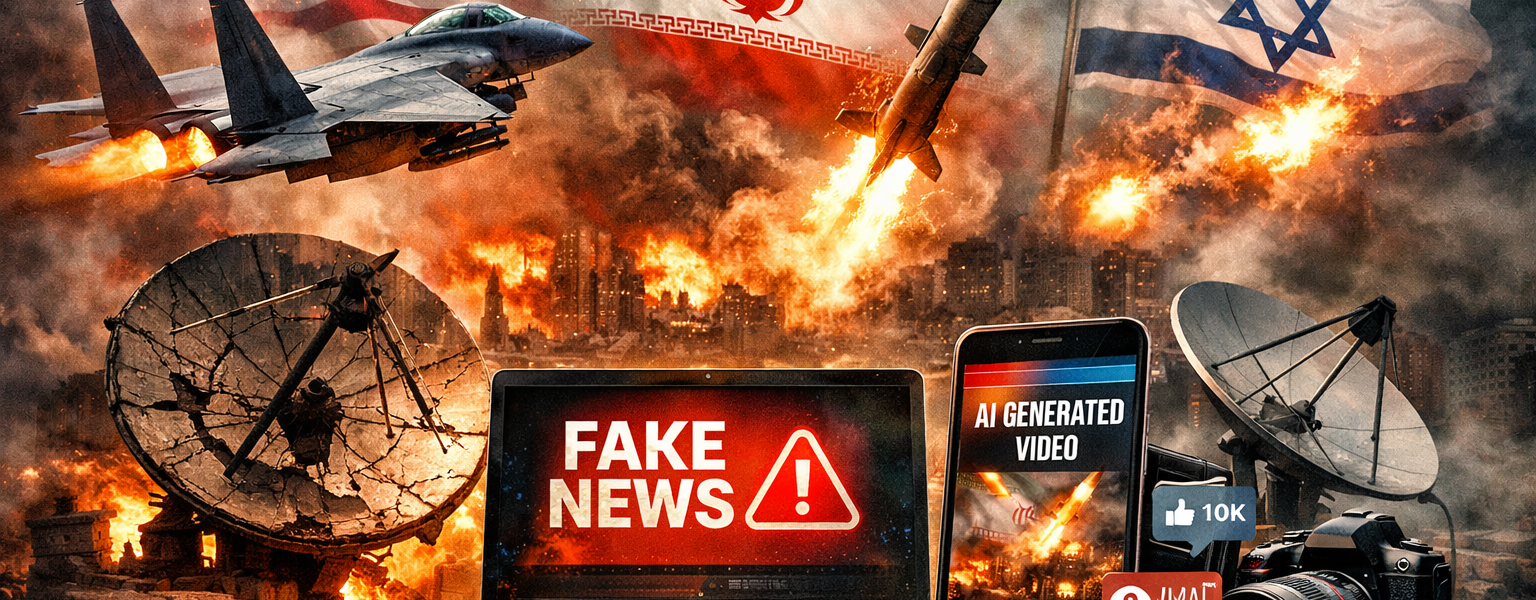
The Architecture of Illusion: Why the World Thinks Iran is Winning a War it is Losing


The Illusion of Collapse: How the US–Israel–Iran War Is Being Fought as Much in Minds as on the Battlefield
In war, truth is always the first casualty. But in the ongoing conflict between the United States, Israel, and Iran, something far more dangerous is unfolding—the collapse of perception itself.
Over the past 48–72 hours, a powerful narrative has swept across global media, social platforms, and even mainstream commentary: that the United States and Israel are “on the back foot,” that Washington is “desperate for a ceasefire,” and that Iran has unleashed such overwhelming force that it is reshaping the balance of power in the Middle East.
But is this reality—or a carefully amplified illusion?
A War of Real Strikes—and Unreal Narratives
There is no denying that the war, which began on 28 February 2026, has entered a highly volatile phase. Thousands of strikes have been carried out, with the US and Israel maintaining a relentless operational tempo. At the same time, Iran has demonstrated a significant capacity to retaliate—launching missiles, deploying drones, and, crucially, targeting energy infrastructure across the region.
Recent attacks on critical energy hubs such as South Pars and Ras Laffan have triggered global concern, reinforcing the perception that Iran can disrupt not just regional stability, but the global economy itself.
However, this is where the narrative begins to diverge from reality.
The claim that Iran is “completely destroying” US and Israeli military systems, or that Israel faces existential collapse, does not hold up under scrutiny. What is actually unfolding is far more complex: Iran can inflict real damage—but it has not achieved systemic destruction.
The Perfect Storm for Misinformation
Why, then, has the perception shifted so dramatically in just a few days?
The answer lies in a rare convergence of three powerful factors:
1. Information Blackouts and Verification Delays
Iran’s internet shutdown and Israel’s tightened media restrictions have sharply reduced the availability of real-time, verifiable information. Simultaneously, delays in commercial satellite imagery—up to 14 days—have impeded independent verification.
In such an environment, uncertainty breeds speculation, and speculation quickly hardens into “truth.”
2. The Rise of Synthetic War Content
Perhaps the most alarming development is the explosion of AI-generated war visuals. Viral videos claiming to show missile strikes on Tel Aviv, or images of destroyed US radar systems, have been widely debunked—but not before reaching millions.
These are not crude fakes. They are emotionally convincing, cinematic, and designed to create instant belief.
The result? A war that appears far more decisive—and far more catastrophic—than it actually is.
3. The Economics of Fear
Iran’s most powerful weapon in this phase of the conflict is not just its missile arsenal—it is its ability to influence global energy flows.
Even limited disruption in the Strait of Hormuz can trigger global price shocks, airline disruptions, and supply chain instability.
This creates a psychological multiplier effect: economic fear translates into perceived military dominance.
The Myth of a Single “Winner”
One of the most dangerous misconceptions driving current discourse is the idea that this war can be reduced to a simple scoreboard.
It cannot.
Iran holds strong leverage in its ability to:
- Disrupt regional stability across multiple theatres
- Threaten global energy supplies
- Exploit vulnerabilities in missile defence systems
Meanwhile, the US and Israel maintain overwhelming advantages in:
- Sustained strike capability and operational depth
- Large-scale infrastructure degradation within Iran
- Defensive systems that, while imperfect, intercept the majority of threats
In reality, both sides are simultaneously winning and losing depending on the metric being used.
But nuance does not go viral.
The “Firehose of Falsehood” Effect
Modern information warfare does not rely on a single narrative—it relies on volume.
Experts describe this as the “firehose of falsehood” model: high-speed, high-volume, multi-channel information flooding that overwhelms the audience’s ability to verify facts.
In such a system:
- Truth arrives slowly
- Falsehood spreads instantly
- Repetition replaces verification
This explains why the idea of “US desperation” or “Israel collapsing” can appear to be a global consensus when, in reality, it is often an algorithmic echo chamber.
Who Benefits from the Narrative?
Extreme narratives rarely exist in a vacuum. They serve strategic purposes.
- Iran-aligned ecosystems benefit from projecting dominance, reinforcing deterrence and discouraging external intervention.
- Engagement-driven media platforms benefit from sensationalism, where fear and certainty outperform nuance.
- Domestic political actors in multiple countries use selective narratives to justify either escalation or withdrawal.
Even Europe’s reluctance to join deeper military involvement, rooted in legal, political, and strategic considerations, is being reframed online as “fear of Iran.”
In other words, perception itself has become a battlefield.
The Crisis of Knowing
What we are witnessing is not just a war it is a crisis of epistemology.
When:
- Real footage is scarce
- Fake footage is abundant
- Verification is delayed
- Emotion is instant
…the public loses its ability to distinguish between reality and narrative.
This is perhaps the most dangerous outcome of modern warfare.
How to Read This War Without Being Misled
To navigate this environment, three principles are essential:
1. Distrust spectacular visuals
If a video looks too dramatic, too cinematic, or too perfect, it likely is.
2. Prioritise slow, verified information
Satellite-confirmed damage, multi-source reporting, and official acknowledgements matter more than viral clips.
3. Separate battlefield events from strategic outcomes
A successful strike does not equal victory. A damaged facility does not equal collapse.
Conclusion: The Real Battle Is for Perception
The sudden surge of narratives portraying the US and Israel as weakened and Iran as overwhelmingly dominant is not entirely fabricated.
It is built on real events.
But those events have been amplified, distorted, and emotionally engineered into a story that feels decisive even when the underlying reality remains deeply contested.
This is the defining feature of 21st-century conflict:
Wars are no longer fought only with missiles and drones.
They are fought with narratives, algorithms, and perception.
And in this war, the most powerful weapon is not firepower—
It is a belief.
Discover more from
Subscribe to get the latest posts sent to your email.