
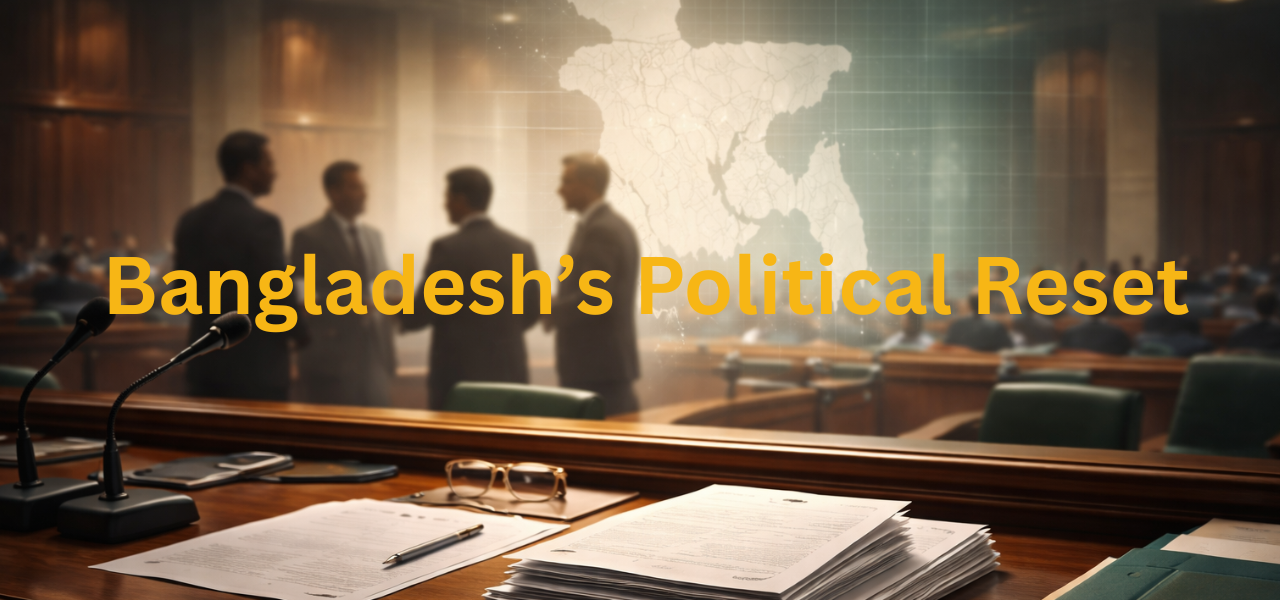
Bangladesh 2026 Election: Tarique Rahman’s Victory Reshapes Power, Minority Security and India Relations


Bangladesh 2026 Election After the Ballot: Tarique Rahman’s Return, Islamist Leverage, Minority Fears — and a New Test for India Relations
A Defining Election in a Post-Uprising State
Bangladesh has entered a new political chapter after the first general election since the 2024 uprising that unseated former Prime Minister Sheikh Hasina. The Bangladesh Nationalist Party (BNP), led by UK-returned politician Tarique Rahman, has secured a commanding majority, clearing the path for him to assume the premiership.
The vote—held under an interim arrangement led by Nobel laureate Muhammad Yunus—drew roughly 60 percent turnout, signalling public engagement despite a polarised climate. The Awami League, which remains banned and politically sidelined, rejected the process, while Islamist and student-led formations flagged irregularities in parts of the country.
Parallel to the Bangladesh 2026 Election, voters also endorsed sweeping constitutional reforms under the so-called “July Charter,” with around 60 percent backing proposals that include term limits for the prime minister, stronger presidential oversight, judicial independence measures, enhanced rights protections, and greater representation for women. If implemented, these changes would significantly recalibrate Bangladesh’s political architecture.
Tarique Rahman’s Dramatic Comeback
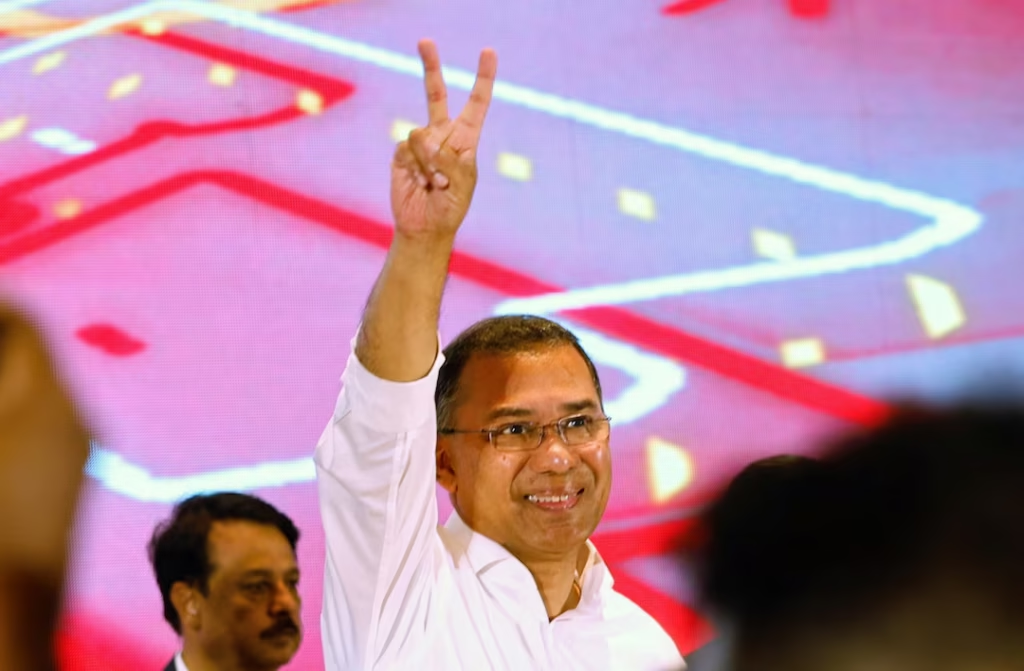
For Tarique Rahman, long in exile and dogged by legal controversies in the past, the Bangladesh 2026 Election marks a dramatic political resurrection. His campaign framed the vote as a mandate for “restoring democracy, repairing institutions, and reviving the economy.”
Yet Rahman’s premiership will not be defined by victory alone. It will be shaped by three simultaneous pressures:
- Stabilising a politically traumatised state.
- Managing Islamist parliamentary strength without ceding institutional ground.
- Rebalancing relations with India amid unresolved tensions surrounding Sheikh Hasina’s presence there.
The coming months will determine whether Rahman governs as a consensus restorer—or presides over another cycle of confrontation.
The Islamist Factor: Parliamentary Opposition or Strategic Leverage?
One of the most closely watched outcomes is the strong showing of Bangladesh Jamaat-e-Islami and its allies, who have secured a substantial bloc in parliament. While they do not control the government, their parliamentary weight is politically consequential.
The concern in regional capitals is not the existence of an Islamist opposition per se—democratic systems can accommodate ideological diversity—but whether parliamentary participation will translate into:
- Influence over education and social policy.
- Pressure on women’s rights and minority protections.
- Renewed street mobilisation politics.
- Soft space for extremist narratives to regroup.
Bangladesh has historically demonstrated resilience against transnational jihadist networks. However, political instability combined with weakened policing environments can create openings for radical elements. The critical test for the new government will be whether it draws a firm constitutional boundary between democratic Islamism and violent extremism.
Minority Security: A Central Legitimacy Test
The post-2024 transition has been accompanied by reports of attacks on Hindu and Christian communities, particularly in districts perceived as Awami League strongholds. Rights organisations have documented incidents of intimidation, property damage, and communal reprisals during periods of political volatility.
Minority security will now become a core legitimacy benchmark for Rahman’s government. The credibility of the new administration will hinge not merely on rhetorical assurances, but on:
- Prosecutions of communal violence.
- Police neutrality and rapid response capacity.
- Public messaging that unequivocally rejects sectarian targeting.
- Legal and institutional safeguards embedded in the July Charter reforms.
If minority fears persist or escalate, Bangladesh risks reputational costs internationally and diplomatic strain regionally.
The “July Charter” Reforms: Structural Reset or Political Risk?
The referendum-backed July Charter proposes ambitious restructuring, including:
- A two-term limit for the prime minister.
- A possible second parliamentary chamber.
- Enhanced presidential authority.
- Judicial independence guarantees.
- Expanded rights protections and women’s representation.
On paper, these reforms aim to prevent executive overconcentration and restore institutional balance. In practice, they introduce new veto points and power-sharing dynamics that could either stabilise governance or trigger fresh political contestation.
Implementation will require elite consensus—something Bangladesh’s politics has historically struggled to sustain.
India–Bangladesh Relations: Between Pragmatism and Pressure
India was quick to congratulate Tarique Rahman, signalling New Delhi’s desire to preserve strategic continuity. Yet underlying tensions remain sharp.
Key Friction Points
- BNP’s demand for Sheikh Hasina’s extradition from India.
- Border security coordination.
- Counterterror intelligence sharing.
- Trade and connectivity projects.
- River-water diplomacy.
India’s strategic priority is stability along its eastern frontier. Bangladesh’s priority is economic recovery and political legitimacy. These imperatives create incentives for pragmatism—but domestic political narratives in both countries could complicate the tone.
Three plausible diplomatic trajectories are emerging:
1. Pragmatic Reset: Quiet backchannel diplomacy contains the extradition dispute while economic and security cooperation continues.
2. Managed Tension: Public rhetoric escalates intermittently, but core cooperation survives.
3. Polarised Drift: Minority violence or identity politics triggers sustained diplomatic hardening.
The most probable path appears to be transactional tension rather than rupture—unless internal instability intensifies.
The Economic Imperative
Beyond politics and ideology, Bangladesh faces urgent economic pressures:
- Inflationary stress.
- Foreign exchange constraints.
- Export sector recovery challenges.
- Youth unemployment.
Rahman’s early policy focus will likely revolve around restoring investor confidence, stabilising currency flows, and maintaining international partnerships. Economic failure would quickly erode his political capital and empower hardline narratives.
The Pakistan Question and Regional Balancing
Speculation about ideological proximity between Islamist factions and Pakistan-aligned networks has surfaced in regional discourse. However, Bangladesh’s geopolitical identity is complex and historically independent. While Islamist parliamentary strength raises caution flags, equating electoral Islamism with foreign strategic alignment would oversimplify Bangladesh’s political ecosystem.
Dhaka traditionally balances relations among India, China, and Western partners. A recalibrated foreign policy under Rahman may emphasise sovereignty and diversification rather than overt realignment.
The First 100 Days of Bangladesh 2026 Election: Indicators to Watch
Analysts will closely monitor:
- Arrests and prosecutions related to communal violence.
- Security sector appointments.
- Legislative sequencing of the July Charter reforms.
- Tone and substance of India’s engagement.
- Public messaging toward Islamist allies and opposition.
These signals will clarify whether the new administration consolidates democratic recovery—or deepens polarisation.
Conclusion: A Democratic Crossroads
Bangladesh stands at a decisive crossroads. Tarique Rahman’s victory marks not merely a change of government but a potential restructuring of the political order.
The stakes are clear:
- Can democratic Islamism be contained within constitutional limits?
- Will minority rights receive credible institutional protection?
- Can India–Bangladesh ties remain strategically stable amid unresolved grievances?
- Will constitutional reform strengthen democracy—or introduce new instability?
Only governance discipline, institutional strengthening, and restraint across political camps will determine whether this transition becomes a democratic reset—or another turbulent chapter in South Asia’s most politically contested republic.
For now, Bangladesh’s future rests less on electoral arithmetic and more on how power is exercised in the weeks ahead.
Bangladesh 2026 Election
Discover more from
Subscribe to get the latest posts sent to your email.





2 COMMENTS