

Tired of Unknown Calls? India’s New CNAP Caller ID Promises Verified Names — No Apps Needed


India’s Telcos Are Bringing Caller Names to Your Screen — No App Required
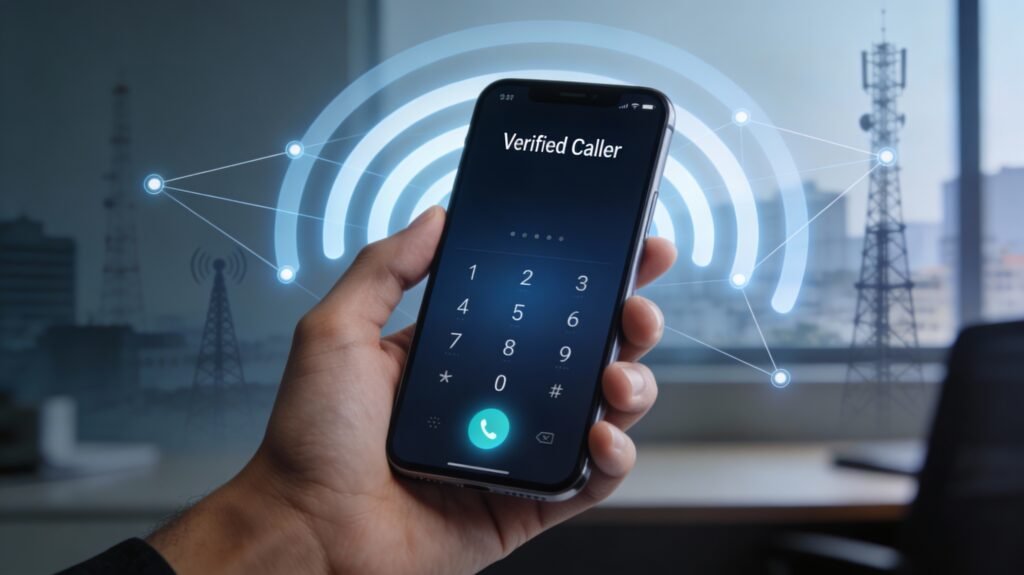
Imagine this: your phone rings with an unfamiliar number. Instead of hesitating, guessing, or opening a third-party app, your screen displays a verified caller name, provided directly by your telecom operator. No downloads. No crowdsourced guesses. Just an official identity tied to the network itself.
That is the promise of Calling Name Presentation (CNAP), a new network-level caller identification service that Indian telecom operators have begun rolling out. Touted as a potential game-changer in India’s long fight against spam, fraud and nuisance calls, CNAP aims to shift caller identification away from opaque third-party apps and into regulated telecom infrastructure.
What exactly is CNAP — and how does it work?
CNAP, short for Calling Name Presentation, is a feature that displays the verified name of the caller along with the incoming phone number.
Here’s how it works in simple terms:
- Every mobile connection in India is issued after the customer has completed Know Your Customer (KYC) verification.
- Telecom operators maintain a database of subscriber names linked to phone numbers.
- When a call is placed, the receiving network fetches the caller’s registered name from this KYC-verified database and displays it on the recipient’s screen.
This is fundamentally different from the traditional Calling Line Identification service, which shows only the number, and from popular caller-ID apps that rely on crowdsourced address books or user-submitted labels.
With CNAP, the name comes from the telecom network itself — not from other users’ contacts.
How CNAP differs from apps like Truecaller
For years, apps such as Truecaller have filled a gap by identifying unknown callers. But they have also attracted controversy.
Privacy advocates and regulators have repeatedly flagged concerns that:
- Contact lists and call metadata may be uploaded without the consent of people who have never installed the app.
- User-generated labels can be inaccurate, misleading, or even defamatory.
- Large datasets containing phone numbers and personal details have been exposed in leaks in the past.
CNAP takes a different route. Instead of building massive crowdsourced databases, it uses information telecom companies already hold under regulatory requirements. No additional app is required, and no address books need to be accessed.
In theory, this limits data collection to what is already necessary for providing telecom services.
Regulation, pilots and the rollout timeline
The move toward CNAP has been driven by India’s telecom regulators and policymakers.
The Telecom Regulatory Authority of India (TRAI) has recommended mandatory implementation of CNAP as part of broader measures to curb spam and fraudulent calls. The Department of Telecommunications (DoT) has backed these recommendations and overseen technical trials.
India’s major private operators — Reliance Jio, Bharti Airtel and Vodafone Idea — have already conducted pilot runs to test feasibility, interoperability and accuracy.
According to regulatory roadmaps, CNAP is expected to:
- Be enabled by default, with opt-out provisions for users
- Initially work best on 4G and 5G networks and newer smartphones
- Roll out gradually, with wider availability targeted by 2026
Why CNAP matters for spam, scams and trust
India receives billions of spam and scam calls every year — fake bank alerts, impostor customer-care numbers, aggressive telemarketers and outright fraud.
By showing a verified caller name, CNAP could help users:
- Instantly spot suspicious calls claiming to be from banks or government offices
- Avoid answering spoofed or misleading numbers
- Make quicker, more confident decisions about whether to pick up or ignore a call
Cybersecurity experts caution that CNAP is not a silver bullet. Fraudsters may still exploit loopholes, such as using legitimately registered numbers or shell entities. But many agree that verified naming raises the cost of impersonation and reduces ambiguity — a key factor scammers rely on.
Consumer-rights advocates also note that moving caller identification into a regulated system creates clearer accountability than relying on private apps.
Exposed: The Shocking ‘Police Officer’ WhatsApp Call scam
Open questions and potential concerns
Despite its promise, CNAP raises important questions that regulators and operators will have to address carefully:
- Name mismatches: KYC names may differ from how people are commonly known. A personal phone registered under a formal name could confuse recipients.
- Data security: CNAP requires cross-operator queries and, potentially, centralised systems. Safeguarding these databases against breaches will be critical.
- User control: If CNAP is enabled by default, users will want clear options to edit, mask, or opt out of name display — especially for privacy reasons.
Regulators have indicated that safeguards, consent mechanisms and data-protection norms will be part of the framework. But as with many digital systems, implementation will matter as much as policy intent.
What users should watch for next
Over the coming months, users can expect:
- State-wise or network-wise expansion of CNAP services
- Software updates that add or refine caller-name displays on phones
- Clearer instructions from operators on how to enable, disable or opt out of CNAP
- Early data on whether spam and scam call volumes actually decline
The larger test will be whether CNAP delivers sustained relief — not just a new label on old problems.
The bottom line
CNAP represents a significant shift in how Indians identify incoming calls. By moving caller names from opaque, app-driven databases to regulated telecom infrastructure, it aims to restore trust, reduce spam, and address long-standing privacy concerns.
If executed transparently and securely, CNAP could finally give users what they have long wanted: fewer unknown calls, clearer identities, and more control over who gets their attention. But its real impact will depend on accuracy, accountability and robust data protection — not just the technology itself.
CNAP caller ID India, unknown calls India, spam calls solution India, telecom caller name service, caller ID without apps, mobile privacy India, TRAI telecom reforms
Discover more from
Subscribe to get the latest posts sent to your email.








1 COMMENTS