Dipu Chandra Das Filmed to Death in Bangladesh: The Lynching of Hindu Man and the Crisis of Mob Justice


When Dipu Chandra Das Is Lynched on Camera: Justice, Human Dignity, and the Crisis of Mob Violence in Bangladesh
The video is difficult to watch—and impossible to forget. A man runs through a public street in broad daylight, chased by a crowd. He stumbles. He is struck again and again. He is dragged along the road as people shout, jeer, and record. At one point, he is left broken and barely conscious. Later, reports say, his body was burned. The man is Dipu Chandra Das, a Hindu. The crowd, according to multiple accounts, is a radicalised mob inflamed by religious hatred.
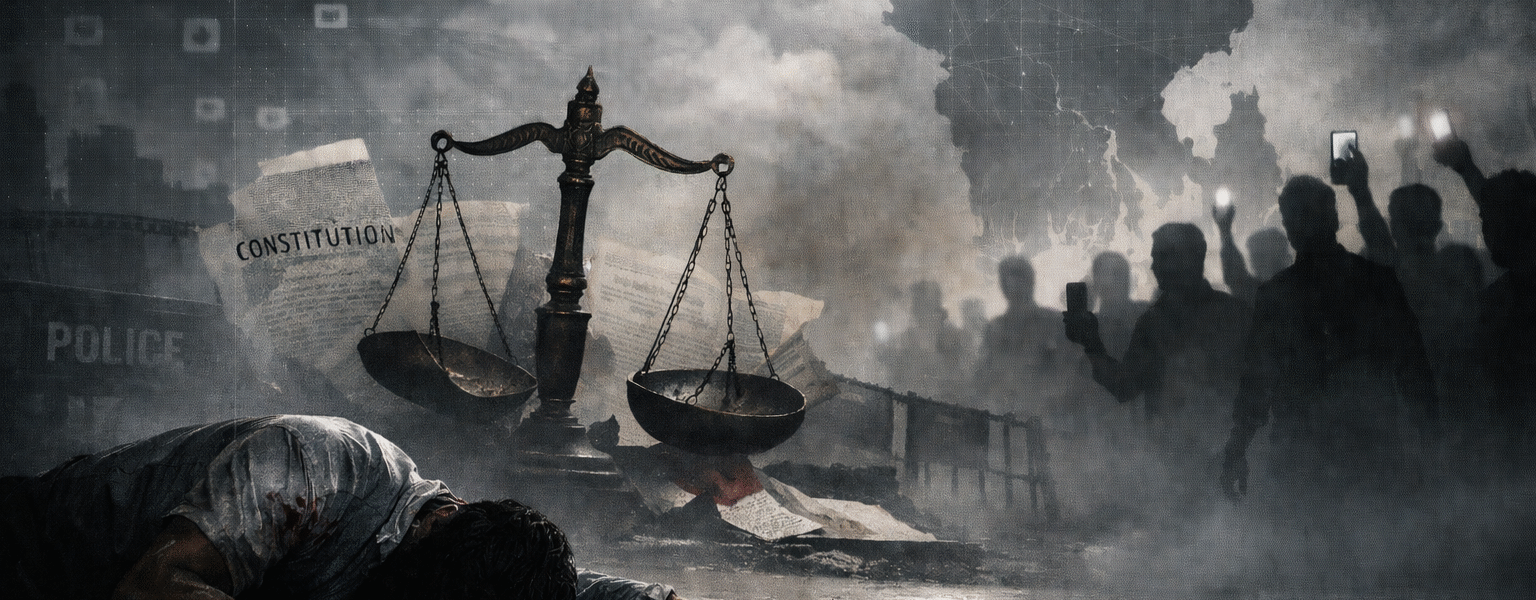
This is not a scene from a dystopian film. It is not medieval fiction. It is a real human being beaten to death in public view, while smartphones are raised and humanity is lowered. The circulation of the Dipu Chandra Das footage online has forced a question that no society can evade: what does justice mean when lynching becomes spectacle, and when the roar of a mob replaces the rule of law?
What is known so far—and what must be stated carefully
Based on verified reporting and publicly available statements, Dipu Chandra Das was attacked by a crowd in Bangladesh after accusations—widely described as religious in nature—were raised against him. Witness accounts and video evidence show a mob assault unfolding in open spaces, without immediate, effective intervention. The attack escalated rapidly: chasing, beating, and dragging. He was left gravely injured. Subsequent reports state that he died of his injuries, with some accounts alleging his body was set on fire after the assault.
Police statements, when issued, acknowledge the incident and indicate that investigations are underway. Authorities have spoken of arrests and inquiries, though details remain limited and evolving. Rights groups and community representatives have called for restraint in spreading rumours while demanding accountability for those clearly visible in the footage. Family members and residents of Dipu Chandra Das, according to reports, have expressed fear and grief, describing a climate in which minorities feel exposed and unprotected.
It is essential to distinguish confirmed facts—the public assault, the fatal outcome, the existence of video evidence—from allegations that require judicial determination, including the precise trigger for the violence and the identities and roles of all involved. But uncertainty about some details cannot obscure the central truth: a man named Dipu Chandra Das was lynched by a mob, in public, in a constitutional state.
Not an aberration: a pattern of mob violence and impunity
Dipu Chandra Das’s killing did not occur in a vacuum. Bangladesh has, over the past decade, witnessed repeated incidents of mob violence linked to accusations of blasphemy, rumours spread through social media, and campaigns of intimidation against religious minorities, secular bloggers, and dissenters. Human-rights organisations—including international NGOs and regional monitoring groups—have documented how Islamic religious vigilantism thrives when rumours outpace facts and when perpetrators expect slow investigations or weak consequences.
Reports have warned of a recurring cycle: an allegation circulates; crowds gather; violence erupts; arrests, if any, are selective; trials drag on. Extremist networks—both organised and informal—have been shown to exploit religious sentiment, weaponising identity to mobilise crowds faster than institutions can respond. The result is a climate where mobs feel empowered, and victims feel alone.
How radicalisation turns neighbours into executioners
The most disturbing question is not only who struck the blows, but how ordinary people can be transformed into participants in lethal cruelty. Scholars of radicalisation describe familiar mechanisms at work: dehumanisation, where a person is recast as an “enemy” or “blasphemer”; moral panic, where violence is framed as righteous duty; and the bystander effect, where responsibility dissolves in the crowd.
Social media accelerates each step. Unverified claims spread instantly. Videos are shared not to summon help but to demonstrate loyalty to the mob. In such moments, the victim is no longer seen as a fellow citizen with rights, but as a symbol to be erased. The rule of law collapses into a rule of rage.
Minorities under threat—and the test of the state
For Bangladesh’s Hindu community and other minorities, the message of Dipu Chandra Das’ lynching is chilling. When mobs act with apparent confidence that they will not be stopped—or swiftly punished—fear becomes rational. Safety becomes conditional. Citizenship feels fragile.
This places an unavoidable responsibility on the state. Where were the police as the crowd gathered? Why was the response not immediate and overwhelming? Are intelligence agencies tracking extremist mobilisation with sufficient seriousness? Do prosecutions move fast enough to deter copycat violence? These are not abstract questions; they are the difference between protection and abandonment.
Rights advocates and regional analysts have long argued for systemic reforms: rapid-response policing for communal threats; accountability for officials who fail to act; regulation and monitoring of extremist preaching; and fast-track courts for mob-violence cases, with witness protection to ensure testimony is not silenced by fear.
Medieval brutality in a digital age
There is a cruel irony in watching public lynchings unfold in an era of constitutions, human-rights treaties, and universal connectivity. The spectacle recalls medieval punishments, yet it is enabled by modern tools. A society cannot credibly claim modernity if citizens are beaten to death in the street while others film for clicks. Development is not measured by GDP alone, but by whether human dignity is defended when it is most under assault.
Drawing a moral line does not require collective blame. It requires clarity. Violence committed in the name of religion is a betrayal of faith, not its fulfilment. Justice demands identifying individual perpetrators, the ideological networks that incite them, and the structures that enable impunity.
A call for justice—and a turning point
The killing of Dipu Chandra Das must not fade into another grim statistic. It demands a transparent investigation, fair and speedy trials, and protection for witnesses and the victim’s family. It requires Bangladesh’s government, judiciary, religious leaders, and civil society to confront mob violence and extremist indoctrination as existential threats to the rule of law.
Solidarity among Hindus—the most peaceful and tolerant community—and all minorities, alongside Muslims who reject vigilantism and demand accountability, is essential. Silence is complicity; justice is prevention.
The final measure of a state is not how it speaks when calm prevails, but how it acts when mobs roar. A society that tolerates lynching—whoever the victim is and whoever the mob is—cannot claim to uphold human dignity or the rule of law.
Bangladesh lynching video, Dipu Chandra Das killed, Hindu lynching Bangladesh, Islamist mob violence, Bangladesh human rights crisis, Dipu Chandra Das lynching, Dipu Chandra Das burnt alive
Disclaimer
This report is based on verified media accounts, official statements, and human-rights documentation available at the time of publication. Allegations are reported with attribution and do not imply legal guilt.
Discover more from
Subscribe to get the latest posts sent to your email.