US Pilot Rescued Iran 2026: Inside the F-15E CSAR Operation


Investigative · Independent · Global
US Pilot Rescued From the Zagros:
Inside the Most Daring U.S. CSAR Operation Since Black Hawk Down
How the CIA ran a deception war inside Iran, SEAL Team Six flew deep into enemy territory, U.S. fighter jets bombed approaching IRGC convoys, and a wounded colonel survived 36 hours in a mountain crevice — before Tehran could get to him first.
I. The Shoot-Down: April 3, 2026 — Southwest Iran
At some point on Friday, April 3, 2026 — during the 34th day of what the United States had named Operation Epic Fury — an F-15E Strike Eagle assigned to the 494th Fighter Squadron, 48th Fighter Wing, out of RAF Lakenheath, England, was hit by Iranian air defences over southwestern Iran and went down. It was the first U.S. combat aircraft to be shot down inside Iran since the war began on February 28, 2026, and it instantly became the most dangerous event of the conflict for Washington.
The F-15E Strike Eagle is a twin-engine, all-weather, multirole fighter-bomber operated by the U.S. Air Force. Unlike single-seat jets, the aircraft carries two crew: a Pilot in the front seat and a Weapons Systems Officer (WSO) in the rear seat. Both are fully trained aviators; the WSO controls the aircraft’s sensor, targeting, and weapons systems in flight. The aircraft that went down over Iran carried both.
According to multiple U.S. officials cited by NBC News, CBS News, Axios, and The War Zone, both crew members successfully ejected from the stricken aircraft and survived the ejection. However, they did not land together — a standard risk given the timing delays and wind conditions that separate crew members at altitude. The pilot came down in a location reachable by U.S. rescue forces relatively quickly. The WSO was not so fortunate. He landed deeper inside Iran, in the rugged, forbidding terrain of the Zagros Mountain range — specifically in the Kohgiluyeh and Boyer-Ahmad province of southwest Iran, the same mountainous interior that has sheltered Bakhtiari nomadic tribes for centuries.
Aircraft Profile — F-15E Strike Eagle (494th FS)
- Unit: 494th Fighter Squadron “Panthers,” 48th Fighter Wing, RAF Lakenheath, England
- Role: Multirole strike fighter — primary deep-strike and close air support platform in Operation Epic Fury
- Crew: 2 — Pilot (front) + Weapons Systems Officer / WSO (rear)
- Shoot-down cause: Iranian surface-to-air missile (SAM) — IRGC claimed the kill; U.S. confirmed the loss
- First U.S. combat aircraft downed inside Iran in this war
- First U.S. combat aircraft downed by enemy fire since 2003
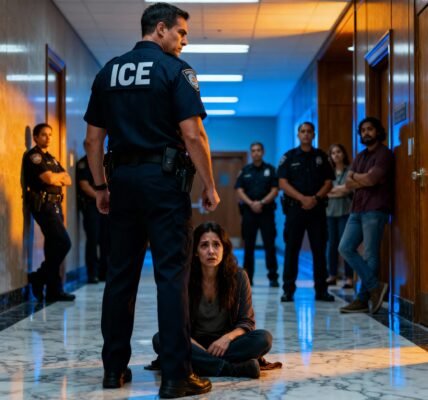
Iran’s Islamic Revolutionary Guard Corps (IRGC) quickly claimed the shootdown, releasing photos and video of wreckage. The Iranian state television anchor on Mehr News Agency urged citizens to “hand over any enemy pilot to police” and promised rewards. An on-screen crawl, according to NBC News, even told viewers to “shoot them if you see them” — an instruction directed at any U.S. crew members who might be spotted. The governor of Kohgiluyeh and Boyer-Ahmad province personally announced a bounty equivalent to $60,000 USD for information leading to the capture of the crew. Nomadic tribesmen — armed, as is tradition in the Zagros, with rifles to protect livestock — began moving through the mountains.
The race to find the WSO before the IRGC did had begun.
II. Survival and Evasion: The Colonel in the Mountain Crevice
The WSO was a colonel, according to President Trump’s public statement confirming the US Pilot Rescued. He was wounded during the ejection sequence or the landing — but critically, he could still walk, according to one U.S. official cited by Axios. Both he and the pilot made initial contact with U.S. forces via their personal communications systems shortly after ejecting — standard procedure under the Air Force’s SERE (Survival, Evasion, Resistance, and Escape) training protocols, which every combat aircrew member undergoes before deployment.
Survival Equipment and Communications
Modern U.S. combat aircrew are equipped with a suite of survival gear integrated into their ejection seat and flight suit. A standard CSAR (Combat Search and Rescue) contact is initiated via a PRC-112 or AN/PRC-149 personal survival radio, which operates on pre-set guard frequencies monitored continuously by AWACS (Airborne Warning and Control System) aircraft, rescue coordination centres, and orbiting surveillance assets. The radio also emits a locator beacon that can be triangulated by overhead assets. The WSO activated his survival radio — that much is confirmed by officials who noted both crew members made initial contact. The difficulty was that the WSO’s signal placed him deep in mountainous terrain, in a location described by a CIA senior official as a “mountain crevice” — a physical hollow that would have provided concealment from the IRGC search parties, who were advancing through the valleys below.
That the WSO survived more than 36 hours in this environment — wounded, in unfamiliar mountain terrain, with armed IRGC forces and armed tribesmen actively hunting him — speaks to the effectiveness of SERE training. He moved to high ground, hid in the crevice, rationed his survival supplies, and maintained radio silence except for scheduled communication windows that would have minimised the risk of electronic detection by Iranian signals intelligence.
“This was the ultimate needle in a haystack — but in this case it was a brave American soul inside a mountain crevice, invisible but for CIA’s capabilities.”— News 24 Media Rsearch Analysts
III. The CIA’s War Inside the War: Deception, Intelligence, and Unconventional Recovery
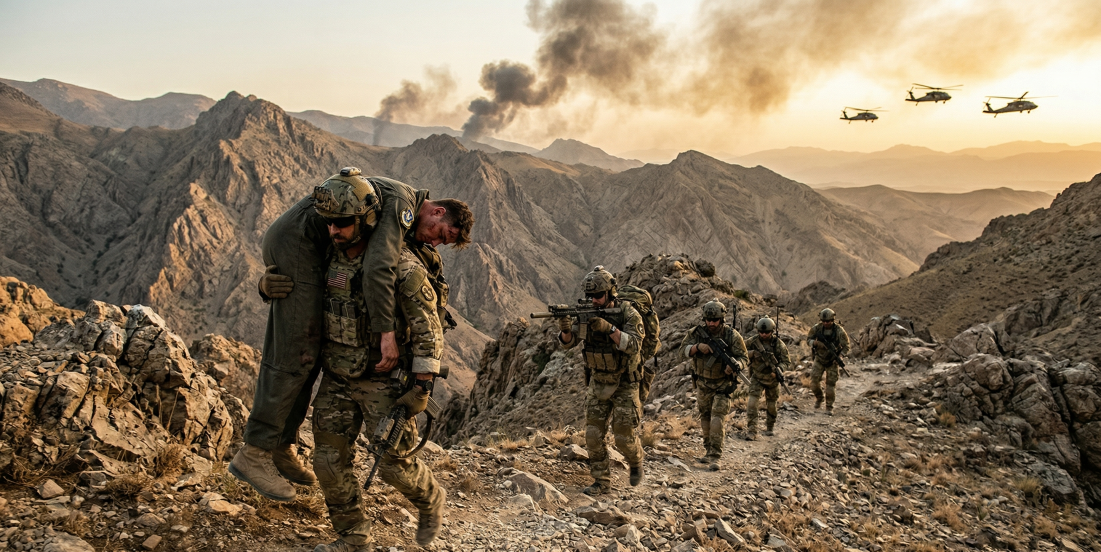
The role of the Central Intelligence Agency in this US Pilot Rescued operation is one of the most striking and consequential elements of the entire episode — and one of the least publicly understood. Intelligence agencies are not normally central figures in CSAR (Combat Search and Rescue) narratives, which are typically a military-to-military domain. That the CIA played the lead role in locating the WSO and engineering the conditions for the US Pilot Rescued tells us something important about the nature of the 2026 Iran conflict and the depth of the U.S. intelligence architecture operating inside that country.
Phase One: The Deception Campaign
Before U.S. forces had any confirmed fix on the WSO’s location, the CIA executed what is being described as a deliberate and sophisticated disinformation operation inside Iran. According to multiple senior administration officials cited by Axios, CBS News, and NBC News, CIA operatives spread word through Iranian networks — likely through a combination of human intelligence assets, communications intercepts, and the manipulation of Iranian intelligence channels — that U.S. forces had already located both F-15E crew members and were in the process of ground exfiltration toward the Pakistani or Iraqi border.
This was entirely false. The WSO had not yet been found. But the deception served a critical operational purpose: it pulled Iranian search teams — IRGC units, local police, and coordinating tribesmen — away from the actual search area and toward phantom exfiltration routes. It created confusion, divided IRGC command attention, and bought the Agency’s technical collection assets the time they needed to work the actual problem.
Phase Two: Finding the Needle — CIA’s “Unique, Exquisite Capabilities”
While the deception was running, the CIA employed what a senior official described as “unique, exquisite capabilities” to locate the WSO. These have not been officially identified, but the operational context — mountainous terrain, deep in Iranian territory, the target moving or sheltering in a rock crevice — strongly suggests a combination of the following classified tools:
Likely Intelligence Collection Methods — Analytical Assessment
- Signals Intelligence (SIGINT): Tracking the WSO’s survival radio beacon across multiple reception points for triangulation
- Overhead ISR (Intelligence, Surveillance, and Reconnaissance): High-altitude surveillance drones — potentially including RQ-170 Sentinel or MQ-9 Reaper variants — providing persistent full-motion video over the Zagros search area
- Human Intelligence (HUMINT): The CIA reportedly facilitated an “unconventional assisted recovery” — meaning the agency contacted, activated, or tasked pre-positioned civilian assets or locals sympathetic to U.S. interests who could provide on-the-ground situational awareness. This is a classified CSAR variant that requires pre-war network development
- Geospatial Intelligence (GEOINT): Satellite imagery analysis of the search zone, including thermal IR signatures
- Electronic Intelligence (ELINT): Detection and geolocation of the WSO’s survival radio pulse
Once the WSO’s location was pinpointed to the mountain crevice, the CIA immediately passed his coordinates — described as “precise” — simultaneously to the Pentagon and to President Trump in the White House Situation Room. Trump ordered an immediate rescue mission. The CIA continued providing real-time intelligence to the rescue force throughout the extraction operation.
The “Unconventional Assisted Recovery” — Local Assets on the Ground
Among the most classified and least discussed elements of US Pilot Rescued is what Axios reported as the CIA facilitating an “unconventional assisted recovery.” This is a formal term in U.S. military and intelligence doctrine for a scenario in which downed personnel are aided by civilians who are not part of the official U.S. military chain of command — local nationals, sympathisers, or pre-positioned assets who provide shelter, food, medical aid, direction, or cover for evading personnel. Whether such assets were activated in this case, and what role they may have played in keeping the IRGC search parties at a distance or guiding the WSO toward his crevice hiding spot, remains undisclosed. But the deliberate use of this term by officials suggests the CIA’s role extended beyond pure technical collection.
IV. The Rescue — Operation Inside Iran: SEAL Team Six, MC-130s, and a Massive Firefight
With the CIA’s precise coordinates in hand and Trump’s direct order issued, the U.S. military launched what would become, in Trump’s own words, “one of the most daring Search and Rescue Operations in U.S. history.” The operational details, drawn from multiple U.S. official and congressional sources, reveal a mission of extraordinary scale and complexity — mounted deep inside a country with layered air defences, active military opposition, and a hostile civilian population.
The Forward Operating Base: An Abandoned Airstrip Near Isfahan
According to geolocation analysis and reporting by The War Zone and open-source researchers, U.S. forces used an abandoned agricultural airstrip approximately 14 miles north of Shahreza City in southern Isfahan province as a temporary forward operating base (FOB) for the US Pilot Rescued. The strip was approximately 3,900 feet long and 200 feet wide — just barely adequate for the MC-130J Commando II special operations transports that the force was using. Isfahan province is strategically significant: it is home to Iranian nuclear facilities, major air defence installations, and the IRIAF’s F-14 Tomcat fleet. Operating a forward base this close to those sites was a calculated risk.
This choice of FOB reveals the distance involved: the crash site in Kohgiluyeh and Boyer-Ahmad province is far from U.S.-controlled airspace in the Gulf. The team needed to stage deep inside Iran to have the range and endurance to reach the WSO and extract him. Two MC-130J Commando II aircraft landed at this airstrip — and subsequently became stuck in the soft ground, unable to take off. U.S. forces, rather than allowing these highly classified special operations aircraft to fall into Iranian hands, deliberately destroyed both MC-130Js in place after replacement aircraft arrived. Iran later displayed the wreckage and claimed it had shot them down; U.S. officials confirmed the intentional destruction.
Aircraft Involved in the Rescue Operation
- F-15E Strike Eagle (downed): 494th FS — the aircraft that triggered the entire event
- A-10 Thunderbolt II “Warthog”: Downed near the Strait of Hormuz while providing covering fire; pilot ejected safely into Kuwaiti airspace
- HH-60W Jolly Green II: Primary CSAR helicopter; two damaged by small-arms fire from Bakhtiari tribesmen, remained operational
- AH-6 / MH-6 Little Birds: Special operations assault helicopters; burned-out hulks photographed at the forward base site after the operation
- MC-130J Commando II (×2): Special operations transports used for insertion/extraction; both became stuck and were intentionally destroyed
- HC-130J Combat King: CSAR coordination and aerial refuelling
- Dozens of fighter/attack aircraft: Air superiority and strike cover; used to bomb IRGC convoys approaching the rescue area
- MQ-9 and/or other surveillance drones: ISR support and real-time targeting
The Ground Force: Special Operations — SEAL Team Six Involvement
Wikipedia’s initial compilation of the operation, citing multiple sources, identifies SEAL Team Six (DEVGRU — the Naval Special Warfare Development Group) as among the elite units involved in the ground extraction. The Air Force statement attributed to the Air Force Special Warfare Recruiting account confirmed that the rescue involved “American Special Operations with Air Force Special Warfare attachments” who “engaged in a massive firefight at the extraction site.” Air Force Special Warfare — which includes Pararescuemen (PJs), Combat Controllers, and Special Reconnaissance airmen — is specifically trained for exactly this scenario: recovering downed aircrew under fire in contested environments. One official told Axios the operation was conducted by “a specialized commando unit with a high volume of air cover.”
The Firefight: IRGC vs. U.S. Commandos
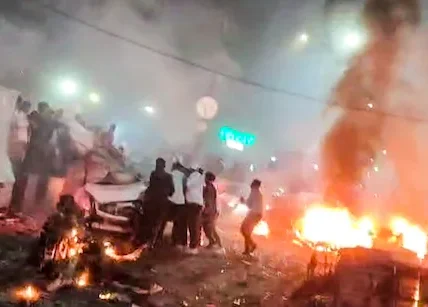
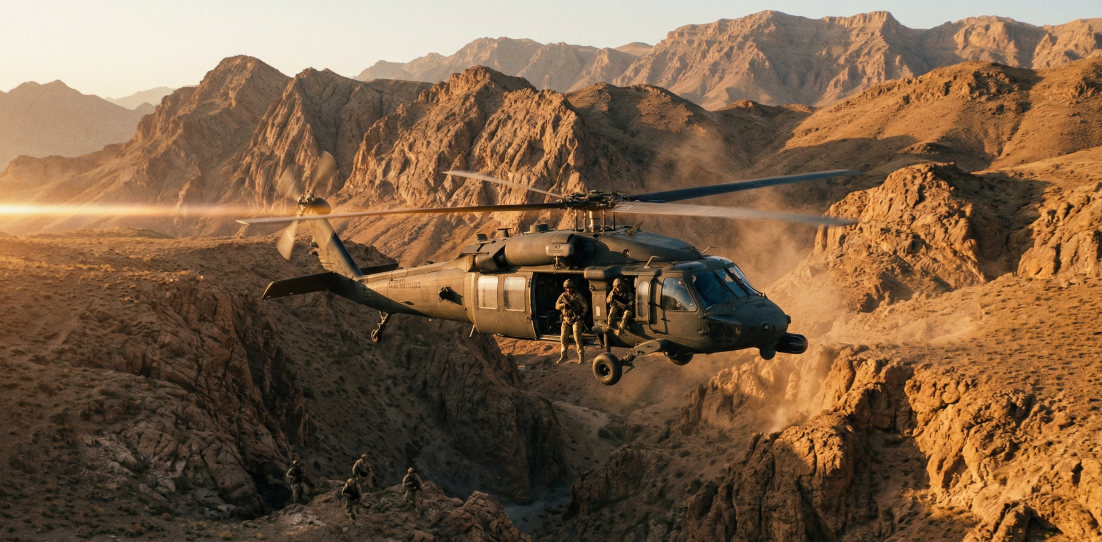
The US Pilot Rescued did not go smoothly. Al Jazeera’s John Hendren, citing information gathered on the ground, reported that what was intended as a “get-in and get-out” night operation under the cover of darkness was prolonged into daylight hours by heavy enemy contact. The IRGC had sent forces to the region specifically to prevent the rescue, according to two U.S. officials cited by Axios. U.S. Air Force jets were conducting active close air support strikes against approaching Iranian military convoys to prevent them from overrunning the rescue zone. Bakhtiari tribesmen — who are intimately familiar with the Zagros terrain — fired small arms at the U.S. helicopters; the BBC independently verified footage of this. Two Black Hawk helicopters were hit by small-arms fire but remained airborne.
Jack Murphy, a respected defence reporter, reported on X: “F-15 WSO recovered alive. Was escaping and evading. Massive firefight on target. Iranians were actively looking for him in the area.” The operation has since been described in U.S. special operations circles as “one of the most challenging and complex missions in the history of U.S. special operations.“
Operational Timeline
Friday, April 3 — F-15E Shot Down
Both crew eject over southwestern Iran. Pilot makes radio contact; WSO also makes contact but lands in the Zagros Mountains, deep in Kohgiluyeh and Boyer-Ahmad province. IRGC begins search immediately. US Pilot Rescued within hours by an initial CSAR team. WSO’s location unknown.
Friday, April 3 — A-10 Warthog Downed
An A-10 Thunderbolt, providing covering fire for CSAR teams, is hit by Iranian fire near the Strait of Hormuz. The pilot flies the crippled aircraft into Kuwaiti airspace before ejecting safely. Iran claims the kill; the U.S. confirms the loss.
Friday–Saturday — IRGC Intensifies Search
Iranian state TV broadcasts appeal to citizens to capture the missing American. A $60,000 bounty is announced by regional governor. IRGC cordons off sections of the province. Bakhtiari tribesmen, armed with rifles, move into the mountains. Israeli air operations in the region are reportedly suspended to support the search.
Saturday, April 4 — CIA Launches Deception Campaign
The CIA plants false intelligence inside Iran claiming both F-15E crew members have been found and are being exfiltrated by ground convoy. IRGC search teams redirect. Simultaneously, CIA’s classified technical collection assets — likely SIGINT, ISR, and HUMINT — begin closing in on the WSO’s actual location.
Saturday, April 4–5 — Location Confirmed; Forward Base Established
CIA pinpoints the WSO’s exact location — in a mountain crevice in the Zagros. Coordinates passed to Pentagon and White House. Trump orders immediate rescue. U.S. special operations forces land at abandoned airstrip 14 miles north of Shahreza, Isfahan, establishing a temporary forward operating base. Two MC-130J transports land and become stuck.
Saturday Night to Sunday Early Hours — Massive Firefight; WSO Rescued
Special operations commandos — including SEAL Team Six and Air Force Special Warfare — reach the WSO. A heavy firefight erupts; U.S. fighters bomb approaching IRGC convoys. The operation, planned for under darkness, extends into daylight. The wounded colonel is extracted. Two stuck MC-130Js are deliberately destroyed. Two helicopters sustain small-arms damage but remain flyable. The WSO is taken to safety.
Sunday, April 6 — Trump Announces: “WE GOT HIM!”
President Trump announces the US Pilot Rescued on Truth Social shortly after midnight. “The U.S. Military sent dozens of aircraft, armed with the most lethal weapons in the World, to retrieve him. He sustained injuries, but he will be just fine.” Iran claims it destroyed multiple U.S. aircraft; U.S. confirms intentional destruction of the two MC-130Js and the earlier loss of the A-10.
V. The Unthinkable: What If the IRGC Had Reached Him First?
This is the question that haunted every decision-maker in the White House Situation Room over those 36 hours — and it is a question that deserves a frank, historically grounded answer. What would have happened to an American colonel, a U.S. Air Force weapons systems officer, had the IRGC’s search parties, or the Bakhtiari tribesmen working at their direction, reached the mountain crevice before the CIA did?
Immediate Capture and the POW Question
Had the WSO been captured, he would almost certainly have been treated not as a prisoner of war under the Geneva Conventions — Iran is a signatory but the IRGC operates by its own internal logic — but as a political and intelligence asset of extraordinary value. The United States and Iran have no formal diplomatic relations. There is no established POW repatriation channel. The Trump administration had publicly re-designated the IRGC as a terrorist organisation, which further complicated any legal framework for treatment.
The most direct historical analogy is the fate of American hostages held in Tehran after 1979, who endured 444 days of captivity under IRGC-adjacent forces. More recently, American civilians and contractors taken by Iranian-backed groups in the region have spent years in detention — often used as bargaining chips in sanctions negotiations or prisoner swaps. An active-duty U.S. Air Force colonel captured mid-war would have represented something far more valuable: a living propaganda tool, a potential source of intelligence on U.S. targeting packages, and a diplomatic leverage instrument of incalculable worth.
If Captured: The Strategic Consequences
Propaganda: The IRGC would have produced televised footage of the captured officer — as it has done with other American detainees. In the middle of a war in which Trump was claiming “overwhelming air dominance,” a uniformed American colonel in IRGC custody would have devastated that narrative globally.
Intelligence: A F-15E WSO carries detailed knowledge of targeting procedures, communications protocols, IFF (Identification Friend or Foe) codes, and operational security measures. Under coercive interrogation, such information could compromise ongoing U.S. air operations over Iran.
Diplomatic hostage: Any ceasefire or deal negotiation would have immediately become contingent on his release — on Iranian terms. Tehran would have used him to extract maximum concessions: sanctions relief, force withdrawals, diplomatic recognition.
Physical safety: Given the IRGC’s documented history of prisoner abuse — including the 2019 Nazanin Zaghari-Ratcliffe case, the treatment of U.S. Navy sailors briefly held in 2016, and the torture of Iranian political prisoners documented by UN bodies — his physical safety would not have been guaranteed. The atmosphere of a war in which Iranian civilians had been killed by U.S. bombing would have made humane treatment extremely unlikely.
VI. The Iranian Calculus: What Tehran Gained and Lost
Iran’s public posture was to claim the operation as a failure and a humiliation for the United States, drawing the explicit comparison to Operation Eagle Claw — Jimmy Carter’s disastrous 1980 attempt to rescue the Tehran hostages, which ended in a collision of helicopters in the Iranian desert and eight American deaths. IRGC spokesman Ebrahim Zolfaghari declared the U.S. rescue mission “completely foiled.” Iranian state media displayed photographs of wrecked aircraft and claimed the destruction of two C-130s and multiple helicopters.
The reality is more complex. Iran did not capture the WSO. Iran lost three IRGC soldiers in the firefight, according to Iranian sources. Iran’s air defences destroyed an F-15E and an A-10 — genuine tactical achievements that shattered the narrative of unchallenged U.S. air dominance. But the rescue succeeded. And the CIA’s deception operation — the fact that Langley ran an intelligence war inside Iran’s own territory, activated human networks, and manipulated IRGC command decisions — revealed the depth of U.S. intelligence penetration of Iran, which is a strategic exposure Tehran will need to reckon with.
Meanwhile, the U.S. losses are real: one F-15E (irreplaceable in short order), one A-10, two MC-130Js intentionally destroyed, and multiple helicopters damaged. That is a significant haemorrhage of special operations lift capacity in a single 48-hour period. The operation worked — but it revealed that Iran’s territory is not permissive, even five weeks into a sustained bombing campaign.
VII. Strategic Analysis: What This Episode Tells Us
Several conclusions emerge from this episode that go beyond the immediate drama of the rescue and carry lasting strategic significance.
1. Iran Has Effective Air Defences
The Trump administration had been claiming, and many Western analysts had accepted, that U.S. operations over Iran had achieved something close to air supremacy. The shoot-down of the F-15E — the U.S. Air Force’s premier deep-strike platform, operated by one of its most experienced units — and subsequently the A-10, in a single day, directly contradicts that claim. Iran’s layered SAM network, even after weeks of attrition by U.S. and Israeli suppression strikes, retains the capacity to down advanced U.S. aircraft.
2. CSAR Over Iran Is Extraordinarily Complex
The loss of multiple aircraft and the need to establish a forward operating base inside Iranian territory simply to reach a downed crew member reveals the distances involved and the hostility of the operating environment. CSAR — Combat Search and Rescue — is always among the most dangerous military missions. Over Iran, in the middle of a war, with IRGC units, local tribesmen, and a hostile population all searching for the same man, it became something else entirely. The fact that it succeeded, at the cost of several aircraft and without American fatalities, represents a genuine operational achievement.
3. The CIA Is Deeply Integrated Into Combat Operations
The CIA’s role here — running deception operations, activating human networks, using classified sensors to locate a downed crew member, passing real-time intelligence to the White House — represents a level of CIA-military integration that is rarely visible in public. It suggests that Operation Epic Fury is not simply a military campaign but a combined arms effort that treats intelligence as a weapon system in its own right.
4. The IRGC’s Failure Is a Strategic Blow to Iran’s Deterrence
Tehran wanted that colonel. Capturing a U.S. Air Force colonel in the middle of this war would have been worth more than any missile strike on Israeli soil. The fact that Iran put out public appeals, mobilised the IRGC, activated tribal networks, offered $60,000 in cash — and still failed to reach him before the CIA did — is a significant intelligence and operational failure for the IRGC. It will not be forgotten in Tehran.
US pilot rescued
Discover more from
Subscribe to get the latest posts sent to your email.