
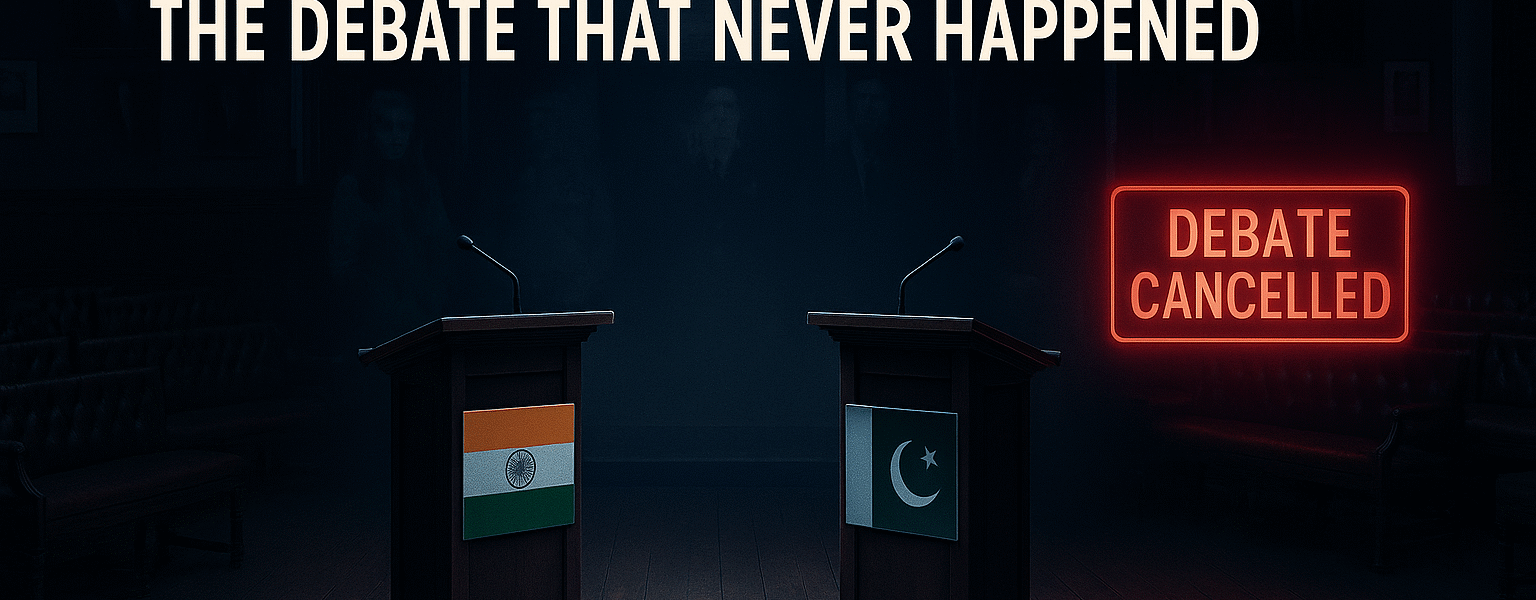
No-Show at Oxford Union debate: How Pakistan Dodged a Debate and Triggered a Global Narrative War


Oxford Union Debate Fiasco: India–Pakistan ‘Debate’ Collapses Into a Diplomatic Farce
By News24 Media – Investigative Desk
India’s latest face-off with Pakistan did not unfold on a battlefield or even in South Asia. It played out in the hallowed halls of the Oxford Union debate — and ended without a single argument. What should have been a high-profile intellectual showdown collapsed into a diplomatic and narrative war, with both countries claiming the upper hand after a debate that never happened.
A Motion Loaded With Geopolitical Sensitivities
The Oxford Union had scheduled a marquee debate for 27 November on a provocative motion:
“This House Believes India’s Policy Towards Pakistan Is a Populist Strategy Sold as Security Policy.”
Representing India’s position was J Sai Deepak — senior advocate, bestselling author, and one of the country’s most high-profile public intellectuals. He had confirmed months in advance, rearranged court dates, and flown specially from Delhi to London. Supporting him were UK-based Kashmiri activist Manu Khajuria and dharmic scholar Pt Satish K Sharma, both of whom had been coordinating with the Union.
The Pakistani side was stacked with heavyweights:
- Gen Zubair Mahmood Hayat, former Chairman of Pakistan’s Joint Chiefs of Staff Committee
- Hina Rabbani Khar, former foreign minister
Together, they were set to argue that India’s national security and Pakistan policy were merely “populist ventures.”
How the ‘No-Debate’ Happened: A Timeline of Confusion
According to detailed accounts from Sai Deepak and multiple Indian media outlets, the Indian team arrived in Oxford hours before the event — ready, prepared, and in full strength.
Then came the shock.
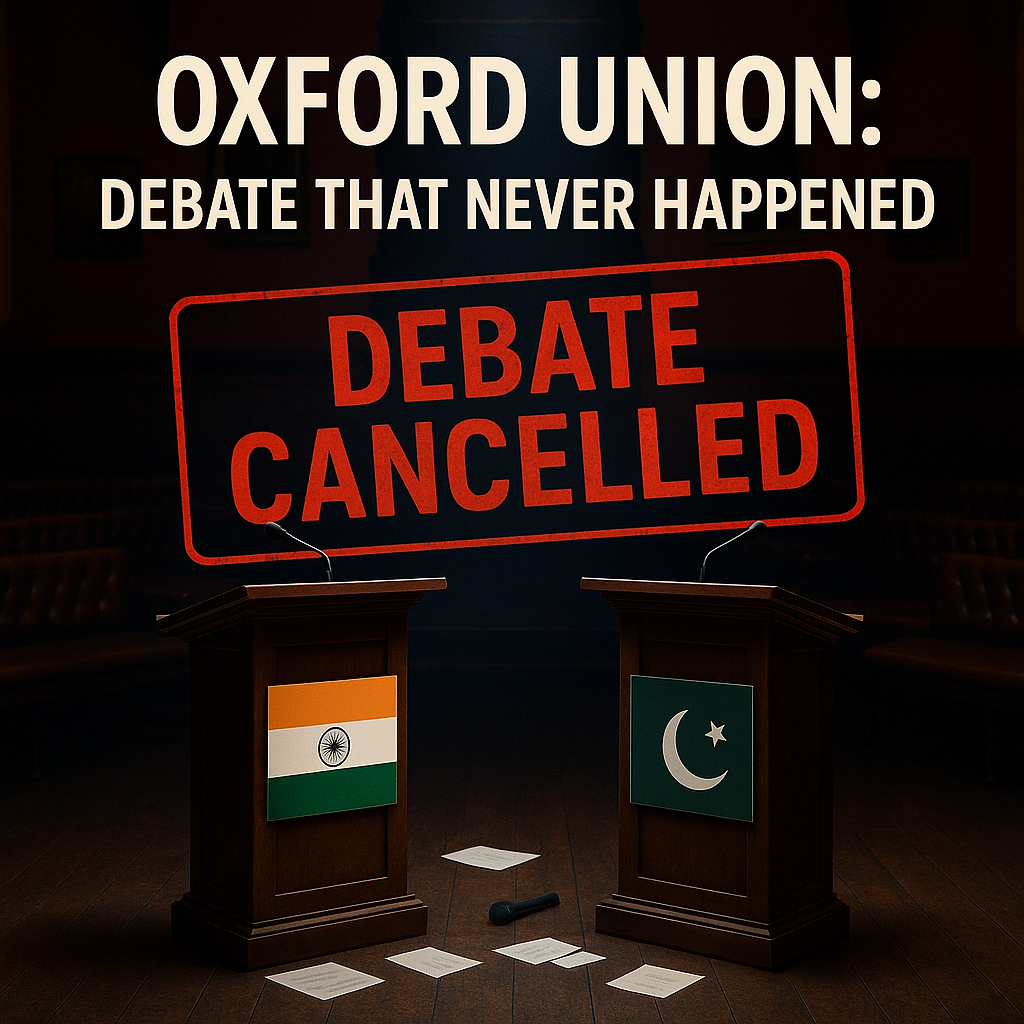
1. Pakistani delegation missing — but information withheld
Union president Moosa Harraj, of Pakistani origin and son of Pakistan’s Minister for Defence Production, reportedly knew from 10 am on the day of the debate that Pakistan’s star speakers were not coming.
Yet, Indian speakers were informed only in the afternoon — three hours before the pre-event dinner — that the debate was cancelled because the Pakistani guests had “not arrived in the UK.”
2. A last-minute ‘replacement’ offer
Instead of the advertised heavyweight face-off, the Union proposed that Sai Deepak debate Oxford students in place of the Pakistani delegation.
Terming this a dilution of the advertised event and a breach of good faith, the Indian team declined.
3. Cancelled event, but continued online promotion
Adding to the controversy, the event was reportedly promoted on Union channels right up to shortly before the cancellation — even after organisers knew the Pakistani speakers were unavailable.
Pakistan’s Counter-Narrative: Claiming an ‘Unopposed Win’
Hours after the cancellation of the Oxford Union debate, Pakistan’s High Commission in London released a sharply worded statement claiming:
- Indian speakers backed out at the last minute.
- Pakistan “won unopposed.”
- India “withdrew when faced with open debate.”
This narrative was quickly amplified on Pakistani television channels and government-leaning social media accounts, portraying the incident as a diplomatic embarrassment for India.
India Pushes Back: “We Came, We Waited, You Didn’t Show Up”
Sai Deepak responded with:
- A detailed timeline of emails
- Screenshots of communications
- A public statement recounting the sequence of events
- Media interviews and posts explaining how the Indian team waited while the Pakistanis simply did not show up
Indian outlets, including India Today, Firstpost, NDTV, and The Print, described the episode as:
- A “farce”
- A “Pak-backed stunt”
- An orchestrated attempt to frame India’s security policy as “populist”
- A misleading narrative exercise rather than a genuine debate
Indian commentators argued that the entire episode aligned with Pakistan’s long-standing playbook of information warfare, propaganda, and narrative manipulation.
What the Incident Suggests About Pakistan’s Global Positioning
Indian analysts quickly tied the saga to broader geopolitical patterns.
1. Pakistan’s comfort with narrative battles
Critics noted that Pakistan often excels at exporting narratives — particularly on Kashmir, Indian security laws, or human rights — but becomes evasive when required to defend its record on:
- Cross-border terrorism
- Sanctuary for extremist groups
- The military’s dominance over civilian governments
- Democratic backsliding
2. Avoiding neutral scrutiny
Many Indian commentators suggested that Pakistan’s establishment prefers friendly platforms or sympathetic audiences but avoids objective, adversarial forums where claims can be challenged.
The Oxford Union debate fiasco, according to them, reinforces perceptions of Pakistan as a state increasingly invested in symbolic wins and media optics, not factual debate.
Why the Oxford Union Debate Is Under Fire
The Oxford Union debate, once celebrated as the home of fearless free speech, now faces accusations of political bias and procedural irregularities.
Key questions being asked:
1. Why hide the no-show for hours?
If organisers knew in the morning that Pakistani dignitaries were not coming, why were Indian speakers kept in the dark until the afternoon?
2. Why continue promoting a cancelled event?
Screenshots show the debate remained publicly listed even as the Oxford Union debate’s leadership privately knew the panel had collapsed.
3. Why propose a last-minute replacement?
Asking a senior Indian lawyer to debate students in place of two top Pakistani officials was seen as a breach of professionalism and fairness.
4. Did the Union allow itself to be used for political messaging?
With its president having close familial links to Pakistan’s defence establishment, many are questioning the neutrality of the institution in handling the event.
A ‘Oxford Union debate That Never Was’ — But One That Revealed Everything
The fallout has hardened positions on both sides:
Pakistan’s Position
Claiming an unopposed victory and insisting India backed out.
India’s Position
Pointing to emails, travel records, and timelines proving the Pakistanis never showed up — and accusing the Union of mismanagement or bias.
For Indian observers, the incident has become a symbol of Pakistan’s credibility crisis on the global stage — one where claims of “peace” and “dialogue” collapse when confronted with transparent, structured engagement.
Conclusion: A Missed Opportunity, A Manufactured Narrative
What should have been a rigorous, intellectually honest debate on South Asian security instead turned into a geopolitical farce.
No arguments were exchanged.
No positions were defended.
No cross-examination occurred.
But the “Oxford Union debate that never happened” has sparked a much bigger conversation about:
- The use — and misuse — of international forums for political messaging
- Pakistan’s growing reliance on information warfare
- India’s assertive global communication strategy
- The shrinking space for honest, balanced debate in highly polarised geopolitical environments
In the end, the Oxford Union debate incident offered a revealing glimpse into how India and Pakistan now compete not only on the battlefield but also in the realm of global narratives — and how even prestigious institutions can get caught in the crossfire.
Oxford Union debate controversy, India Pakistan Oxford Union, J Sai Deepak Oxford debate, Pakistan no-show debate, Oxford Union bias allegations, India Pakistan narrative war, Hina Rabbani Khar debate, Gen Zubair Hayat Oxford Union, India security policy debate, Pakistan information warfare, Oxford Union diplomatic row, India UK debate controversy, No-Show at Oxford Union debate,
Discover more from
Subscribe to get the latest posts sent to your email.



1 COMMENTS