Nashik Corporate Jihad: TCS BPO Conversion Racket Exposed | News24Media


Inside the TCS Nashik Racket: When the Office Became a corporate jihad Conversion Trap
It began with a mother’s worry. Sometime in early 2026, a woman in Nashik walked into a police station not to file a complaint about a crime she had witnessed, but about a daughter she no longer recognised. The young woman — who had joined a well-known BPO unit of Tata Consultancy Services straight from college — had quietly stopped eating the food she grew up with, had begun dressing differently, and had withdrawn from the family’s religious rituals. Her parents feared the worst. Their instincts, as it turned out, were entirely correct.
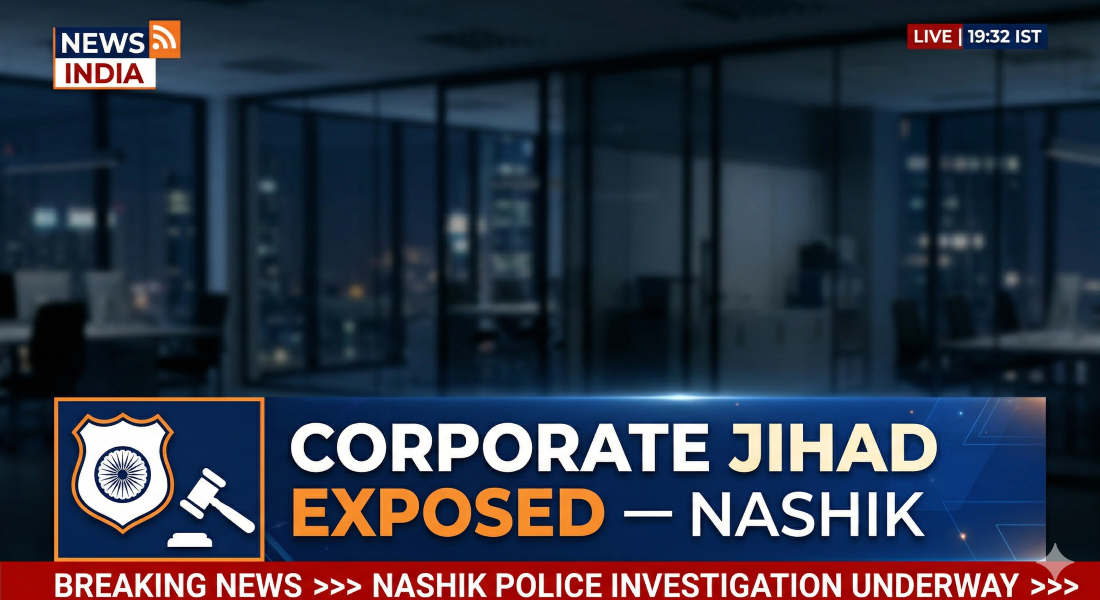
What investigators are now unravelling is one of the most disturbing cases of organised workplace exploitation in Maharashtra’s recent history. Between 2022 and early 2026, a group of senior team leaders at the Nashik BPO facility of TCS — located near the predominantly Muslim neighbourhood of Wadala village — allegedly ran a deliberate and coordinated operation targeting Hindu colleagues. The goal, police allege, was not just harassment. It was corporate jihad conversion.
- Company: TCS BPO Unit, Nashik, Maharashtra
- Active Period: 2022 – March 2026 (~4 years)
- Arrested: 7 — Asif Ansari, Shafi Sheikh, Shah Rukh Qureshi, Raza Memon, Tausif Attar, Danish Sheikh + 1 unnamed woman
- FIRs Filed: 9 (8 women + 1 male employee)
- Charges: IPC, POSH Act, MCOCA (organised crime)
- SIT Head: ACP (Crime) Sandeep Mitke
- Evidence: 40+ hours of CCTV footage; conversion photographs recovered

The nine First Information Reports (FIRs) registered at Mumbai Naka Police Station tell a story of systematic predation. The complainants — eight women and one male employee, all aged between 18 and 26, most from economically marginalised backgrounds — describe a workplace where supervisory authority was weaponised. Victims were stalked inside the office. Women were cornered in stairwells. One woman was groped in the office lobby while another was asked intrusive questions about her personal and private life. A male employee alleged that he was repeatedly forced to eat beef and mutton and was pressured to offer namaz, while his own Hindu customs were mocked to his face.
The conversion methodology, as it emerges from the FIRs, followed a chilling pattern. First, a target was selected — invariably young, financially vulnerable, and relatively new to the workplace. Then came the grooming phase: false promises of marriage, romantic manipulation, and emotional dependency. Physical escalation followed — inappropriate touching, molestation, and in at least one case, an alleged sexual assault. Simultaneously, victims were incrementally introduced to Islamic practices: forced consumption of non-vegetarian food, coercion to observe Ramzan fasts, pressure to wear a burqa, and compelled participation in namaz. Hindu deities were mocked and denigrated to weaken the victim’s religious identity. In at least one documented instance, police are investigating claims that a victim was transported to Mumbai for a formal religious conversion procedure. Photographs of an alleged conversion ceremony have reportedly been recovered.
— Nitesh Rane, Maharashtra Minister of Fisheries & Ports Development
As alarming as the alleged crimes themselves is the role — or catastrophic absence of a role — played by the company’s human resources department. Multiple complainants told police that they had formally reported the harassment to HR. Nothing happened. No inquiry was launched. No accused was suspended or warned. The company’s HR manager has since had her statement officially recorded by investigators, and as of this writing, an HR official sits in police custody. Whether the inaction was individual negligence, systemic incompetence, or something far more troubling is now a central question before the SIT.
The Maharashtra government’s response has been swift by political standards. On April 9, Maharashtra Minister Nitesh Rane held a press conference, calling the case “Corporate Jihad” and issuing an unambiguous warning to those he described as pursuing what Hindu nationalist groups call “Ghazwa-e-Hind” — an Islamisation agenda targeting India. The BJP staged large protests outside the TCS facility in Nashik. Nashik Police Commissioner Sandeep Karnik constituted a Special Investigation Team under ACP (Crime) Sandeep Mitke, equipped with a dedicated victim helpline and access to over 40 hours of CCTV footage from the facility.
The accused have been booked under the Maharashtra Control of Organised Crime Act (MCOCA) — a provision not typically applied to workplace disputes. Its invocation sends a clear signal: Nashik Police do not believe this was a matter of a few individuals behaving badly in an office. They believe it was an organised criminal network. MCOCA charges carry severe consequences and signal the state’s intent to treat this case with the gravity it demands.
This case arrives at a deeply uncomfortable moment for India’s IT and BPO sector. The industry employs millions of young Indians — many of them women, many from economically precarious families, often working their first formal job. They trust that their workplaces will be governed by law, protected by policy, and supervised with integrity. In Nashik, that trust was allegedly exploited, not upheld. The SIT investigation is still in its early stages, and the accused are entitled to due process. But the evidence accumulating — the nine FIRs, the CCTV footage, the photographs, the HR officer in custody — points to something that the nation’s corporate sector can no longer afford to dismiss as an outlier. The office, it appears, is no longer safe from the most ancient of predatory impulses, now dressed in a corporate identity card.
Trapped by Deception: Ayodhya Woman Exposes Sinister ‘Love Jihad’ Plot
Discover more from
Subscribe to get the latest posts sent to your email.