IndiGo Ground Chaos: Passengers Stranded on Kolkata Airport Tarmac


Sky-High Fares, Indigo Ground-Level Chaos: Is ‘On-Time’ Enough for Indian Airlines?
KOLKATA — Since the regulatory shifts implemented last December, the Indian aviation sector has undergone a paradigm shift, leaving many travellers bracing for impact before they even reach the airport. For months, citizens grappled with a relentless series of flight delays, abrupt cancellations, and exorbitant fares. While proactive government intervention has largely stabilised the airspace—reducing delays and cancellations mostly to technical or emergency issues—the ground reality for passengers tells a different story.
IndiGo, India’s largest carrier, seems to be at the centre of this evolving narrative. While the planes might be landing on schedule, the service standards appear to be in freefall.
A Perfect Landing, A Bumpy Arrival
A recent IndiGo flight from Guwahati to Kolkata perfectly encapsulated this new normal. The aircraft executed a flawless, on-time landing, bringing a sigh of relief to the passengers onboard. However, that relief was short-lived.
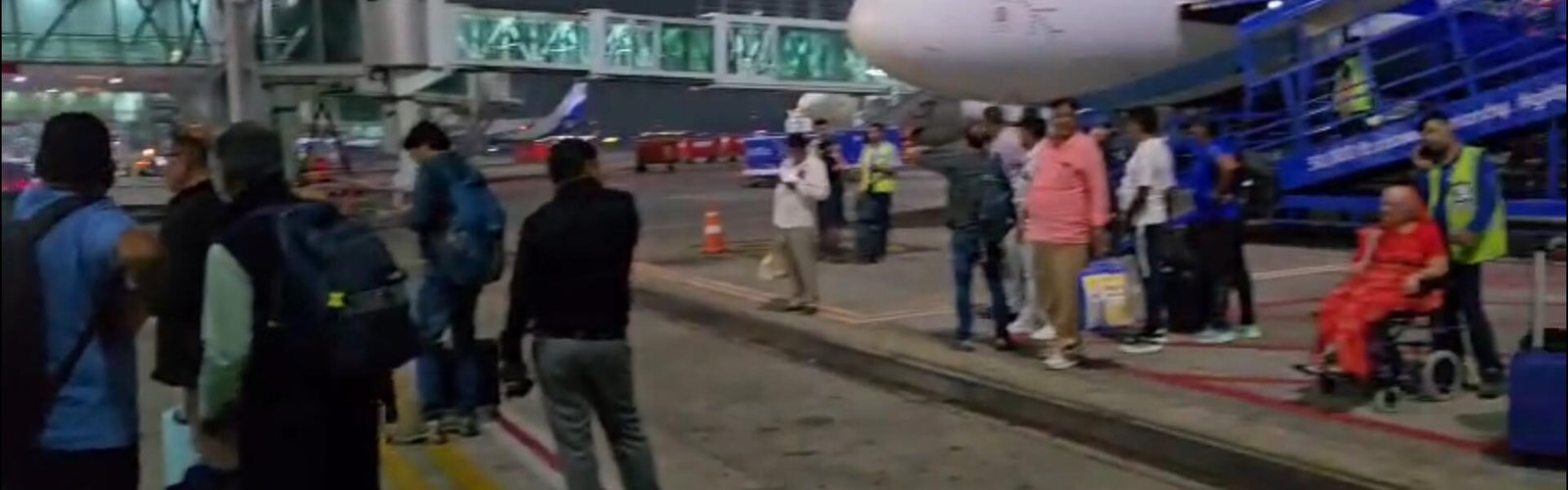
Once parked, the aircraft sat idle for 10 to 15 minutes. The reason? A complete lack of ground arrangements. There was no step ladder available for passengers to deboard. When the staircase finally did arrive, the weary travellers, who had waited patiently in the cabin, stepped off the plane only to face their next hurdle.
The Runway “Bus Stop”
Is 'on-time' performance masking a massive drop in basic customer service?
— News 24 Media (@news24nmedia) March 2, 2026
See the footage here: #Aviation #IndiaNews #News24Media #IndiGo6E pic.twitter.com/Nzhf9mSZXL
Instead of a smooth transition to the terminal, passengers found themselves stranded on the tarmac, waiting for a shuttle bus.
“In my whole life, I have never witnessed such a situation,” recounted a traveler on the flight. “People were thronging and waiting for a bus not in the regular traffic routes of Esplanade, but right on the airport runway.”
When a lone bus finally appeared in the distance, the disciplined wait quickly morphed into an anxious scramble:
- The Rush: Unsure of when, or if, a second bus would arrive, passengers rushed to secure a spot.
- The Overcrowding: The bus was packed to the brim, a scene rarely associated with the supposedly premium experience of air travel.
- The Leftovers: Dozens of passengers were left behind on the tarmac, forced to wait another 5 to 10 minutes for a second vehicle to finally transport them to the terminal.
The “Patience Penalty”
What stands out most in these daily operational failures is the remarkable, perhaps detrimental, resilience of the Indian passenger. Despite the exhaustion, the pushing, and the glaring lack of basic logistical coordination, there was no shor sharaba (commotion). The passengers waited obediently, quietly bearing the brunt of the airline’s mismanagement.
This raises a pressing question for the industry: Are airlines taking the Indian traveller’s patience for granted?
There is a growing sentiment that because citizens are culturally conditioned to bear inconveniences without raising a massive outcry, aviation companies feel entitled to operate entirely at their own will. The tremendous dip in IndiGo’s service quality since December suggests that “on-time performance” metrics might be masking a deep decay in basic customer care and ground operations.
The Bottom Line
While the government has reined in the worst of the mid-air chaos, it is time for regulatory bodies to look at what happens once the wheels touch the ground. Until passengers demand better and hold airlines accountable, the tarmac will continue to look less like an international transit hub and more like a crowded city bus stop.
IndiGo Ground Chaos
Discover more from
Subscribe to get the latest posts sent to your email.