
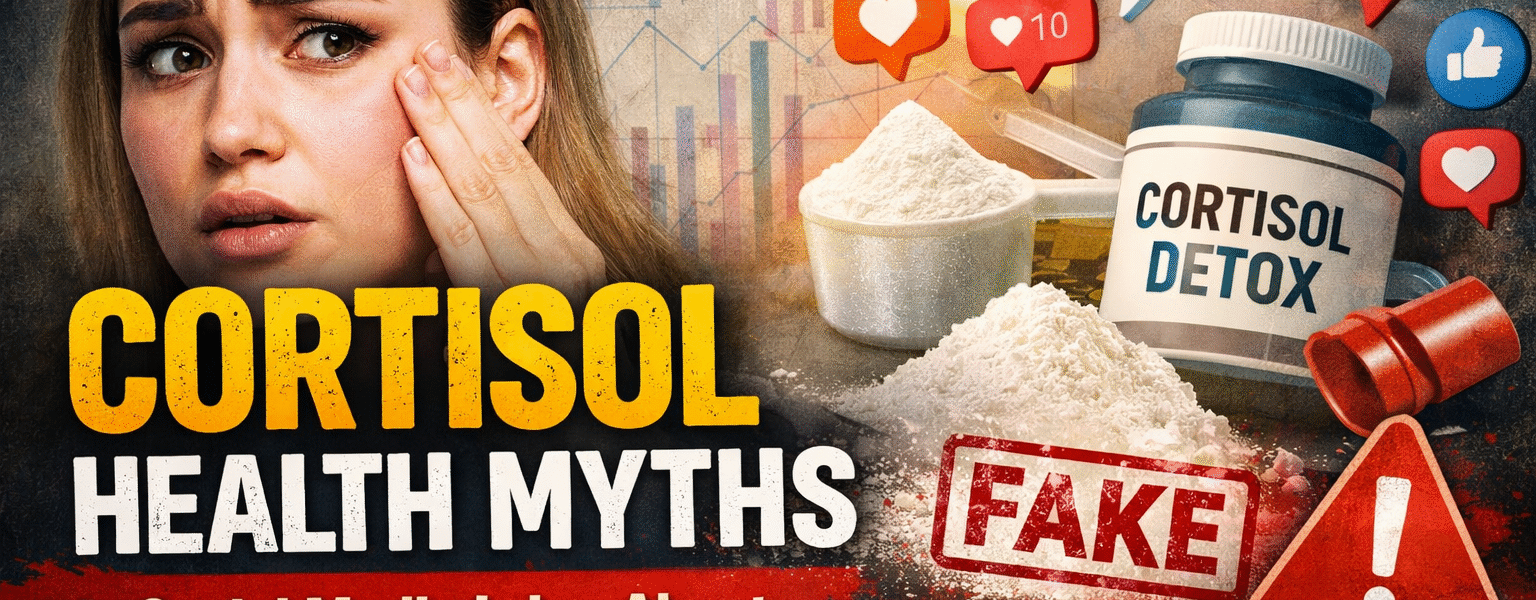
Cortisol Health Myths EXPOSED: How Social Media Is Scaring Millions About a Hormone They Don’t Understand


Why Everyone Online Is Suddenly Obsessed with Cortisol (Cortisol Health Myths)
Scroll through enough TikToks or Instagram reels and you’ll see cortisol blamed for belly fat, fatigue, acne, “cortisol face,” personality changes, and pretty much everything that ails you. Viral wellness creators have turned this hormone into the latest health boogeyman — complete with powders, mocktails, and quick-fix tricks meant to “fix your cortisol.”
But here’s the twist: most of the internet hype isn’t backed by science. In reality, cortisol is both essential to life and misunderstood as a simplistic cause of modern health woes.
Cortisol Isn’t Just a Stress Hormone — It’s a Key Body Regulator
Doctors sometimes call cortisol a “stress hormone”, but that’s only part of the story. Produced by tiny adrenal glands above your kidneys, cortisol helps regulate:
- Blood sugar and metabolism
- Inflammation and immune responses
- Blood pressure
- Sleep–wake rhythms
- Energy use during stress
Without it, your body couldn’t manage energy or react to real threats. It isn’t an invader — it’s a necessary biological signal.
The Internet Cortisol Health Myths: Cortisol Causes “Cortisol Face”
One of the most significant social media claims is the “cortisol face” — the notion that stress can literally reshape your face, causing it to appear puffy or rounded. TikTokers and wellness posts insist stress raises cortisol, and suddenly, your cheekbones disappear.
Cortisol Health Myths and Reality Check:
There is no medical condition known as “cortisol face.” The only similar phenomenon is a rare clinical sign called moon face, seen in conditions like Cushing’s syndrome or prolonged steroid use — not everyday stress. Most puffiness people see in the mirror is not caused by cortisol at typical physiological levels.
So if your face looks a bit rounder, it’s far more likely due to diet, sleep, fluid retention, or genetics — not chronic cortisol spikes.
Weight Gain and “Stress Belly” — What’s True and What’s Hype (Cortisol Health Myths)
Chronic stress can indeed influence weight patterns. Cortisol can trigger metabolic changes that encourage the body to store more energy as fat — especially around the belly — when stress is ongoing. This is a leftover evolutionary response to danger.
But here’s the nuance:
- High cortisol may contribute to weight gain in some people
- It doesn’t cause obesity by itself
- Lifestyle factors like diet, sleep, physical activity, and overall stress load matter more for weight outcomes than cortisol numbers alone
In other words, cortisol is one factor among many, not a weight loss/sugar binge switch.
Fatigue, Mood Swings, and Brain Fog — debunking Cortisol Health Myths
Cortisol circadian patterns (high in the morning, lower at night) help your body know when to wake and sleep. A disruption in this rhythm — from poor sleep, irregular routines, or stress — can lead to fatigue and mood fluctuations. But again, it’s not cortisol acting independently — it’s your daily habits and stress environment that influence it. reference Cleveland Clinic
So, Is Cortisol a Villain? Not Really.
Here’s the headline you won’t see on a reel:
Cortisol is a vital hormone, not a villain. What matters is how your lifestyle, sleep, nutrition, and overall stress levels shape your body’s response. National Geographic
Experts warn that oversimplifying cortisol’s role — and assuming that powders, drinks, or quick hacks can “fix” it — sets people up for misinformation, unnecessary worry, and costly products with little evidence.
What Science Suggests Instead
Rather than blaming “cortisol,” health professionals point toward holistic lifestyle changes for real results:
- Balanced diet and adequate sleep
- Moderate, consistent physical activity
- Stress-management techniques like meditation or breathwork
- Professional guidance rather than endless internet self-diagnosis
These approaches support your hormone balance — not just cortisol levels — but overall health and resilience.
Hence, debunking Cortisol Health Myths
Cortisol isn’t out to get you. It’s a complex hormone with a messy reputation online — often inflated by fleeting wellness trends and viral content. Instead of fearing it, science invites us to understand it as part of our body’s broader stress and metabolic systems.
By focusing on evidence-based lifestyle habits rather than TikTok-style cortisol cures, you’ll be better positioned to improve your health — sustainably, realistically, and without the viral panic.
cortisol health myths, cortisol misinformation, cortisol face myth, stress hormone cortisol explained, does cortisol cause weight gain, social media health misinformation, cortisol supplements scam, stress hormones and weight gain, TikTok cortisol trend, hormone myths online, wellness industry misinformation, Cortisol Health Myths
Discover more from
Subscribe to get the latest posts sent to your email.