
NEP 2020 in Action: CBSE Curriculum 2026 Shift Promises Future-Ready Classrooms


From Memorisation to Mastery:
How New CBSE Curriculum Is Rewriting India’s Educational Contract
The Central Board of Secondary Education, executing the National Education Policy 2020 , is restructuring CBSE Curriculum, assessment, and pedagogy in ways that carry profound implications for how India’s next generation thinks, learns, and competes.
India’s schools are undergoing their most consequential structural overhaul in four decades — and the question is no longer whether the system will change, but whether it can change fast enough. For generations, Indian students have been evaluated not on what they understand, but on what they can reproduce. The annual ritual of rote memorisation, last-minute cramming, and mark-sheet anxiety has defined the school experience of hundreds of millions. That contract — between student, teacher, and examination board — is now being deliberately dismantled.
The Central Board of Secondary Education, acting as the frontline executor of the National Education Policy 2020, is restructuring CBSE Curriculum, assessment, and pedagogy across Classes VIII, IX, and X in ways that carry profound implications for how India’s next generation thinks, learns, and competes in an increasingly complex world.
The Competency Turn: What Has Actually Changed
At the centre of the CBSE curriculum changes 2026 is a decisive pivot toward competency-based education — a framework that prioritises the application of knowledge over its passive retention. Examination papers for Classes IX and X have been progressively redesigned to include a higher proportion of case-study questions, source-based assessments, and scenario-driven problems that test reasoning rather than recall. Competency-focused items now constitute a significant share of board examination question papers, signalling a structural, not cosmetic, shift in how student learning is measured.
The rationale is embedded directly in the NEP 2020 vision: to cultivate students who are critical thinkers, problem solvers, and effective communicators — not answer-reproduction machines. Under the revised assessment architecture, internal evaluation carries greater weight, reducing the existential pressure of a single terminal examination and creating space for continuous, holistic learning.
Competency-based education India is attempting to build is the foundation on which workforce readiness and economic productivity will either advance or stall over the next two decades.
NEWS 24 Media Research AnalysisCBSE Curriculum rationalisation — the deliberate reduction of syllabus volume — accompanies this shift. Rather than accelerating through a dense catalogue of topics, students are now expected to engage more deeply with a leaner set of concepts. The philosophy is straightforward: breadth without depth produces surface knowledge; depth without breadth produces narrow expertise. NEP 2020 seeks the more difficult middle ground.
Skill Integration and the R3 Framework
Two other reforms deserve particular attention for their long-range significance. First, the introduction of a third language option — referred to in policy language as R3 — from Class VI onwards broadens linguistic exposure and honours India’s multilingual character. In a country where language politics and regional identity are perpetually intertwined, this reform carries both educational and cultural weight.
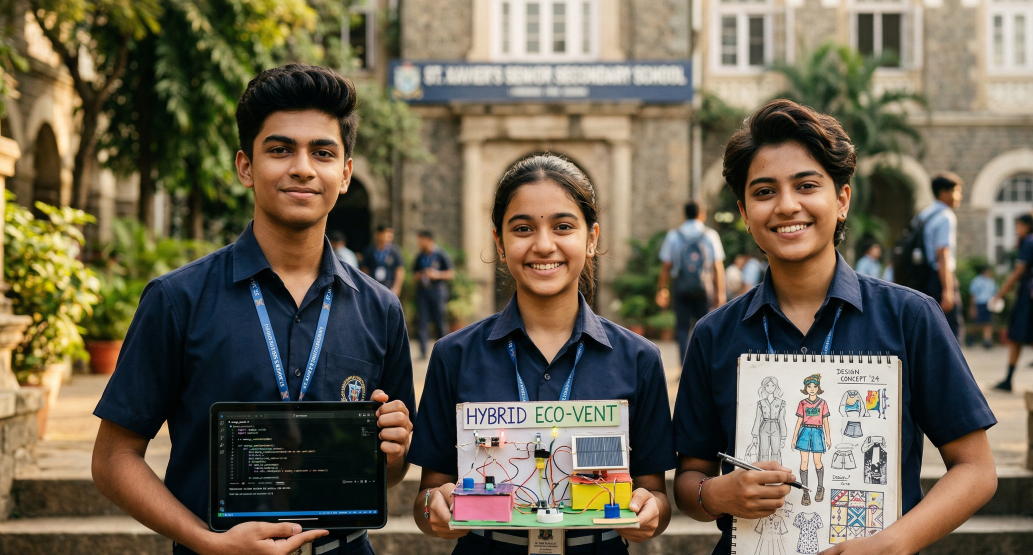
Second, the expansion of vocational and skill-based education into mainstream schooling marks a structural departure from the historic stigma attached to non-academic pathways. CBSE has been widening its skill subject portfolio, integrating disciplines such as artificial intelligence, coding, financial literacy, and design thinking into the CBSE Curriculum framework. The NEP 2020 impact on schools is perhaps most visible here — in the slow but deliberate erosion of the hierarchy between academic and applied knowledge.
Digital and experiential learning, too, are being formally embedded into pedagogical design, with schools encouraged to deploy project-based learning, laboratory investigations, and technology-assisted instruction as standard tools rather than supplementary enrichment.
Why This Matters
- India adds 12–15 million young people to its working-age population every year — the quality of their education determines economic productivity for decades.
- Competency-based assessment skills — analytical thinking, source interpretation, applied reasoning — are precisely those demanded by higher education and modern employers.
- The R3 framework affirms India’s multilingual identity at a moment of growing linguistic polarisation in public discourse.
- Vocational integration signals that policymakers are finally addressing the academic-applied knowledge hierarchy that has long limited access to dignified livelihoods.
- Curriculum rationalisation reduces cognitive overload, creating room for deeper engagement and genuine conceptual understanding.
Ground Reality: Where Policy Meets the Classroom
Candour requires acknowledging where this transformation remains aspirational. Teacher preparedness is the reform’s most significant vulnerability. Competency-based pedagogy demands fundamentally different classroom practice — Socratic questioning, differentiated instruction, formative feedback — skills that require sustained professional development, not a single orientation workshop. The existing teacher training infrastructure, across both state and central systems, has not yet scaled to meet this demand.
Infrastructure limitations compound the challenge. Digital learning integration presupposes device access, reliable connectivity, and functional school laboratories. In large parts of rural India, and in many government schools in Tier-3 towns, this baseline is absent. The urban-rural divide in implementation capacity means that the same CBSE policy framework will, in practice, produce vastly different learning experiences depending on a child’s geography and socioeconomic position.
Assessment reform, too, requires examiner retraining. Evaluating a well-reasoned analytical response is a more demanding task than marking a factual answer correct or incorrect. Standardisation of competency-based evaluation at scale remains a work in progress — and one that will define whether these reforms deliver equity or deepen existing advantage.
Transformation or Transition?
India’s education reform history is populated with ambitious blueprints that gradually softened into bureaucratic routine. What distinguishes the current moment is the combination of legislative backing through the NEP 2020 framework, a board with genuine operational authority in CBSE, and a generational awareness — among parents, students, and educators alike — that the old system was producing a mismatch between education and opportunity.
Whether this constitutes a true transformation or a policy ambition still navigating its most difficult passage depends entirely on what happens in the next three to five years: in teacher training centres, in district-level school inspections, in state government budget allocations, and in the quality of examination reform at the assessment design level.
The architecture of change is credible. The construction is underway. But India’s classrooms will only be transformed when every student — in a village school in Jharkhand as surely as in a CBSE-affiliated institution in South Delhi — experiences a teacher confident enough, trained enough, and supported enough to teach for understanding rather than for marks. That remains the unfinished work of the most important reform project this country has undertaken in a generation.
CBSE Curriculum
Discover more from
Subscribe to get the latest posts sent to your email.









4 COMMENTS