
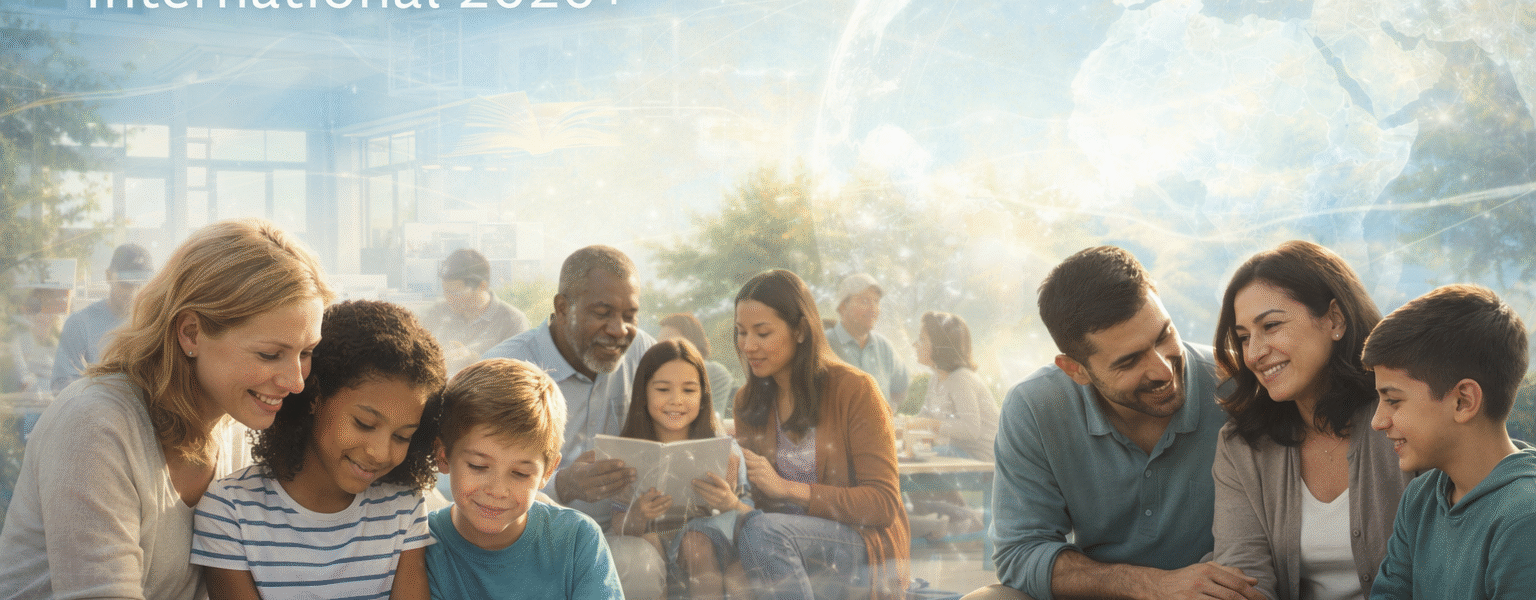


Why families and communities matter in shaping the future of education
Education is often discussed in terms of schools, teachers, curricula, and policies. Yet for most children and young people, learning does not begin—or end—inside a classroom. It begins at home, within families and communities that shape values, aspirations, behaviour, and wellbeing.
Recognising this reality, Education Charter International (ECI) 2026+, currently under public consultation by CCLP Worldwide, places strong emphasis on education as a shared responsibility of society—one that includes parents, caregivers, and communities alongside schools and institutions.
Education Is Bigger Than Schools Alone
While schools play a central role in structured learning, parents and communities provide the first and most enduring learning environment.
From early childhood through adolescence, families influence:
- attitudes toward learning
- values such as honesty, respect, and responsibility
- emotional security and well-being
- digital habits and ethical behaviour
- aspirations and confidence
ECI 2026+ acknowledges that education systems cannot succeed in isolation. Sustainable, equitable education depends on trust and cooperation between schools, families, and communities.
What Is Education Charter International 2026+—In Simple Terms?
Education Charter International 2026+ is a renewed global framework that views education as a public good and a lifelong process.
Originally developed between 1999 and 2003, the Charter has been updated to reflect today’s realities—such as digital transformation, artificial intelligence, climate pressures, and changing social structures—while preserving its original ethical foundations.
Importantly, ECI 2026+ is:
- Voluntary
- Non-binding
- Non-regulatory
It does not impose rules or obligations on parents, schools, or communities. Instead, it offers shared principles to guide reflection and dialogue.
Parents as Partners, Not Observers
A key message of Education Charter International 2026+ is that parents are partners in education, not passive observers.
This partnership extends beyond academic achievement to include:
- supporting children’s wellbeing and mental health
- reinforcing ethical behaviour and digital responsibility
- encouraging curiosity, creativity, and resilience
- respecting diverse learning pathways, including vocational options
Rather than prescribing how families should act, the Charter recognises the diversity of family contexts and the importance of mutual respect.
Communities and the Question of Equity
Education outcomes are deeply influenced by community conditions—access to resources, safety, social inclusion, and cultural support.
Education Charter International 2026+ highlights the role of communities in:
- promoting inclusion and equity
- supporting marginalised learners
- fostering safe learning environments
- encouraging participation in education beyond formal schooling
Community organisations, local groups, and civil-society networks help bridge gaps that schools alone cannot address.
Lifelong Learning Begins at Home
One of the defining features of Education Charter International 2026+ is its emphasis on lifelong learning—the idea that learning continues throughout life, not only during school years.
Parents and caregivers play a powerful role by:
- modelling curiosity and learning habits
- adapting to new skills and technologies
- encouraging reading, discussion, and reflection at home
- demonstrating that learning does not stop with formal education
In this sense, families are both learners and educators.
What Education Charter International 2026+ Does Not Ask Parents or Communities to Do
To avoid misunderstanding, it is important to be clear about what the Charter does not require.
ECI 2026+:
- does not impose obligations on parents
- does not introduce paperwork, compliance, or reporting
- does not interfere with cultural or national practices
- does not replace the role of schools or governments
Participation is entirely voluntary and focused on reflection, not enforcement.
Why the Public Consultation Matters for Families
The current public consultation phase invites feedback from parents and communities because lived experience matters.
Parents and caregivers are uniquely positioned to share insights on:
- student well-being and pressure
- digital exposure and screen use
- learning gaps and access challenges
- family–school relationships
By contributing to the consultation, families help ensure that the Charter reflects real-world realities, not only institutional perspectives.
Aligning with UNESCO’s Vision of Education
Although Education Charter International 2026+ is an independent initiative, it aligns closely with UNESCO’s vision of:
- Education as a public good
- inclusive and equitable learning
- lifelong learning for all
- global cooperation and dialogue
For platforms like unescoclub.in, this alignment reinforces the importance of informed community participation in global education conversations.
Education as a Shared Responsibility
At its heart, ECI 2026+ conveys a simple message:
Education is not owned by institutions alone—it belongs to society as a whole.
For parents and communities, the Charter is not a mandate, but an invitation:
- to reflect on shared values
- to support children beyond classrooms
- to contribute voices and perspectives
- to recognise education as a collective endeavour
As the public consultation continues, families and communities are encouraged to engage thoughtfully, ensuring that the future of education is shaped not only by systems—but by people.
Education Charter International 2026+, ECI 2026 parents communities, Education as a shared responsibility, Global education framework, Parents role in education, Community and education, Lifelong learning at home, UNESCO education values, Education as a public good
Discover more from
Subscribe to get the latest posts sent to your email.







1 COMMENTS